
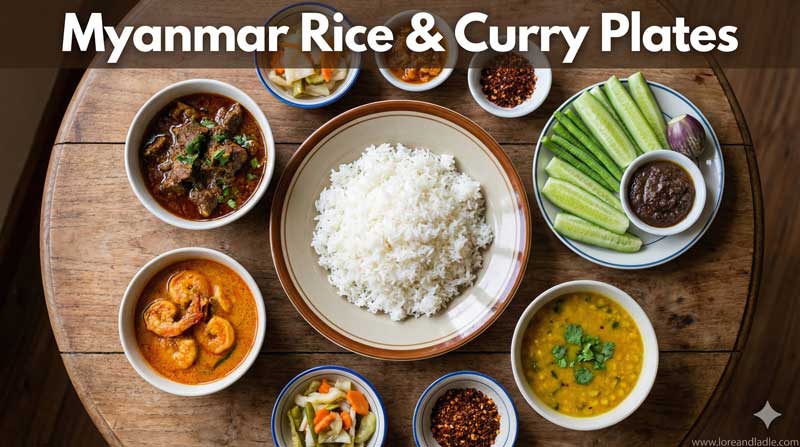
Overview: High-Flavor, Low-Effort Myanmar Rice & Curry Plates for Busy Days
This dish invites you into the warm, everyday heart of Burmese cooking. High-Flavor, Low-Effort Myanmar Rice & Curry Plates for Busy Days centers on fluffy steamed rice crowned with fragrant curries and bright garnishes. It is built for speed without sacrificing depth. In each plate, you taste a culture that treasures balance, aroma, and the joy of a nourishing meal shared with others. The approach is simple, yet the flavors feel crafted and thoughtful.
The Core of Burmese Meal Culture
Rice anchors Burmese dining. It is more than nourishment; it is a canvas for color, aroma, and texture. On busy days, families turn to plates that pair dependable staples with comforting sauces. Curries in Burma often combine accessible ingredients with fresh herbs and a hint of tang. This plate mirrors that generous spirit: a sturdy, dependable staple (rice) supported by flavorful, reachable curries and crisp accompaniments. The result is a meal that travels well from kitchen to table, inviting conversation and appreciation for small, well-made pleasures.
Flavor Map: Key Ingredients and Techniques
The most recognizable elements are simple and approachable. Steamed jasmine or long-grain rice provides a warm, neutral base. Curries, whether chicken, fish, or a plant-based option like lentil, simmer in a modest sauce enriched with garlic, onion, and a touch of ginger. Coconut milk may mellow the sauce, while tomatoes add bright acidity. Aromatics—coriander seeds, turmeric, and a whisper of chili—build depth without overwhelming the palate. A squeeze of lime or splash of vinegar often brightens the finish. Additions like crisp fried onions, fresh cilantro, and a quick cucumber salad bring crunch and freshness. The technique is straightforward: bloom the aromatics in hot oil, simmer the curry to tender perfection, then plate carefully so each bite carries a balance of rice, sauce, and crisp sides.
Structure and Balance: Rice, Curries, and Sides
This plate thrives on balance. The rice provides a soft, neutral stage that absorbs the curry’s sauce without being overwhelmed. The curry contributes protein or legumes, a savory depth, and a gentle sweetness from simmered aromatics. Side components—such as a fresh cucumber and tomato salad or a small pickle—introduce brightness and contrast. A handful of fried onions or sesame seeds adds crunch and a little toasty warmth. Plate design matters too: a neat bed of rice with the curry spooned alongside, and the sides arranged to invite a complete bite, creates a pleasing, color-rich presentation. The sensory harmony—soft, creamy, crisp, tangy, and herbaceous—defines the culinary significance of the dish.
Culture in a Plate: Everyday Meals and Shared Rituals
This dish embodies how Burmese households celebrate daily life through food. It is the kind of meal that appears after a long day, yet it brings a sense of calm and connection. Sharing a plate like this reinforces hospitality, conversation, and mutual enjoyment. The ingredients are familiar enough to comfort the palate, yet varied enough to feel special—proof that tradition can fit into a busy schedule without losing its sense of care. In markets and kitchens, cooks admire the way a single plate can carry aroma, texture, and memory into one harmonious moment. The dish stands as a small ceremony of nourishment, a reminder that flavor can be generous and accessible at the same time.
Practicalities for Busy Days: Quick Prep and Storage
Despite its depth, the plate respects time. Curries can be cooked in larger batches and gently reheated, which helps busy days feel calmer. Rice cooks quickly and can be prepared ahead and reheated with a splash of water to revive its texture. Fresh vegetables and herbs add brightness just before serving, keeping the dish vibrant and alive. A few pickles or a light salad can be prepared in advance and folded in as needed. The result is a meal that feels crafted and comforting, with minimal fuss. This approach makes the dish a reliable companion for regular routines, highlighting its cultural value as a practical yet elegant expression of Burmese flavors.
Serving and Savoring: How to Experience the Plate
To enjoy fully, start with a gentle aroma—lift the plate to appreciate the waft of curry and herbs. Take a bite of rice with a spoonful of curry at the same time, embracing the soft, silky texture with the rich depth of the sauce. Add a touch of brightness from the cucumber salad or lime wedge, then finish with a crack of fried onions for an inviting crunch. The plate rewards mindful tasting: notice how the tang from citrus courts the curry’s savory warmth, how the herbs lift the overall voice of the dish, and how the balance invites you to slow down just enough to savor every element.
A Window into Burmese Culinary Significance
This dish exemplifies how Burmese cuisine translates fast, everyday cooking into a deeper culinary story. It shows how a community can celebrate seasonality, simplicity, and depth in a single, well-composed plate. The emphasis on balance—from heat to acidity, richness to freshness—reflects a broader culinary philosophy: a meal should delight the senses and nourish the body, even on busy days. In that sense, High-Flavor, Low-Effort Myanmar Rice & Curry Plates for Busy Days is more than a meal. It is a celebration of daily life, shared flavors, and the beauty of thoughtful preparation that honors time, texture, and taste.
Conclusion: A Warm Welcome to Burmese Flavor
If you seek a dish that feels both comforting and culturally grounded, this plate welcomes you with open arms. Its beauty lies in simplicity done well: rice, a pair of curries, and bright accompaniments that together tell a story of Burmese taste, practicality, and care. It stands as a small but meaningful contribution to the living tapestry of food culture—an invitation to pause, savor, and celebrate flavor in everyday moments.