
Introduction
Welcome to Simple Sauces and Sides to Match Myanmar Salads & Tea Leaf Dishes. This collection highlights how Burmese flavors come alive when sauces and small accompaniments join fresh salads. The focus is on balance, texture, and aroma. Each component is crafted to celebrate the beauty of Myanmar’s food culture. The result is a meal that feels intimate, vibrant, and deeply satisfying.
The Heart of Myanmar Salads
Myanmar salads celebrate brightness and contrast. They shine with tangy citrus, salty notes, nutty crunch, and fragrant herbs. Fresh vegetables mingle with toasted seeds, dried shrimp, or fermented elements for depth. Sauces and sides act as bridges, tying ingredients together while leaving each flavor distinct. When you pair a simple dip or a crisp side with a salad, you honor the dish’s natural rhythm and elevate the dining experience.
Simple Sauces: The Flavor Bridges
- Lime-Chili Fish Sauce Dip: Bright, salty, and clean. A squeeze of lime wakes the greens, while chili adds gentle heat. This sauce pairs well with creamy or crunchy salad bases.
- Peanut-Lime Dressing: Creamy and nutty with a citrus edge. Ground peanuts mingle with lime juice and a touch of sweetness for balance.
- Sesame-Garlic Oil: Fragrant and silky. A small drizzle of sesame oil with toasted garlic brings warmth without overpowering the vegetables.
- Tamarind-Ginger Relish: Tart, slightly sweet, and aromatic. Ginger adds a peppery lift that complements herbal notes in the salad.
Each sauce is simple, fresh, and designed to harmonize with the bright character of Burmese salads. They invite you to taste layer by layer and savor how acidity, sweetness, and salt interact.
Sides that Elevate Texture and Aroma
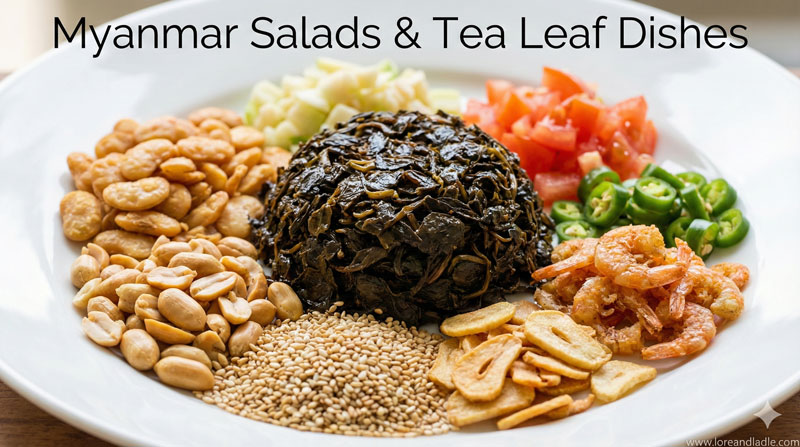
- Toasted Peanuts and Sesame: A handful provides crunch and a roasted note that echoes many Burmese flavors.
- Crispy Shallots or Garlic: Lightly fried slices add a crisp, aromatic finish to any bowl.
- Fresh Herbs and Shavings: Cilantro, mint, or sliced scallions brighten the plate and lift the salad’s aroma.
- Coconut Shavings or Grated Coconut: A subtle, creamy note that softens tangy or spicy elements.
- Light Rice Crackers or Crisp Tofu Pieces: Offer a delicate contrast in texture without stealing the show.
These sides are easy to prepare and store. They bring texture, aroma, and color to the table, making every bite more engaging.
Pairing with Tea Leaf Dishes
- Lahpet (Tea Leaf Salad) Context: Lahpet is beloved for its fermented tea leaves and savory depth. A bright, citrusy dip helps lift the tea leaf tang, while a nutty dressing adds body and richness.
- Balance with Acidity and Crunch: Use a tangy sauce to brighten the leaf’s umami, and add a crisp side to give contrast to the soft bite of the leaves.
- Herb and Nut Echo: Fresh herbs and crushed nuts echo the salad’s earthy notes, creating a cohesive flavor story from bite to bite.
- Keep Heat Moderate: A gentle spice level enhances aroma without overwhelming the delicate tea leaf flavor.
These pairing ideas honor the dish’s character and invite the palate to explore nuances in each bite.
Techniques for Fresh, Vibrant Results
- Toast nuts and seeds lightly to deepen flavor. This adds warmth and a toasty aroma.
- Finely chop herbs for even distribution. Fresh herbs release aroma quickly and keep the dish lively.
- Balance is key. Start with a small amount of sauce or side, then adjust to taste.
- Use bright acids last. A final squeeze of lime or a dash of tamarind can refresh the plate just before serving.
- Prepare sauces ahead. Most simple sauces keep well for a day or two in the fridge, preserving their brightness.
Serving and Social Joy
In Myanmar’s table culture, sharing plates encourages conversation and connection. These sauces and sides are designed to be passed around, tasted, and adjusted together. The goal is not a heavy presentation but a bright, respectful balance of flavors that invites everyone to contribute their own preferences. A well-composed plate becomes a small ceremony of hospitality, where each bite tells a story of season, region, and care.
The Cultural Value and Culinary Significance
Myanmar cuisines place high value on harmony among ingredients. Salads blend freshness, aroma, and texture with careful seasoning. Simple sauces act as culinary poetry, speaking to the farmer’s harvest, the market’s diversity, and the cook’s craft. Sides add texture and resonance, turning a meal into an expressive experience. This approach honors traditional techniques—such as toasting, fermenting, and selective seasoning—while inviting modern kitchens to celebrate with clarity and balance. The dishes reveal how everyday ingredients can become a beautiful, meaningful meal when paired with thoughtful sauces and crisp accompaniments.
Bringing It Home: Quick Steps to Start
- Gather bright ingredients: limes, garlic, chili, peanuts, sesame, fresh herbs.
- Toast nuts and seeds briefly for maximum aroma.
- Whisk simple sauces with minimal sugar or salt; taste and adjust.
- Prepare a small platter of crispy shallots, herbs, and coconut shavings to accompany the salads.
- Assemble bowls with a light drizzle of sauce and a sprinkle of sides to finish.
Conclusion
Simple Sauces and Sides to Match Myanmar Salads & Tea Leaf Dishes invites you to explore a culinary tradition rooted in balance, freshness, and shared pleasure. By pairing bright sauces with crunchy, fragrant sides, you honor the cultural practice of crafting meals that feel both comforting and elegant. Enjoy the harmony of textures and flavors, and let each bite celebrate the beauty of Myanmar’s food culture.