
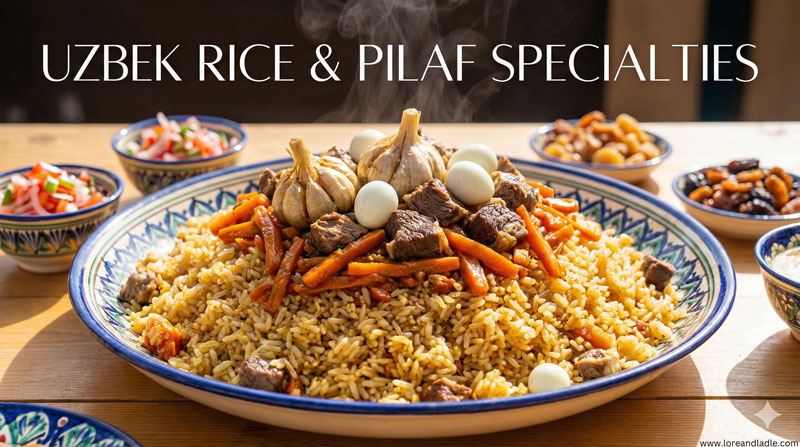
A Warm Welcome to Easy Homemade Plov
Today we explore Easy Homemade Plov – Uzbekistani Rice & Pilaf Specialties Flavor You’ll Love. This dish is more than a recipe; it is a doorway into Uzbek kitchens. It invites you to share meals with family and friends. The approach here keeps steps simple, yet honors long-standing methods. You will sense the culture in every aroma and bite.
Cultural Heartbeat: Plov and Uzbek Hospitality
Plov is a symbol of warm hospitality. Hosts welcome guests with a steaming pot and a friendly smile. Sharing plov marks gatherings, festivals, and everyday visits alike. The pot travels from stove to table, linking hands and stories. The care in each carrot, onion, and grain shows respect for guests. This tradition invites generosity and connection.
The Craft: Techniques that Elevate Flavor
Chefs discuss plov as both art and craft. They work with a wide, heavy pot called a kazan. Oil shimmers in the heat as onions soften and meat browns. Carrots add color and sweetness, balancing the meat’s depth. Cumin and other spices wake the aroma and perfume the air. Rice is rinsed and layered over the base; water is added just enough to create a gentle simmer. The dish rests as steam blooms, and a warm, fragrant crust may form at the bottom. Each step builds flavor and texture that feel distinctly Uzbek.
The Flavor Palette: Aromatics and Texture
The core flavors come from a simple trio: onion, carrot, and meat. The onion provides sweetness, the carrot brings brightness, and the meat offers rich savor. Cumin seeds give a warm, earthy note that ties the dish together. The rice stays separate and fluffy, each grain catching the savory steam. The result is a comforting balance of savory, sweet, and aromatic tones that linger pleasantly.
A Symbol of Community: Serving and Sharing
Plov is meant to be shared. People gather around the table as the aroma fills the room. Servers or family members lift portions with care, inviting everyone to taste. The first bites honor guests, while the final portions bring a sense of togetherness. Leftovers often find new homes with neighbors, keeping the circle of sharing alive. The act of serving plov becomes a quiet celebration of community.
Easy Steps to Make It at Home
- Rinse the rice until the water runs clear, then soak briefly.
- In a large pot, heat oil and sauté onions until golden.
- Add meat and brown it evenly, then fold in carrots and cook until tender.
- Stir in spices, letting their aroma rise, then layer the rice over the mixture.
- Add just enough water to reach a gentle simmer. Cover and cook on low until the rice absorbs the liquid.
- Let the pot rest off the heat for a few minutes, then serve and share.
Regional Variations: Personal Touches in Uzbek Plov
Across regions, cooks add their own touches. Some favor more carrots for sweetness; others lean toward meat for richness. Lamb is common, though beef makes a sturdy alternative. Garlic heads tucked into the rice offer a fragrant surprise. Saffron, barberries, or peppers may appear in some homes, lending subtle accents. These variations show how plov adapts to local tastes while preserving a shared soul.
A Living Tradition in Modern Kitchens
Today, Easy Homemade Plov connects generations. It teaches patience, balance, and respect for ingredients. The dish encourages mindful cooking and generous sharing. It remains a welcoming centerpiece for meals that celebrate everyday life as well as special moments. By cooking plov at Home, you keep a living tradition vibrant for future generations.