
Introduction: A Dish to Gather Around
Family-Style Lao Noodle Favorites to Share at the Table invites everyone to slow down and enjoy together. This is not just a plate of noodles; it is a celebration of hospitality, memory, and the simple joy of dining side by side. The dish blends soft textures, bright herbs, and warm broths to create a gentle harmony that welcomes all ages. Readers will feel how Lao culinary practice honors the table as a place of conversation, care, and shared delight.
Noodles as a Cultural Thread
Rice noodles lie at the heart of Lao noodle traditions. They are versatile, able to hold a comforting broth, soak up bright sauces, or stand bright and fresh in a lively salad. In Lao kitchens, noodles are prepared with care and patience. The result is a texture that is tender yet firm, a quiet backbone for a bowl or a platter shared among friends and Family. In this style of cooking, noodles carry stories of home, family rituals, and simple rituals that happen at the table. When you see a dish built around rice noodles, you sense a link between technique, season, and the way a meal simply feels right when it is shared.
The Shared Table in Lao Cuisine
Eating together is a daily expression of welcome and warmth. A family-style table invites conversation, humor, and the chance to savor many flavors at once. Dishes are arranged so guests can mix components to their liking. Fresh herbs, zesty sauces, and a gentle spice ride are passed around with bowls and spoons. This arrangement honors variety and inclusion: everyone can tailor their bite, from a delicate noodle bite to a bold, herbal lift. The table becomes a circle of food that supports memory, kindness, and shared happiness. In this setup, the dish earns its place as a reliable favorite for celebrations and quiet weeknights alike.
Key Flavors and Techniques
Five flavors guide Lao noodle dishes: bright acidity, savory depth, gentle heat, herbal lift, and comforting warmth. The acidity often comes from lime or a touch of tangy sauce, balancing the savoriness of fish or soy-based seasonings. The savory depth grows from stocks, slow simmered broths, and carefully chosen seasonings. A light kiss of chili adds warmth without overwhelming the palate. Fresh herbs—such as cilantro, mint, and dill—brighten the plate and lift every mouthful. Finally, a drizzle of fragrant oil or a mild chili paste ties the bowl together. Techniques center on gentle simmering for the broth, careful sautéing for aromatics, and carving a path for textures to mingle. The beauty lies in balance: a noodle bite that feels soft, a crisp herb leaf, and a splash of tang.
A Closer Look at Khao Piak Sen and Friends
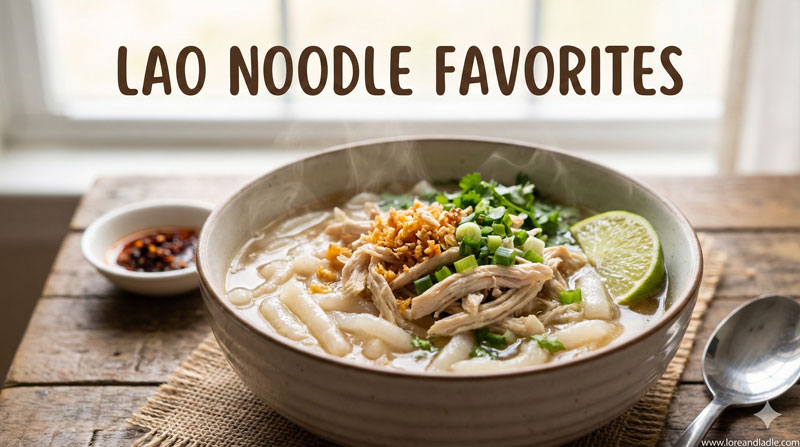
Khao Piak Sen is a flagship Lao noodle experience. It features soft, cloud-like rice noodles resting in a warm, comforting broth. The broth is simple yet deeply flavored by slow simmering and light seasoning. Toppings may include sliced chicken, scallions, fried shallots, and fresh herbs. The result is a bowl that feels like a quiet hug—nourishing and familiar. Alongside this are Lao vermicelli bowls and other noodle preparations that highlight regional freshness. When served family-style, these dishes invite guests to build their own bowls, layering broth, noodles, and toppings. The focus remains on clear flavors, thoughtful textures, and a sense of belonging around the table. Each component is chosen to harmonize with the others, so the group experiences a cohesive and comforting meal.
Regional Touches and Seasonal Variations
Laos offers regional nuances in noodle dishes, reflecting climate and farm fruitfulness. in the north, you may encounter firmer herbs and a robust, roasted aroma from toasted ingredients. In central regions, lighter broths and brighter acidity highlight herbs like mint and cilantro. Seasonal vegetables—green beans, fresh herbs, and greens—find their way into noodle bowls, providing color and crispness. The shared plate style adapts easily to these differences, allowing cooks to honor local harvests while maintaining the essence of Lao noodle flavors. This flexibility keeps the dishes lively across the year, offering new combinations while preserving a familiar sense of comfort.
How to Present and Enjoy Together
Presenting Lao noodle favorites in a family setting is an art of hospitality. Arrange large platters of noodles, broth bowls, and bowls of herbs and toppings where guests can reach easily. Provide small bowls of fish sauce, lime wedges, crushed chilies, and jeow-style chili pastes for those who want a personalized kick. Encourage guests to mix in herbs just before eating to keep flavors bright. A light sprinkle of roasted peanuts or fried garlic adds texture and a welcome crunch. Pass bowls and spoons in a clockwise fashion to invite everyone into the shared moment. The key is to create a rhythm of passing, tasting, adjusting, and enjoying together. In this way, the dish becomes more than food; it becomes an experience of togetherness.
The Cultural Value of Sharing Lao Noodle Dishes
This family-style approach showcases several core values. First, it highlights generosity: the table is a place where each person contributes to the collective flavor. Second, it emphasizes balance: the best bites come from a careful blend of broth, noodles, herbs, and sauce. Third, it honors memory and continuity: familiar flavors link generations and meals through time. Finally, it celebrates hospitality: inviting others to the table and letting them tailor their own bowls makes guests feel seen and welcome. In this practice, food becomes a language of care, and the act of sharing becomes a moment of connection.
A Note on Craft and Care
Craft matters in Lao noodle dishes. The broth is built with patience; the noodles are prepared with precision; herbs are added with intention. Even small touches—the sheen of fresh lime, the aroma of toasted garlic, the brightness of mint—contribute to a refined eating experience. The beauty lies in how these elements work together without shouting. The result is a dish that feels effortless yet is thoughtfully assembled. This is the art of Lao cooking at its finest: simple ingredients, careful technique, and a generous spirit at the table.
Conclusion: Celebrate Flavor, Celebrate Together
Family-Style Lao Noodle Favorites to Share at the Table offers more than taste. It offers a sense of belonging, a way to welcome guests, and a practice of mindful, shared dining. The dish celebrates the beauty of Lao flavors—bright, balanced, and comforting—while inviting everyone to contribute to the experience. As plates circle the table, the noodles tie people together in a quiet, joyful ritual. Enjoy the warmth, savor the textures, and honor the shared table that makes every meal meaningful.