
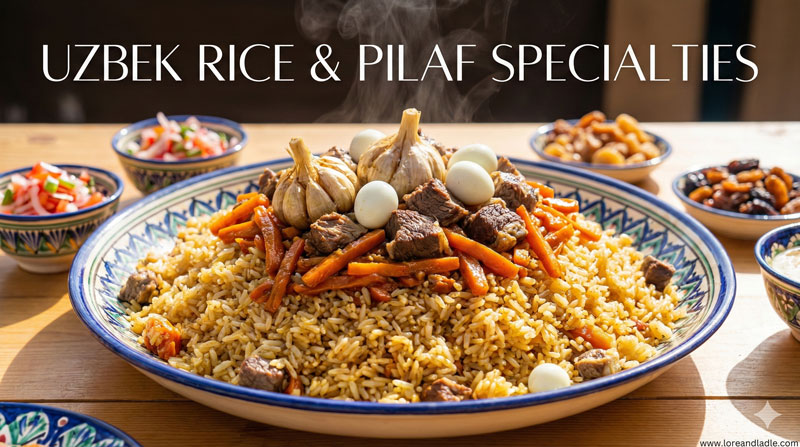
A Taste of Ganfan – Uzbekistani Rice & Pilaf Specialties Flavor You’ll Love
Welcome to a culinary journey that centers on warmth, tradition, and shared meals. A Taste of Ganfan invites readers to explore Uzbekistani rice and pilaf specialties in a single, inviting plate. This dish blends Simple Ingredients with careful technique to reveal cultural values built around hospitality and family. In Uzbek kitchens, such meals are more than food; they are small rituals that shape daily life.
Core Elements of Uzbek Rice and Pilaf
In Uzbekistan, rice pilaf, or plov, starts with patience. Long-grain rice holds its separate grains when cooked with care. To begin, cooks toast onions and meat to release aroma and depth. Carrots are added in bright ribbons, giving color and sweetness. Spices like cumin, coriander, and bay leaves guide the palate. The result Is a harmony of texture and flavor that invites calm conversation.
Craft and Technique in Ganfan
A key feature is the kazan, a wide, deep pot that preserves heat and builds flavor. First, fat or oil heats gently, then onions soften and meat browns. Next, carrots join the scene, releasing their sweetness. Then the rice rests on top, not stirred harshly, so each grain can steam evenly. Finally, broth or water finishes the dish with a gentle simmer. The magic lies in timing, layering, and respectful pauses between steps.
Cultural Significance in Everyday Life
This cuisine honors gathering and conversation. Families come together around a steaming pot, sharing stories as the aroma deepens. The act of serving reflects care: elders offer the first portions, and everyone eats with attention. In many towns, these meals mark milestones, from harvests to simple Sunday reunions. A Taste of Ganfan embodies that spirit of welcome and shared abundance.
Regional Variations and Serving Traditions
Cities across Uzbekistan shape small differences in plov. Some favor lamb, others beef; some use dried fruits for a touch of sweetness. Yet the core remains the same: balanced rice, tender meat, and a flavorful broth. Serving is a moment of ceremony—accompanied by bread and tea, with plates passed and replenished as needed. The dish adapts, but the warmth stays constant.
Pairings and Shared Moments
To complete the experience, serve with fresh herbs, a wedge of lemon, and crisp bread. A cup of green tea or strong chai adds a soothing counterpoint. These accompaniments heighten the sense of hospitality and make every bite feel like a welcome.
Sourcing and Craft
Choose grains labeled for plov or long grain when possible. Fresh meat should be of good quality, and carrots should be firm and bright. Fresh onions lift the base flavors, while spices should be aromatic but not overpowering. When prepared with patience, A Taste of Ganfan becomes a reliable celebration of craft.
A Timeless Experience
Ultimately, this dish is more than a recipe. It is a living tradition that travels from kitchen to kitchen, carrying memory and joy. By savoring A Taste of Ganfan, you taste not only rice and meat, but the care of cooks who have kept a culinary art vibrant through generations.