
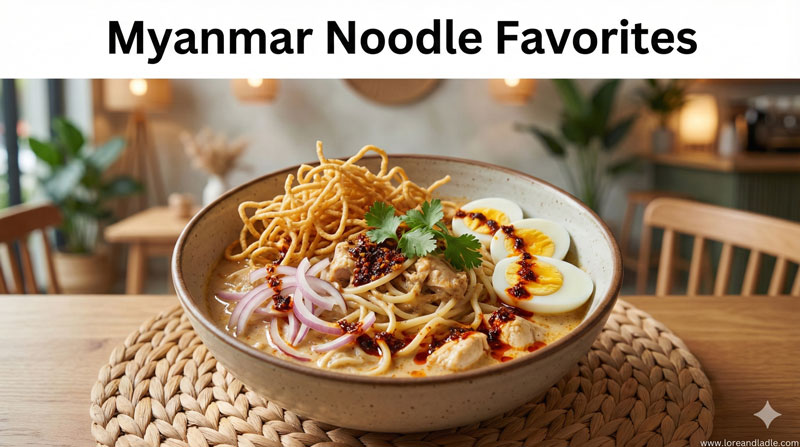
Introduction: A fresh take on Myanmar noodle favorites
Lightened-Up Myanmar Noodle Favorites Without Losing Flavor welcomes readers to a colorful world where broth, noodles, and herbs meet lighter cooking. The dish honors Burmese culinary roots while embracing modern desires for bright, nourishing meals. In Myanmar, noodles appear in markets, homes, and street stalls, weaving together daily life with rich aroma and texture. By trimming excess oil and boosting vegetables, these bowls keep bold flavor intact. The result is a delicious, approachable way to celebrate a beloved tradition without sacrificing depth or charm.
Cultural threads: Noodles at the heart of daily life
Noodles are more than food in Myanmar; they are a daily ritual. A friendly bowl greets you at breakfast stalls, a comforting supper after a long day, or a bright lunch on a warm afternoon. The same basic idea—savory broth, tender noodles, and a chorus of toppings—takes on many regional personalities. in the lightened versions, cooks listen to local tastes and seasons: fish broth that mirrors coastal markets, herbal notes from fresh cilantro and scallions, and a squeeze of lime that lifts the entire bowl. This approach respects tradition while inviting new menus and new cooks to participate in the story. The result is bowls that feel both familiar and refreshingly bright.
Culinary significance: Flavor balance and the beauty of lightness
Burmese cuisine prizes balance and clarity. A perfect bowl tastes savory, bright, and alive in the mouth. Broth forms the backbone, often enriched with fish sauce or a touch of turmeric for warmth. Aromatics such as garlic, shallot, lemongrass, and fresh herbs layer in slow, steady time, creating a scent that invites you closer. In Lightened-Up Myanmar Noodle Favorites Without Losing Flavor, the technique remains faithful to this balance. The oil is measured, the proteins lean, and the vegetables plentiful. The result is a vivid, multi-note experience where each component contributes without heaviness. This emphasis on balance makes the dish versatile—satisfying for a quick meal and worthy of a thoughtful dinner.
Signature dishes that inspire lightened versions
Mohinga is a hallmark of Burmese noodle culture. Its aromatic fish broth, lime brightness, and delicate texture invite gentle adjustments. In a lightened version, cooks reduce oil, emphasize lean protein, and keep the fishy warmth intact. Ohn No Khao Swè, a coconut-scented noodle soup, offers another canvas. A lighter preparation might use a lighter coconut milk or focus on a clear, savory broth with crisp vegetables added at the end for color and texture. Shan noodles, with their own nutty sauce and fresh herbs, provide yet another model for lighter, flavorful interpretation. Across these variations, the core spirit remains: a noodle bowl that feels comforting, bright, and deeply Burmese in character.
Techniques that preserve flavor while reducing heaviness
- Build flavor in layers: start with a gentle broth base, then add aromatics, then finish with herbs at the end for freshness.
- Use lean proteins and plant-forward toppings: chicken, shrimp, tofu, or a mix of vegetables maintain texture and taste without excess fat.
- Choose noodles wisely: rice noodles or whole-grain options bring a pleasing chew and better satiety with less oil.
- Limit added oil; rely on stock, citrus, and herbs to carry brightness.
- Finish with a bright fold of lime juice, cilantro, and chopped scallions to awaken the dish just before serving.
These practices honor the technique of Burmese home cooking, where simplicity and attention to detail create depth without heaviness. They also make the dish accessible to a wider audience, inviting curious diners to experience Myanmar’s noodle traditions in a lighter, modern format.
How to savor: Serving with intention and care
A great bowl invites the senses to participate. Begin with a warm, clear broth that delivers aroma and depth. Add the noodles, then arrange toppings like fresh herbs, shredded cabbage, sliced chili, and toasted sesame or crushed peanuts. A squeeze of lime brings a citrus kiss, while a spoonful of chili oil or fish sauce adds a final spark. The act of mixing slowly, tasting, and adjusting with lime and herbs mirrors the Burmese habit of personalizing a bowl at the table. This ritual reinforces the social dimension of noodle meals: they are meant to be shared, enjoyed, and adjusted to suit the moment, the season, and the palate.
The cultural value of lightened-up noodles: Tradition meets everyday life
The lightened versions of Myanmar noodle favorites sit at a special crossroads. They honor time-honored flavors and familiar textures while respecting today’s focus on lighter meals. This approach makes a traditional cuisine more accessible to families and individuals seeking balanced nutrition without sacrificing taste. It also encourages Home Cooks to experiment with regional ingredients—fresh herbs from the market, seasonal vegetables, and locally available proteins—within a framework that preserves the dish’s essential character. In this way, the bowls remain a shared cultural practice, connecting cooks and eaters through flavor, memory, and daily life.
A warm invitation to explore
If you seek a meal that feels both timeless and contemporary, these lightened-up Myanmar noodle favorites offer a welcoming path. They celebrate Burmese culinary artistry—the careful layering of aroma, texture, and brightness—while inviting personal tweaks that reflect what’s fresh at the market and what tastes best to you. Whether you are new to Burmese noodles or returning to a familiar favorite, these bowls promise flavor, comfort, and a sense of belonging at the table. Embrace the beauty of the dish and savor the adaptive spirit that keeps Myanmar’s noodle traditions vibrant and alive.