
Introduction
Lao cuisine speaks through bold aromas, bright herbs, and simple rhythms. The concept of High-Protein Classic Lao Main Dishes for Busy Professionals invites readers to see how Lao flavors meet modern pace. This collection highlights protein-forward dishes that work well in a busy day, yet remain deeply rooted in Lao culture. The aim is to celebrate taste, technique, and an everyday cooking style that travels from village kitchens to urban kitchens with ease. The result feels welcoming, respectful, and vibrant.
The Concept and Cultural Value
High-Protein Classic Lao Main Dishes for Busy Professionals centers on nourishment that respects time and tradition. In Lao culture, meals are social ballet and practical practice at once. Protein is prized for energy and balance, while herbs and citrus brighten the plate. The concept honors both daily life and ceremonial meals, showing how a people sustains vitality without sacrificing flavor. It also reflects a thoughtful approach to food: lean proteins, mindful seasoning, and a respect for ingredients that are seasonal and local. The result Is a menu that feels both familiar and fresh, a bridge between heritage and contemporary life.
Core Ingredients and Techniques
At the heart of these dishes are ingredients common to Lao markets: river fish, pork, chicken, and a chorus of herbs such as mint, cilantro, basil, and green onions. Aromatics like lemongrass, lime leaves, and kaffir lime zest add brightness. Fish sauce and lime juice provide salt and acidity in a way that feels clean and bright. Toasted sticky rice powder brings a gentle nutty lift.
Techniques matter just as much as ingredients. Grilling (ping) lends smoky depth to meat and fish. Quick pan searing preserves succulence. Light steaming and gentle braising unlock tenderness without heavy sauces. Fresh herbs are added at the end to preserve aroma and color. A small touch of chili often rounds out the plate, never overpowering the other notes. These methods create dishes that are satisfying, balanced, and quick enough for a busy schedule.
Larb and Other Protein-Centric Lao Dishes
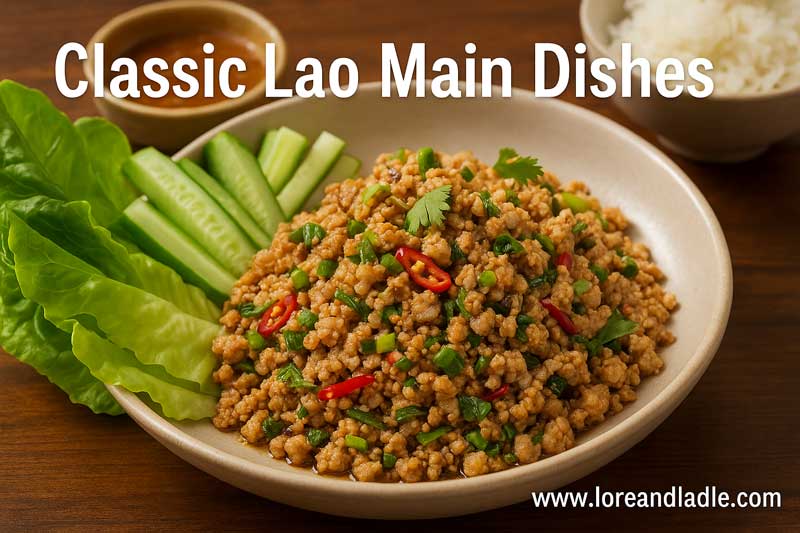
Larb often sits at the center of protein-forward Lao meals. This minced meat salad uses herbs, lime, fish sauce, and roasted rice powder to create a bright, savory punch. It is a dish of texture and contrast: soft meat, crisp herbs, and a tangy finish. Other classics fit the same philosophy. Grilled river fish with herbs can be vivid and clean. Pork or chicken dishes finished with fresh greens offer balance. Steamed fish wrapped in leaves or banana leaf (such as mok pa) showcases gentle aroma and delicate tenderness. Each dish emphasizes protein as the anchor, complemented by herbs, citrus, and a light touch of heat. The result is a menu that feels cohesive and distinctly Lao.
The Role of Meal Rhythm in Lao Culture
In Lao dining, meals often unfold in a rhythm that honors sharing and pace. A table is a place for conversation as well as food. Small plates and shared bowls encourage a communal experience. Yet even with shared settings, the protein-forward dishes respond to modern need for efficiency. The idea behind High-Protein Classic Lao Main Dishes for Busy Professionals is to offer plates that can be prepared in a reasonable time, without compromising cultural flavor or texture. The dishes invite mindful tasting, where each bite reveals herbaceous brightness, mineral salt from fish sauce, and the comforting warmth of spice. This balance mirrors Lao daily life, where practicality and poetry meet at the table.
Busy Professionals and the Kitchen as a Cultural Space
For busy professionals, the kitchen becomes a place where tradition supports productivity. Short prep times, clean labels, and clear flavors help with planning and routine. Yet the dishes remain a lesson in cultural care: a reminder that meals are more than fuel; they are a shared experience and a form of hospitality. The High-Protein concept highlights not just speed, but the beauty of a well-balanced plate. It showcases how Lao cooks translate time-honored flavors into everyday meals that fit a modern calendar. In this sense, the kitchen becomes a quiet cultural space where heritage and efficiency coexist gracefully.
Practical Tasting Notes and How to Experience the Culture
To savor these dishes, notice the harmony of ingredients: the crispness of fresh herbs, the crisp edge of roasted rice powder, the clean brightness of lime, and the savory depth from fish sauce. Look for that balance between savory and tart, with chili warming without overwhelming. Texture matters here: tender protein contrasts with crunchy greens and soft rice. The flavor profile mirrors Lao cultural priorities—clarity, freshness, and a respectful nod to tradition. When you taste, you participate in a culinary conversation that has traveled through markets, homes, and street stalls, carried forward by cooks who value both speed and soul.
Conclusion
High-Protein Classic Lao Main Dishes for Busy Professionals presents more than a meal plan. It offers a doorway into Lao culture through flavor, technique, and everyday practice. The dishes honor nourishment, community, and the artistry of simple, bright ingredients. They show how Lao cooks blend practicality with beauty, crafting meals that energize busy days while keeping cultural memory at the forefront. Embrace the experience, and you step into a table where protein, herbs, and river stories come together in a single, welcoming bite.