
Introduction
How to Build a Full Menu Around Myanmar Vegetarian & Vegan Dishes is more than a culinary guide. It is a celebration of texture, aroma, and the quiet strength of a kitchen that honors vegetables as the main actors. This approach centers on Myanmar’s vibrant vegetarian and vegan traditions, inviting readers to explore flavors that are bright, comforting, and deeply rooted in everyday life. The concept treats vegetarian and vegan dishes as a complete culinary world, ready to drive an entire menu with cohesion and grace. By focusing on cultural value and culinary significance, we can see how a thoughtful menu reveals the soul of Burmese food without relying on meat as the anchor. The result is inviting, respectful, and full of color.
The Heart of Myanmar Vegetarian & Vegan Cuisine
Myanmar cooking thrives on balance. Fresh herbs, toasted spices, tangy zest, and gentle sweetness mingle in harmony. Vegetables and legumes take center stage, offering diversity across regions and seasons. A menu built around Myanmar vegetarian and vegan dishes mirrors a regional pantry: leafy greens from monsoon markets, lentils that glow in yellow curry, and silky tofu that soaks up spice and brightness. The cultural value lies in how these dishes bring people together around a shared table, where every bite speaks of place, season, and care. The culinary significance comes from a tradition of respectful preparation, where patience and technique transform simple ingredients into comforting, memorable meals. When you design a menu around these dishes, you honor a cuisine that thrives on ingenuity, balance, and hospitality.
Key Flavors and Ingredients
To build a full Myanmar-inspired vegetarian or vegan menu, start with a palette that feels both familiar and distinctly Burmese. Core flavors include bright lemongrass, galangal, turmeric, garlic, shallots, and fresh chilies. Leafy greens such as mustard greens, fenugreek, and morning glory anchor many dishes. Legumes—lentils, chickpeas, and beans—provide protein and a satisfying backbone. Coconut milk lends creaminess in curries and soups, while tamarind or lime juice adds a crisp, citrusy brightness. Fresh herbs like cilantro and dill lift flavors at the finish. For a vegan menu, consider substitutions that respect the region’s technique: soy sauce or mushroom-based sauces replace fish paste in places where umami is essential, and miso can add depth to liquid curries. Fermented components, when used in vegan form, can add complexity without relying on animal products. The result is a spectrum of tastes: mellow, tangy, herbaceous, and warmly spiced, all rooted in vegetable-forward cooking.
Principles to Build a Full Menu
First, prioritize balance. A complete menu should pair textures, colors, and temperatures. Include crisp, fresh elements alongside comforting, soft textures. Next, create a narrative arc: begin with vibrant starters that awaken the palate, move to heartier curries and stir-fries, and finish with light, fragrant desserts. Additionally, respect regional variety. Myanmar’s culinary landscape spans the plains, hills, and river valleys, so let your menu reflect multiple regional voices. Finally, maintain coherence. Use a unifying set of ingredients or techniques so the menu feels like a single concert rather than a collection of separate songs. The approach centers on vegetables and plant-based proteins as the leading roles, with spices and aromatics as supporting cast.
Sample Menu Concepts
- Starter ideas: Lahpet Thoke (tea leaf salad) in a vegetarian version, sesame-ginger cucumber salad, light mung bean fritters with tangy dipping sauce. These dishes wake the palate and showcase Burmese flavors without heavy sauces.
- Main courses: Coconut milk–based chickpea curry with turmeric and mustard greens; pumpkin and lentil curry with lemongrass; stir-fried vegetables with garlic, tofu, and a drizzle of lime; eggplant with garlic-ginger sauce. Each dish emphasizes plant-based proteins, bright aromatics, and a gentle simmer that yields depth without heaviness.
- Sides and accompaniments: Steamed jasmine rice, colorful herb salads, pickled vegetables, and a tomato-onion relish. These support a main course with brightness and contrast.
- Dessert and palette cleansers: Sweet coconut sticky rice with jaggery, fresh fruit in lime-sugar syrup, or sesame-studded sesame balls fried lightly and served warm. Desserts emphasize natural sweetness and delicate textures.
- Beverage pairings: Herbal tea blends with lemongrass and chrysanthemum, cooled cucumber and mint agua fresca, or lime juice with a touch of palm sugar. These beverages refresh without overpowering the meal.
Plating, Texture, and Color
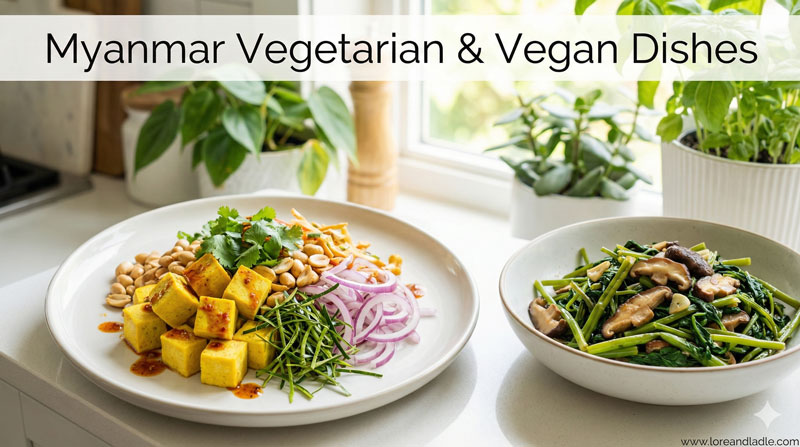
A Myanmar-inspired vegetarian or vegan menu shines when plates tell a story through color and texture. Think vibrant greens from coriander or dill, the pale richness of coconut milk, the warm orange of roasted carrots, and the deep purples of beet or purple yam. Layer textures: a crisp salad alongside a silky curry, a chewy fritter, and a soft rice base. The eye travels across a plate, inviting curiosity and comfort at the same time. Simple garnishes—slivers of chili, fresh herbs, a squeeze of lime—transform dishes and highlight the dish’s freshness. A well-planned menu uses contrast to keep guests engaged, ensuring no two bites feel identical.
Regional and Seasonal Insights
Myanmar’s markets reveal a calendar of harvests. In the monsoon months, leafy greens and herbs flourish, inviting bright, quick-simmered dishes. In the cooler, drier seasons, root vegetables and squash shine, offering heartier curries and stews. A thoughtful menu adapts to what is freshest, which strengthens cultural connection and flavor integrity. Incorporating seasonal produce signals respect for local growers and a commitment to sustainable cooking. The regional variety—coastal, upland, riverine—adds layers to the menu, allowing you to weave a broader narrative of Myanmar’s culinary landscape. By highlighting these differences, the menu becomes a living map of place and season.
Practical Tips for Home Cooks and Small Kitchens
- Plan around a few staple ingredients: rice, tofu or another plant-based protein, leafy greens, and a coconut milk base. These form a dependable backbone for multiple dishes.
- Use fresh herbs generously. They lift vegetarian dishes and keep flavors vibrant without heavy sauces.
- Build your spice profile gradually. Start with garlic, shallot, and turmeric, then add lemongrass, ginger, and chilies to taste.
- Test substitutions ahead of time. If you replace fish sauce or other animal-based ingredients, ensure the umami remains rich through miso, mushroom soy, or dried mushrooms.
- Balance heat and cooling elements. Pair a spicy curry with a cooling cucumber salad or a herbaceous chutney to maintain harmony on the plate.
- Focus on plating. A well-presented plate invites guests to savor the dish with their eyes first. Use contrasting colors, a clean plate, and a thoughtful arrangement.
Cultural Significance and Everyday Joy
A menu built around Myanmar vegetarian and vegan dishes honors daily life and communal dining. In Myanmar, meals often center on sharing and hospitality. When you design such a menu, you acknowledge the importance of gathering, seasonality, and respect for ingredients. The dishes celebrate everyday nourishment and the joy of flavors that come from simple vegetables prepared with care. This approach reinforces a sense of place and tradition, inviting guests to experience a culture through its plant-based flavors. The beauty of the concept lies in its accessibility: everyone can explore Myanmar’s culinary world by focusing on vegetables, grains, and aromatic herbs. The result is a respectful, enriching dining experience that highlights cultural pride and culinary artistry.
The Reading Experience: Language, Rhythm, and Clarity
To ensure clarity and reader appeal, use concise sentences and transitions. Start with a clear purpose, then walk through each stage of menu-building. Use active voice to keep the narrative energetic and engaging. Employ transition words such as first, next, additionally, and finally to guide readers through the process. A well-structured flow helps readers visualize a complete menu and feel confident trying it at Home or in a small kitchen.
Conclusion: A Festival of Plant-Based Burmese Cuisine
How to Build a Full Menu Around Myanmar Vegetarian & Vegan Dishes invites you to glimpse the beauty of Burmese plant-based cooking. It highlights cultural value and culinary significance by focusing on vegetables as the stars, seasonal produce as the backbone, and thoughtful preparation as the heart. The approach yields a cohesive, welcoming menu that celebrates flavor, texture, and color. By honoring traditional techniques, regional diversity, and modern substitutions, you create an inviting dining experience that resonates with guests and respects the land that sustains it. This is not just a menu; it is a celebration of Myanmar’s rich, plant-forward culinary heritage. If you bring patience, curiosity, and kindness to the kitchen, you will craft a menu that feels both timeless and fresh—a true reflection of the beauty of Myanmar vegetarian and vegan food.