
7 Indonesian Comfort Food Classics to Try If You Love Bold Indonesian Flavor
Indonesia’s kitchens celebrate bold flavors that welcome everyone to the table. This collection—7 Indonesian Comfort Food Classics to Try If You Love Bold Indonesian Flavor—highlights dishes that bring warmth, color, and character to daily meals. Each dish sits at the crossroads of local ingredients, family rituals, and regional pride. They are approachable at Home, yet deeply expressive. From spice pastes to slow simmering, these dishes reveal a communal spirit and a love for craft. The flavors invite curiosity, and the stories behind them celebrate skilled hands and generous hospitality. Below, you’ll discover why these dishes matter in Indonesian food culture and how they earn their place at the heart of a meal.
Nasi Goreng
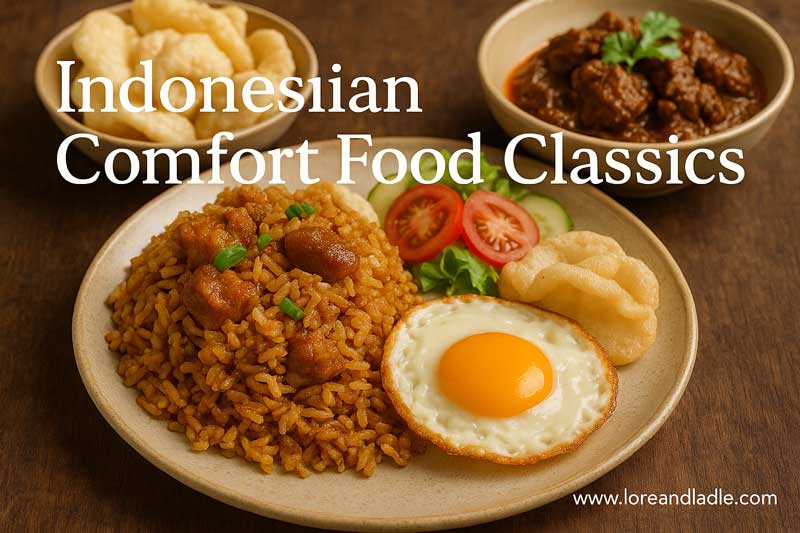
Nasi Goreng is Indonesia’s signature fried rice. It often starts as a practical way to transform leftover rice into a warm, comforting meal. A hot wok quickly releases garlic, shallots, and a chorus of aromatics. Sweet soy sauce and a touch of chili add bold color and depth. Some cooks fold in shrimp paste for a savory kick. A fried egg on top, crisp cucumber slices, and crunchy krupuk complete the plate. In homes and street stalls, Nasi Goreng is a reliable favorite for any time of day. It shows how simple ingredients become bold flavors with technique and balance. Regional twists—extra chilies, toasted sesame, or different proteins—give each version its own character. Sharing a plate of Nasi Goreng reflects Indonesian hospitality and a love of flexible cooking.
Rendang
Rendang is a slow-cooked beef curry from West Sumatra, beloved across the archipelago. Coconut milk, chilies, lemongrass, and a toasted spice paste blend until the meat becomes tender and the sauce darkens. The cooking lasts for hours, allowing flavors to deepen and meld. The result is meat that almost melts in the mouth and a fragrant, caramelized coating. It is typically served with steamed rice and perhaps vegetables. Rendang shines at celebrations, family gatherings, and special meals. The dish demonstrates a patient balance of heat, sweetness, and savory richness. Its aroma fills the room and invites conversation. Rendang stands as a symbol of culinary craftsmanship and regional pride.
Soto Ayam
Soto Ayam is a fragrant chicken soup with a bright, turmeric-tinted broth. Aromatics like turmeric, lemongrass, and ginger lift the liquid into a warm, clear soup. Shredded chicken, rice, and boiled eggs drift through the bowl, while fried shallots add crunch. A splash of lime or a dab of sambal invites brightness and heat. Each family has its own soto recipe, making the dish a daily ritual as much as a feast. The soup travels well between meals, from breakfast to lunch. Soto Ayam captures Indonesia’s preference for light, boldly seasoned soups that comfort with clarity. It showcases how broth can carry depth without heaviness.
Bakso
Bakso is a comforting meatball soup found in homes and street stalls across the country. Beef or chicken meatballs swim in a clear, savory broth with noodles, tofu, and greens. A dash of pepper, chopped scallions, and fried shallots brighten every bowl. Some meals pair Bakso with sambal and a squeeze of lime for zing. The dish embodies approachable, everyday eating and cheerful gatherings around a steaming bowl. The technique—grinding meat with ice to keep texture tender, shaping round spheres, and building aroma in the broth—highlights Indonesian precision and care. Bakso invites warmth and conversation to flow as freely as the broth itself.
Gudeg
Gudeg is a slow-cooked jackfruit stew from Yogyakarta, deeply rooted in Java’s culinary landscape. Young jackfruit simmered with palm sugar and coconut milk yields a velvet, deeply savory-sweet sauce. The dish is typically served with rice, hard-boiled eggs, and sometimes chicken or tempeh. A bit of krecek (spiced dried beef skin) adds a contrasting texture. Gudeg embodies patience and ritual, often appearing on weekend tables and festive menus. Its aromatic appeal comes from long, gentle simmering and the balance of sweetness, salt, and herbal notes. Gudeg reflects a regional pride in traditional techniques and in using plant-based ingredients to create complex comfort food.
Mie Goreng
Mie Goreng is a beloved fried noodle dish that travels easily from home kitchens to street stalls. Cooks toss noodles in a hot wok with garlic, shallots, and chili. Sweet soy sauce (kecap manis) provides caramel color and a gentle sweetness that anchors the dish. Additions vary, with prawns, chicken, vegetables, and sometimes eggs enriching the mix. A final touch of fried onions adds texture and aroma. Mie Goreng is a versatile quick meal that everyone recognizes. It demonstrates how Indonesian cooks blend wok-cookery with local flavors to create bright, satisfying comfort food. The dish’s ubiquity makes it a shared culinary signature across regions.
Satay (Sate)
Satay is skewered meat grilled over charcoal and served with peanut sauce. Common choices include chicken, beef, and lamb, each marinated with a blend of coriander, cumin, turmeric, and other spices. The grilling process yields a smoky, tender bite that complements the creamy, nutty sauce. Slices of onion, cucumber, and lime brighten the plate. Satay is a social food, often enjoyed at markets, gatherings, and family barbecues. Variations abound across islands, yet the core idea remains the same: simple ingredients elevated by fire, spice, and shared pleasure. This dish embodies how Indonesian cuisine honors community moments around a grill and a plate of bold flavors.
Embracing Indonesian Comfort: Final Thoughts
These seven dishes reveal a cuisine that values warmth, connection, and craft. Each recipe centers on local ingredients, respected techniques, and the joy of sharing. They illustrate how bold Indonesian flavor can come from humble roots and patient work. Enjoying these dishes offers a doorway into regional identities, seasonal ingredients, and the everyday artistry of Indonesian cooking. Whether you cook at home or savor them at a market stall, you’ll taste hospitality, pride, and a love of good food that brings people together.