
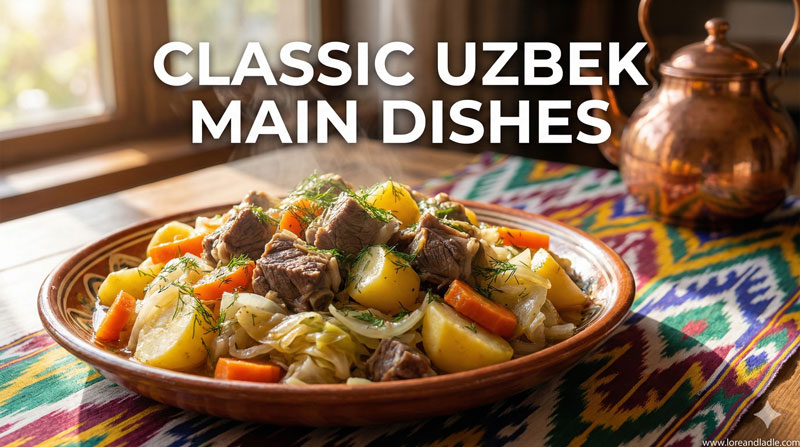
Traditional Lagman – Classic Uzbekistani Main Dishes Flavor You’ll Love
Lagman is a cherished staple in Uzbek kitchens. This traditional dish honors patience and craft. It blends hand-pulled noodles, a fragrant broth, and tender meat with bright vegetables. The result is a warm bowl that welcomes family and friends. In every bite, you taste a history of Home Cooking, shared recipes, and careful technique. This post invites you to explore the cultural value and culinary significance of traditional lagman.
What Lagman Is and Its Place in Uzbek Cuisine
Lagman means more than a recipe; it is a way of sharing meals. The noodles are often long and chewy, made by hand, then simmered in a rich broth. Meat, usually lamb or beef, adds depth, while vegetables bring sweetness and color. The dish sits at the heart of daily dining and weekend gatherings. It embodies balance: soft noodles, hearty broth, and crisp vegetables all in one bowl.
The Craft: Noodle, Broth, and Tender Meat
Noodles form the soul of lagman. Chefs knead, roll, and pull strands until they reach the right thickness. The broth simmers slowly, collecting savory notes from bones and meat. Vegetables join later, so their flavors stay bright. Tender meat is added to deliver warmth and texture in every bite. This careful sequence defines lagman’s comforting character.
Aromatics and Sauce: The Harmony of Spices
Cumin and coriander lead the fragrance, with black pepper and paprika for depth. Garlic and onions form a savory base that carries the vegetables. Tomatoes or tomato paste brighten the broth, while herbs such as dill and cilantro finish the bowl. The sauce remains light enough to let the noodles shine. The result is a harmonious, savory balance that lingers on the palate.
Regional Voices: Variations Across Uzbekistan
Different towns and families bring small twists. Some lagman features thicker, hand-cut noodles; others prefer finer strands. The broth may be clearer in one region and richer in another. Vegetables vary with local harvests, offering carrots, peppers, and zucchini in various combinations. These differences celebrate regional voices while keeping the core: chunky noodles, a flavorful broth, and tender meat.
Cultural Value: Shared Meals and Everyday Joy
Lagman gathers people around the table. It is common at Family Dinners, weekends, and market stalls where steam and aroma invite neighbors. The act of kneading dough, shaping noodles, and simmering broth becomes a shared ritual. Recipes are passed down with care, creating a living link between generations. In this way, lagman is more than food; it is a doorway to hospitality and memory.
Serving, Pairings, and Moments to Savor
Serve lagman hot, garnished with fresh herbs and a squeeze of lemon or a dash of chili oil for heat. A side of flatbread and fresh pickles enhances the meal. The broth should be fragrant and flavorful, not overwhelmed by spice. Diners lift a portion and notice the soft pull of the noodles. Each spoonful offers warmth, texture, and a sense of place.
A Timeless Favorite: Why Lagman Endures
The appeal lies in balance, technique, and tradition. Lagman invites cooks to slow down, savor each step, and share with others. It adapts to seasons, ingredients, and family tastes, while keeping a clear core: noodles, broth, meat, and vegetables. This dish celebrates craftsmanship and culture in every bowl. If you try lagman, you taste a piece of Uzbek culinary heritage.