
Delicious Lagman – Uzbekistani Rice & Pilaf Specialties Flavor You’ll Love: A Cultural Introduction
Delicious Lagman – Uzbekistani Rice & Pilaf Specialties Flavor You’ll Love invites readers to taste a rich tapestry of Central Asian culinary culture. This dish is not only about flavor; it Is a celebration of sharing, craft, and seasonal ingredients. It offers a warm doorway into how Uzbek communities nourish each other through food.
A Window into Central Asian Hospitality
At its heart, lagman is about hospitality. Families welcome guests with steaming bowls and generous portions. The aroma from simmering broth signals care and patience. When people gather, conversations rise alongside the steam, helping memories to form around the table. This dish embodies a spirit of togetherness that several generations cherish. In homes, markets, and family kitchens, lagman appears as a dependable staple that brings people close.
The Craft of Lagman: Noodle Craft, Broth, and Tender Meat
Lagman showcases a balance of textures and techniques. Hand-pulled noodles provide a chewy bite that contrasts with a silky broth. Tender meat lends depth, while vegetables brighten the pot with color. Chefs begin with a simmering base, layering flavors patiently. They then fold in the noodles just before serving so each spoonful carries both richness and clarity. The result is a practical artistry: a dish that feels both rustic and refined.
A Palette of Aromatics: Spices and Vegetables
The aroma journey starts with onions and garlic, then deepens with cumin, coriander, and black pepper. A touch of paprika or chili adds warmth, while tomatoes or bell peppers lend brightness. Carrots, leafy greens, and sometimes potatoes contribute sweetness and body. This spice and vegetable constellation is what makes lagman fragrant and comforting. Each kitchen adds its own personal touch, yet the core balance remains recognizable across Uzbekistan.
Rice, Pilaf, and Cultural Pairings
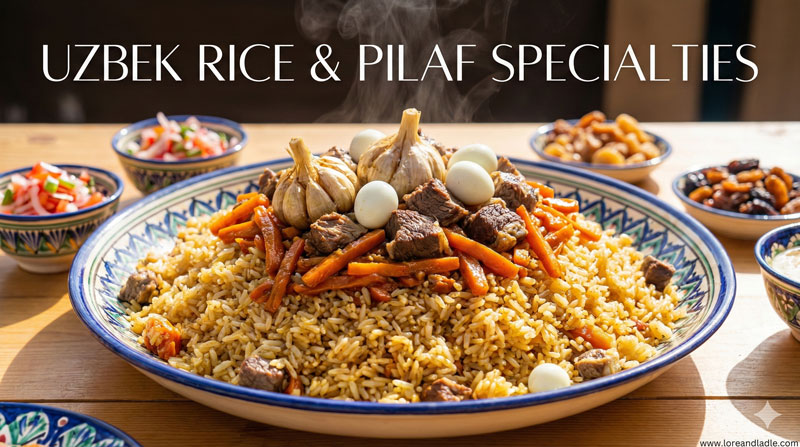
In Uzbek cuisine, plov (pilaf) and lagman often share the stage in a well-balanced meal. Rice dishes and pilaf carry a historical significance of their own, and this is harmonized beautifully with lagman’s heartiness. The pairing emphasizes variety at the table—soft noodles with a rich broth, alongside fragrant rice and savory meat. The combination speaks to an appreciation for texture, aroma, and memory, giving diners a broader sense of the country’s culinary landscape.
Serving Traditions and Community
Serving lagman is a thoughtful act. Bowls are filled with care, and bread accompanies each plate, ready to mop up the last flavorful bits. Fresh herbs may crown the dish, adding a final note of brightness. Guests often gather around a low table or in a warm dining nook, where the act of sharing becomes a ritual in itself. Such traditions reinforce respect for food, for cooks, and for one another.
Lagman Today: A Living Culinary Tradition
Today, Delicious Lagman – Uzbekistani Rice & Pilaf Specialties Flavor You’ll Love travels from family cookouts to cozy restaurants. The dish adapts to regional ingredients while preserving its core character. In contemporary settings, chefs honor the technique while inviting new flavors to the table. This adaptability keeps lagman relevant and beloved, turning every tasting into a memory of place and craft.
How to Appreciate the Flavor and Culture
To truly appreciate lagman, savor the broth first. Notice how the aromatics bloom as you spoon more into your bowl. Then enjoy the noodles—their chewiness should feel deliberate, not heavy. Finally, consider the vegetables and meat as a chorus that completes the dish. This is a culinary microcosm of Uzbek culture: balance, patience, and communal joy.
A Gentle Invitation to Explore
If you are curious about cultural flavors and culinary craftsmanship, lagman offers a warm invitation. Taste the harmony of ingredients, and you’ll sense how people in Uzbekistan have shaped meals into moments of connection. Delicious Lagman – Uzbekistani Rice & Pilaf Specialties Flavor You’ll Love stands as a tribute to that enduring kitchen wisdom. It welcomes readers to explore a legacy of hospitality, technique, and shared delight.