
Comfort Classics: Lao Vegan & Vegetarian Dishes That Taste Like Home
These comfort classics celebrate Lao vegan and vegetarian dishes that carry the memory of Home in every bite. They honor fresh herbs, crisp textures, and bright citrus that sing together on a single plate. The focus here is on cultural value and culinary significance, showing how simple ingredients become meaningful, everyday sustenance.
The Heart of Lao Home Cooking
Lao Home Cooking centers on balance, seasonality, and accessibility. Families gather around tiny markets and home gardens to choose peppers, greens, and rice. Home meals often begin with rice, the quiet backbone of many dishes, and build outward with herbs, lime, and mushrooms or beans. Recipes are handed down with care, refined to fit family tastes and the seasons. In this space, cooking is both practical and expressive, a daily ritual that makes strangers feel welcome and familiar.
Flavor Pillars of Lao Vegan Comfort
Lao vegan dishes shine through four core pillars. First, freshness: herbs like mint, cilantro, and fragrant lemongrass brighten every bite. Second, brightness: lime and tamarind lift flavors without heaviness. Third, texture: crunchy vegetables, tender greens, and chewy rice bring contrast. Fourth, umami: mushrooms and fermented bean sauces provide depth. Together, these elements create meals that feel hearty despite their vegetarian or vegan nature. Transitional phrases like “also,” “in addition,” and “as a result” help these flavors flow from one bite to the next.
Dishes That Comfort, The Lao Way
Here are Lao vegan and vegetarian dishes that taste like home, with their comforting qualities in mind:
- Green Papaya Salad (Vegan Version): Crisp shredded green papaya, carrots, and long beans tossed with lime, chili, and a touch of palm sugar. No fish sauce needed; the tangy, spicy dressing delivers a bright, homey finish.
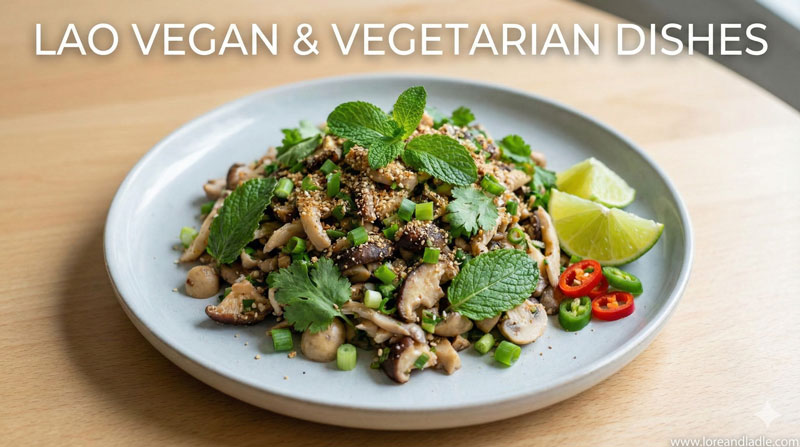
- Mushroom Laap: Finely chopped mushrooms seasoned with lime, herbs, and toasted rice powder. The texture mimics traditional larb while staying fully plant-based, offering a familiar palate of sour, salty, and herbal notes.
- Morning Glory Stir-Fry: Tender stems and leaves sautéed quickly with garlic, chili, and a splash of soy or mushroom sauce. This dish highlights the garden’s greens and a clean, lively finish.
- Eggplant and Tomato Or Lam-Style Stew: A vegetable-forward stew with eggplant, peppers, and herbs simmered in a flavorful broth. The result is comforting warmth with every spoonful.
- Herb-Pilled Sticky Rice Bowls: Steamed sticky rice served with a chorus of herbs, sliced chilies, and a lime-garlic dipping sauce. It’s a simple pairing that feels like a shared family meal.
These dishes emphasize home-oriented flavors: quick preparation, seasonal produce, and a gentle balance of sour, salty, and fresh notes. They invite cooks to honor family tastes while keeping meals inclusive for vegans and vegetarians.
The Role of Rice and Fermentation
Rice is the quiet star in Lao vegan cuisine. Sticky rice anchors meals and pairs with every dish, offering a soft sweetness that complements bold herbs and lime. Fermentation adds depth without heaviness. Fermented bean pastes, small pickles, and toasted rice powder provide savory complexity. Together, rice and fermentation shape a familiar, nourishing experience that feels like home even when ingredients change with the seasons.
The Social Table: Sharing and Rituals
Lao meals are often social events. People gather to prepare, taste, and discuss meals, turning cooking into collaboration. Sharing small plates around the table fosters connection and warmth. The act of chopping herbs, pounding spices in a mortar, and passing a bowl along the line creates a sense of belonging. In this setting, comfort foods carry cultural value by reinforcing family bonds, language of care, and mutual respect around the table.
Bringing Lao Comfort to Your Table
To bring these Lao vegan comfort classics to your own kitchen, start with a simple plan: stock fresh herbs, lime, garlic, and mushrooms; choose a reliable rice variety; and keep a light pantry of fermented or soy-based sauces for depth. Cook with patience, taste as you go, and invite friends and Family to share the process. In doing so, you honor Lao culinary traditions and celebrate the universal joy of meals that taste like home.