
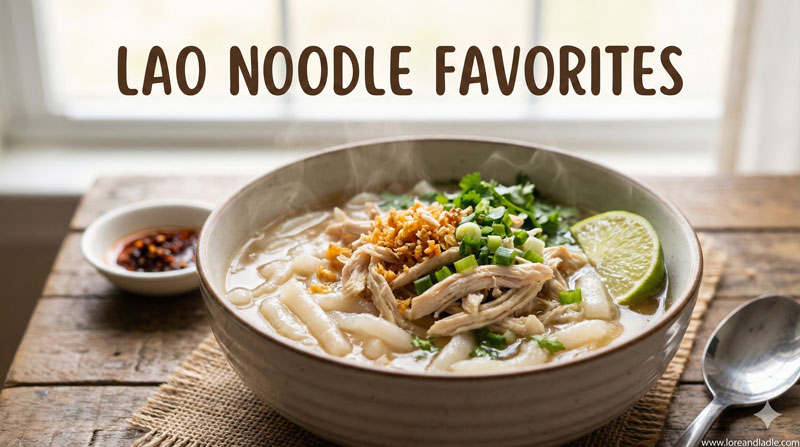
A Warm Welcome to Lao Noodle Favorites
Welcome to Quick Guide to Lao Noodle Favorites for Busy Home Cooks. This post celebrates the cultural value and culinary significance of Lao noodle dishes. It speaks to busy evenings and lively kitchens. These bowls reflect river life, market wisdom, and the joy of shared meals. Each bite tells a gentle story of family, season, and balance.
Core Qualities: Balance and Craft
Lao noodles honor balance in flavor, texture, and aroma. Bright herbs meet mellow broths and gently spiced pastes. Sour, salty, spicy, and savory notes mingle to form harmony. Rice noodles offer a clean, comforting bite that carries sauces and herbs well. Fresh herbs finish the dishes with fragrance and color. The result is food that feels both simple and refined.
Signature Dishes: Khao Piak Sen and Khao Poon
Two beloved Lao noodle favorites anchor this guide. Khao Piak Sen is a soothing rice noodle soup. The noodles are soft and hand-cut, simmered in a clear, comforting broth. Chicken or pork adds warmth, while herbs brighten the finish. Khao Poon is a vermicelli curry soup enriched with coconut milk and a fragrant curry paste. It arrives in a rosy, golden hue and rests on a bed of vegetables. Both dishes showcase how Lao cooking layers textures and flavors. They also reveal a shared love of family-style serving and joyful, sociable meals.
Ingredients that Define Lao Noodles
A few ingredients shape Lao noodle cuisine. Rice noodles form the canvas, offering versatility and light texture. Fresh herbs such as mint, cilantro, dill, and Thai basil lift every bite. Aromatics like lemongrass, garlic, and chili bring brightness. Sauces are usually fish sauce or a salty splash from shrimp paste, balanced with lime juice. In Khao Poon, coconut milk adds softness and depth. Spices and pastes are blended with care, allowing the flavors to mingle without overpowering one another. This careful balance is a signature of Lao noodle culture.
Techniques for Busy Home Cooks
These dishes work well for busy schedules when planned thoughtfully. Start a simple stock on the weekend and use it during the week. When time is tight, opt for store-bought curry paste for Khao Poon and add fresh herbs at the end. Cook noodles al dente and add them just before serving to keep texture lively. Chop herbs in advance and store them in a jar for quick finishing. Use one pot for simmering and a separate pan for a quick protein finish if you like. The result is a flavorful Lao meal with minimal cleanup.
Pairings and Table Culture
Lao noodle meals shine with vibrant herb garnishes and bright acidity. Serve bowls with herbs on the side so everyone can tailor brightness to taste. A simple cucumber or banana blossom salad adds texture and color. These dishes invite sharing, discussion of flavors, and a sense of hospitality. The bowls express care, as each person adds the final herbal touch. This room-temperature approach to serving emphasizes warmth and togetherness.
Quick Menu Ideas for Busy Nights
Plan a fast Lao noodle night in three steps. Step one: brew a light stock and prepare both khao piak sen and khao poon components. Step two: set out herbs, lime, and chili slices for personal finishing. Step three: stir in herbs at the end and serve immediately. A single, well-timed batch can yield multiple dinners, keeping weeknights satisfying and calm. The result is nourishment that respects tradition while fitting modern schedules.
A Closing Note on Cultural Value
Laotian noodle dishes celebrate vitality, family, and place. They connect cooks to rivers, markets, and seasonal ingredients. Their beauty lies in balance, freshness, and the kindness of shared bowls. This quick guide highlights how Lao noodles remain welcoming, expressive, and enduring in today’s kitchens. Enjoy these bowls as a daily ritual of care and cultural pride.