
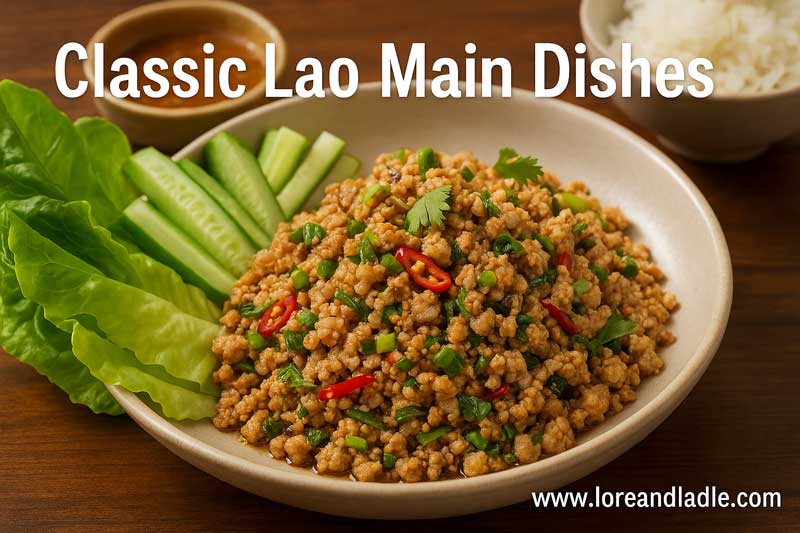
Introduction: Party-Ready Lao Main Dishes for Gatherings
Celebrating Lao cooking means celebrating balance, rhythm, and shared joy. This post introduces party-ready Lao main dishes ideal for game nights and gatherings. Each dish speaks of place, craft, and the warmth of a table kept close. The focus is on cultural value and culinary significance. The goal is to invite everyone to savor bold flavors, fresh herbs, and a sense of community. These mains pair well with the staple sticky rice and a bright herb plate, creating a table that feels welcoming from first bite to last.
Or Lam: A Hearty Lao Main for Sharing
Or Lam is a robust stew from northern Laos. It blends meat with eggplant, leeks, and herbs in a fragrant chili-lemongrass broth. The key is patience: gentle simmering draws out deep flavors while keeping the meat tender. Earthy dill, turmeric, and wood ear mushrooms add depth and aroma. This dish is designed to be shared, with portions sized for generous servings over sticky rice. The aroma rises as the pot simmers, inviting guests to gather around. Or Lam embodies culinary heritage through texture and spice, a true centerpiece for a festive table.
Mok Pa: Fragrant Fish in Banana Leaves
Mok Pa showcases the fragrant bloom of Lao herbs. Fish is marinated with dill, lemongrass, garlic, and lime leaves, then tucked into banana leaves and steamed gently. The banana leaves seal in moisture and perfume the meat with a subtle, herbal steam. Served with steamed rice and a fresh green herb relish, Mok Pa becomes a bright, aromatic main that refreshes the palate between richer dishes. The presentation itself—hand-folded leaves and steaming baskets—adds a festive touch to gatherings. It highlights craftsmanship, balance, and a respect for delicate flavors.
Larb: The Zest and Texture of a Heartier Main
Larb is a bright, textural dish built on minced meat or mushrooms, lime juice, fish sauce, chiles, and a flock of fresh mint and cilantro. For a party main, laab is kept generous and lively. The sour lime and peppery heat wake the senses, while herbs brighten every bite. Crushed toasted rice adds a crisp, nutty note that holds the flavors together. Larb pairs beautifully with sticky rice and cucumber slices for crisp, cleansing contrasts. This dish celebrates technique—seasoning, chopping, and tossing—while inviting guests to savor every fresh layer.
Gai Yang: Char, Smoke, and Comfort
Gai Yang Lao-style chicken is marinated with garlic, lemongrass, coriander, and fish sauce, then grilled over charcoal until the skin is lacquered and fragrant. The frying heat and smoky caramelization create a comforting aroma that signals a shared meal. Sliced and arranged on a platter, the chicken invites guests to assemble bites with sticky rice and a tangy dipping sauce. The method honors outdoor cooking traditions and the joy of gathering around an open flame. Gai Yang is a crowd-pleaser that feels both familiar and celebratory.
The Glue of the Table: Sticky Rice as a Communal Center
Sticky rice, or khao niao, is more than a side in Lao cuisine—it anchors the meal. Its soft bite and ability to scoop up sauces and bits of meat make it ideal for sharing. In gatherings, a large bamboo basket of warm sticky rice serves as the table’s centerpiece. Diners form small portions with their hands, dipping and folding as a group. This practice embodies hospitality and togetherness. The rice ties the mains together, creating harmony across flavors and textures.
Serving for Game Night: Practical Tips
- Plan a cohesive menu: choose 2–3 mains plus a sticky rice centerpiece.
- Prepare components ahead: mok pa can be made and kept cold before steaming; laab can be mixed shortly before serving for crisp freshness.
- Keep sauces bright: offer a lime-chili dipping sauce to brighten each plate.
- Plate for sharing: arrange meats in generous slices; place herbs and rice in the center for Easy picking.
- Mind the pace: alternate hot mains with lightly cooled, refreshing sides to maintain balance.
The Cultural Value: Craft, Community, and Celebration
These Lao mains reveal a culture that values balance—between heat and brightness, between meat and herb, between sharing and savoring. The crafts of marinating, steaming, grilling, and tossing reflect careful attention to flavor and texture. In Lao cooking, meals become events of connection: everyone gathers, tastes, and talks about the layers of spice, sourness, and aroma. The use of fresh herbs, garlic, lime, and fish sauce shows a culinary language that is both simple and sophisticated. In a game night or gathering, these dishes transform food into a social ritual, inviting conversation and mutual appreciation.
Closing: Embracing Lao Flavor at Your Next Gathering
Party-ready Lao mains offer more than sustenance; they invite exploration of aroma, balance, and craft. Or Lam, Mok Pa, Larb, and Gai Yang stand as elegant expressions of Lao culinary heritage. Combined with sticky rice, they create a table that feels rooted, generous, and warm. For your next game night or gathering, these dishes deliver not only flavor but a sense of shared enjoyment and cultural beauty. Enjoy the cooking, the aroma, and the joy of gathering around a table that celebrates tradition with every bite.