
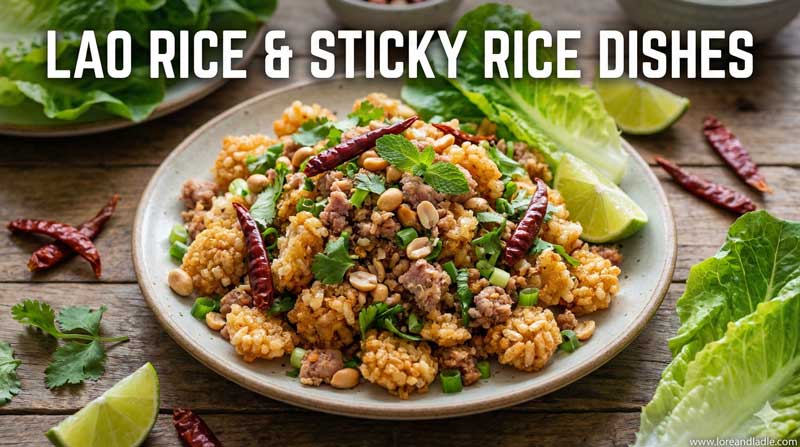
Opening: A Warm Welcome to a Lao Kitchen Favorite
Introducing “Beginner-Friendly Lao Rice & Sticky Rice Dishes Anyone Can Cook” invites you into a beloved Lao dining tradition. This approach centers on khao niaow, the sticky rice that threads meals together. The dish stands at the heart of Lao culture, inviting cooks of all levels to explore simple, meaningful techniques. Here, flavor and ceremony blend, offering both comfort and pride in every bite.
The Heart of Lao Tables: Sticky Rice as Culture
Sticky rice is more than a staple; it is a social practice. In Lao homes, meals begin with the rice. Each grain is prepared to be soft but firm enough to shape into a small ball. Dishes arrive in bright colors and bold textures, but the rice remains the common thread. A single basket of steaming sticky rice sits at the center, ready to be shared. This practice reflects Lao hospitality: food is a gift to guests, and the act of sharing strengthens bonds. The dish we explore honors that generosity, making it accessible for beginners while preserving cultural meaning.
Simple Techniques for Beginners
The beauty of this concept lies in its simplicity. Start with the essentials: sticky rice, water, a steamer or a pot with a tight lid, and a clean cloth or basket for steaming. Soak the rice for a few hours or overnight to loosen the starch. Drain, then steam over simmering water. Steam until the grains are tender, glossy, and just a touch chewy. Fluff gently with clean fingers or a wide spoon. The goal is to keep each grain intact, so the texture remains plump and clingy. With practice, you’ll notice the rice becomes more fragrant and even more enjoyable to shape into small balls for eating with friends and family. This method keeps cooking approachable while honoring the grain’s character.
Flavor Bridges: Pairings, Dips, and Dishes
Beginner-friendly Lao rice pairs well with a variety of flavors. A light jeow—an herb-forward chili sauce—adds brightness without overwhelming the rice. Grilled meats, roasted fish, and fresh greens welcome the rice as a local supporting star. Herb salads with mint, cilantro, and lime enhance the aroma of the steaming rice. Crunchy vegetables provide balance to the soft texture of the grains. The result is a meal where the rice carries the flavors, and every bite feels connected to Lao palate traditions. These pairings demonstrate how flexible the dish is, allowing Home Cooks to adapt with seasonal produce and personal tastes.
Social Life and Hospitality Around the Dish
In Lao culture, sharing sticky rice creates a moment of togetherness. People press small portions of rice into palm-shaped mounds to be picked up with fingers. This tactile approach honors generosity and community. Gathering around a shared plate of rice and complementary dishes turns cooking into a social event. The dish thus serves as both sustenance and social glue, reinforcing polite conversation, attentive hosting, and mutual enjoyment. By presenting and sharing rice in this way, beginners experience a doorway into Lao hospitality—genuine warmth expressed through a simple, well-loved staple.
Accessibility and Culinary Significance for Beginners
Why is this Lao rice concept especially beginner-friendly? Because the core ingredient is forgiving and versatile. It does not demand costly equipment or exact, complex techniques. The steaming method is reliable and scalable. The rice accepts a wide range of flavors, so you can tailor dishes to your pantry. The cultural significance remains strong even as you adjust ingredients. This makes the dish a perfect entry point for cooks who want to respect Lao cuisine while building confidence in fundamentals like texture, aroma, and balance.
A Path to Practice: Practical Steps for Home Cooks
- Gather: sticky rice, water, a steamer or improvised steaming setup, and a clean cloth or basket.
- Soak: rinse briefly, then soak the rice for at least a few hours.
- Steam: drain, steam until the grains are tender and glossy.
- Shape: gently form small rice mounds for easy handling.
- Pair: choose a simple jeow or fresh vegetables to complete the plate.
- Practice: try different timings and depths of steam to find your preferred texture.
Each step connects you with Lao culinary practice without overwhelming you. As you gain confidence, you can expand with additional dips, herbs, and grilled proteins. The dish remains a friendly teacher, guiding you toward a deeper appreciation of Lao food culture.
Cultural Value: Why this Dish Matters
This Beginner-Friendly Lao concept celebrates hospitality, shared meals, and the everyday beauty of Lao cooking. It honors a grain that travels well from field to table and invites cooks to slow down enough to notice texture, aroma, and color. The dish shows how a single staple can shape routines, gatherings, and memories. In this spirit, learning to prepare sticky rice becomes a doorway to understanding Lao values of generosity, balance, and connection with nature and people.
Culinary Significance: The Foodways Behind the Rice
Culinarily, sticky rice anchors flavor, texture, and presentation. Its glue-like quality helps hold bits of meat, herbs, and vegetables together in each bite. The soft chew contrasts with crisp or bright accompaniments, creating a satisfying mouthfeel. The rice also enhances aroma, soaking up sauces and marinade flavors in a gentle way. In Lao cooking, rice is not just food; it is a vessel for stories, seasonal ingredients, and shared delight. This approach makes the dish enriching for cooks who value technique that supports flavor without demanding rigid precision.
Closing: An Open Invitation to Explore
If you are new to Lao cuisine, this dish offers a respectful, joyful entry. It invites curiosity, practice, and mindful tasting. The act of cooking sticky rice for loved ones becomes a small celebration of culture—patient, generous, and delicious. By embracing the steps, partners, and flavors described here, you join a long tradition where food brings people together. Welcome to the world of Lao rice, where every grain carries history, warmth, and a promise of good meals for all.