
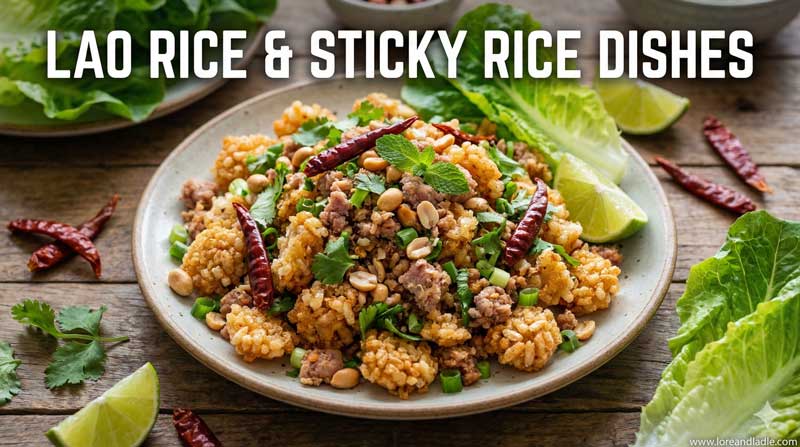
Introduction
Comfort Classics: Lao Rice & Sticky Rice Dishes That Taste Like Home invites you into a warm, intimate corner of Lao culinary culture. Here, rice is more than nourishment; it is a daily ritual that shapes meals, traditions, and shared moments. This collection highlights how Lao rice and sticky rice dishes carry taste, memory, and heart into every family table. You’ll discover why cooks around Laos savor these staples and how a simple bowl can spark conversation, comfort, and connection.
The Heart of Lao Eating: Rice as a Cultural Centerpiece
In Lao cuisine, rice sits at the center of every meal. Sticky rice, known as khao niao, is a prized variety that clings lightly to the fingers, guiding the rhythm of eating. Diners gather around a spread of meats, herbs, and dips, and every bite and pairing reinforces a sense of belonging. The texture—soft, chewy, and a touch sweet—complements bold sauces and bright herbs. This harmony between grain and dish defines the homey feel that Lao meals aim for: nourishment that feels like a hug after a long day.
Texture, Flavor, and Technique: What Makes It Taste Like Home
Sticky rice delivers a unique mouthfeel that ordinary white rice cannot match. The chew and the way each grain traps aroma creates a comforting dining experience. Chefs craft this experience through careful soaking, precise steaming, and gentle handling. The rice is steamed in bamboo or a steamer, then shaped into small portions for easy pickup. Dips and side dishes—fermented sauces, fresh herbs, grilled meats—are designed to pair with the rice so every mouthful blends savory, sour, spicy, and herbal notes. The resulting flavors feel familiar, inviting, and wholesome.
Pairings That Tell a Story
A Lao plate often centers around a balance of textures and flavors. Grilled chicken or pork, pulled or sliced thin, finds harmony with a dab of jeow or other chili-fresh relishes. A bright green papaya salad or a crisp herb salad adds freshness that lightens the meal while staying true to Lao flavor profiles. Fermented condiments lend tang and depth, while fresh herbs like mint, cilantro, and dill brighten each bite. The act of assembling a bite—a chunk of meat tucked into sticky rice with a gentle dip—demonstrates a shared approach to eating: simple elements that sing when brought together with care.
Regional Variations: A Tapestry of Lao Rice Dishes
Across Laos and nearby regions, small differences shape comfort classics. In river towns, lighter sauces and herbal notes may accompany sticky rice, while in highland areas, richer grilled meats and heartier jeow variants appear. Each village or family may have a preferred pairing, yet the unifying theme remains: rice binds flavors, memories, and the sense of home. The variety itself becomes a celebration of local soils, climates, and seasonal produce, all anchored by the familiar comfort of a steaming bowl of sticky rice.
How to Recreate Comfort at Home
To bring this comfort into your kitchen, start with good sticky rice. Soak it adequately, steam until translucent and tender, and serve with a small portion of meat and a selection of dips. Use your hands to roll a bit of rice around a bite of meat and sauce for a satisfying bite. Keep side dishes bright with fresh herbs and crisp vegetables, and let the meal breathe with a light dip or lime squeeze. The goal is not complexity but balance: let each element support the rice and each bite feel warmly familiar.
The Social Value of Comfort Classics
These dishes shine because they invite togetherness. Meals become moments where family and friends share stories, laugh, and savor comfort that feels like home. The gentle ritual of preparing sticky rice, the careful shaping of portions, and the deliberate pairing with sauces all contribute to a dining experience that centers care and hospitality. In this way, Lao rice and sticky rice dishes serve as a daily act of kindness, a steady anchor in the pace of life.
Conclusion
Comfort Classics: Lao Rice & Sticky Rice Dishes That Taste Like Home celebrates not just taste but belonging. The rice-centric meals carry cultural value through texture, technique, and thoughtful pairings. They remind us that food can be a steady, soothing presence—nourishing the body and warming the heart. By embracing these Lao rice traditions, you invite a taste of home into every table and every shared meal.