
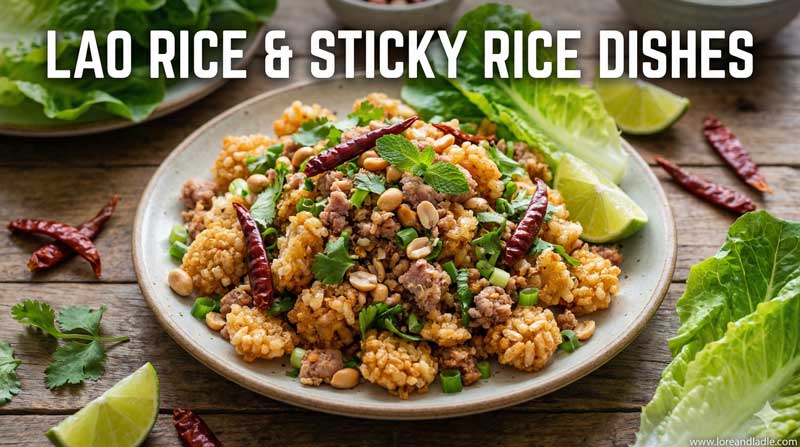
Comforting Lao Rice & Sticky Rice Dishes Ideas for Cozy Dinners invites you to explore a warm, everyday part of Lao food culture. The focus is on the humble rice grain that holds meals together, the chewy grace of sticky rice, and the small, joyful dishes that turn a simple dinner into a memorable moment. This post centers on cultural value and culinary significance, welcoming readers to savor the texture, aroma, and ritual around Lao rice.
The Heart of Lao Tables: Sticky Rice as Cultural Center
Sticky rice, or khao niaw, sits at the center of Lao meals. It is more than food; it Is a shared experience. Diners form small balls with their fingers, then press a bite onto a bite-sized dip or a piece of meat. This tactile act creates a calm pace for the table and for conversation. The rice is often steamed in bamboo baskets, kept warm, and passed around with care. In Lao homes and markets, the presence of sticky rice signals hospitality and comfort. The grain’s gluey texture offers a gentle sweetness that harmonizes with bold sauces. As a staple, it anchors a family meal and invites everyone to participate in the meal’s rhythm. In short, sticky rice is not just nourishment—it is a cultural ritual that unites people at dinner time.
Techniques That Shape Texture: From Soak to Steam
The texture of Lao rice matters as much as its flavor. Traditionally, glutinous rice is washed, soaked, and steamed until it glistens softly. Soaking helps the grains absorb moisture evenly. Steaming heightens fragrance and creates a slightly chewy bite that holds sauces well. The preparation invites patience and care; it rewards attention with a satisfying, liftable grain. Modern cooks often adapt by using a trusty steamer or a rice cooker, but the principle remains: gentle heat, even moisture, and time. The result is a grain that plays beautifully with dips, meats, and vegetables. The technique honors generations of cooks who have perfected balance between texture and taste, making each dinner feel crafted and comforting.
Dishes and Dips: Larb, Jeow, and More
A Lao dinner often features a lively trio: sticky rice, a bright larb-style meat or mushroom salad, and a vivid jeow, or Lao dip. Larb uses minced meat or mushrooms seasoned with lime, fish sauce, chilies, and herbs. It’s light and aromatic, brightened by herbs like mint, cilantro, and scallions. Jeow, a family of chili-based dips, range from green to red and pair well with the rice’s tenderness. Garlic, shallots, and fermented fish sauce add depth without overpowering the palate. For variety, cooks introduce grilled fish, shredded coconut, or roasted vegetables, all balanced by the rice’s chewy sweetness. This trio creates a dinner that feels both simple and sophisticated, celebrating the flavor of fresh ingredients and thoughtful preparation.
The Balance of Flavors: Herb, Spice, and Seasonality
Lao cooking balances sweet, sour, salty, and spicy notes with herbal brightness. Lemongrass, dill, lime leaves, and Thai basil appear alongside cilantro and mint. Galangal and kaffir lime deepen aroma without heaviness. Fresh chilies wake the palate, while palm sugar adds a soft sweetness that rounds sharp flavors. Seasonal vegetables bring crunch and color, from cucumber to green leaf herbs. The cooking emphasizes restraint and harmony. Each bite blends the bright zing of herbs with the mellow chew of sticky rice. This balance creates a comforting, approachable cuisine that feels bright without overwhelming the senses.
Cozy Dinners: Serving, Setting, and Moments of Joy
Comfort comes from more than taste; it comes from the whole dining moment. Serve sticky rice in small baskets or on a large platter to encourage sharing. Small bowls of jeow invite dipping, while a plate of larb offers a hearty option. Fresh herbs sprinkled top-to-bottom bring aroma to the table. For an inviting setting, keep the lighting soft and the table uncluttered. Pair the meal with a light, refreshing beverage such as a citrus-infused water or a mild herbal tea. A quiet, warm ambiance lets conversations flow and enhances the sense of home. The beauty of these dishes lies in their simplicity and the care shown in every component.
Regional Flavors and Diversity: Lao Rice Varieties
Laos presents a variety of regional interpretations, each adding its own touch to the common thread of sticky rice. In some regions, dill and mint appear more prominently; in others, lime leaves and galangal color sauces differently. Rice is grown in diverse soils, and cooks adjust water, heat, and timing to reflect local harvests. This regional diversity enriches cozy dinners, offering subtle differences in texture and aroma while keeping the comforting core intact. The result is a family of dishes that feels intimate, familiar, and regionally rooted.
Practical Tips for Crafting a Comforting Lao Dinner at Home
- Start with quality sticky rice and a simple steam method. Set a gentle rhythm and let the rice rest briefly after steaming.
- Build a small menu around a central larb or a bright jeow, and let the rice anchor every bite.
- Use fresh herbs generously to lift flavors. Mint and dill brighten the dish and invite a second helping.
- Keep dips bright with lime juice and a touch of palm sugar to balance heat.
- Create a calm dining space. A simple table setting and gentle lighting make the meal feel special.
- Enjoy the process as much as the plate. The joy of Lao cooking lies in patience, sharing, and comfort.
In summary, Comforting Lao Rice & Sticky Rice Dishes offers more than nourishment. It invites you into a cultural practice that values sharing, balance, and the quiet joy of a well-prepared meal. The dishes honor tradition while inviting new cooks to discover their own cozy dinner moments. May your table become a warm place where sticky rice binds flavors and memories alike.