
Introduction
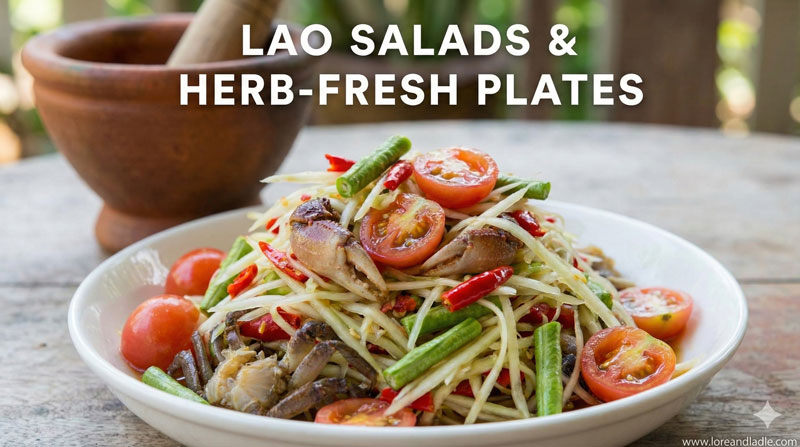
Fresh Herb–Lovers Guide to Lao Salads & Herb-Fresh Plates invites readers into a bright corner of Laos cuisine. This dish is more than a meal; it is a celebration of aroma, balance, and community. Herbs narrate the story here. They lead the palate through citrusy brightness, peppery bite, and cooling freshness. The plate shines when herbs are treated as protagonists, not decorations. In Laos, markets, kitchens, and street stalls all honor the same green notes. This guide focuses on cultural value and culinary significance, showing how a herb-forward approach can define a region’s identity on a plate.
The Herbs at the Heart of Lao Salads
Fresh herbs are the soul of Lao salads. Mint glints with coolness, cilantro and culantro add citrusy depth, and Thai basil lends a peppery sweetness. Dill and chives appear in some regional riffs, offering delicate brightness that brightens meat, fish, or tofu. Lemongrass, lime zest, and lime juice sharpen the herb chorus, while kaffir lime leaves whisper fragrances when included. The herbs are never mere garnish; they shape texture, aroma, and the overall rhythm of the dish. In Lao culture, gathering these greens from a market or a home garden becomes a daily ritual that connects cooks with the land and with neighbors who share tips and harvests.
Techniques That Elevate the Herb-Fresh Plate
Crafting a fresh herb-forward plate relies on thoughtful technique. Tear or gently chop leaves to release essential oils, instead of pulverizing them. Dressings blend fish sauce or salt with lime juice, a touch of chili, and a dash of toasted rice powder for texture. The rice powder adds a subtle nutty crunch that contrasts with the herb softness. Balance is key: bright acidity, savory depth, and a hint of heat should harmonize with fresh greens. Finally, timing matters. Add herbs just before serving to preserve their vibrant color and lively aroma. When done well, each bite feels clean, crisp, and alive.
Cultural Value: Food as a Shared Experience
Lao salads and herb-forward plates are woven into everyday life. They appear at family meals, market gatherings, and festive occasions. The herbs thread through a sense of place, linking cooks to the seasons and to neighbors who exchange tips on growing, harvesting, and preparing greens. These dishes cultivate hospitality: a bowl of herb-forward salad invites others to gather, taste, and share stories. The approach respects local technique, seasonal ingredients, and a philosophy of balance. In this way, the dish embodies Lao culinary philosophy: harmony among flavors, simplicity in practice, and generosity in presentation.
Presenting Lao Salads: Serving and Pairing
Serving is part of the culture. A herb-forward Lao plate often arrives with fresh vegetables, crisp cucumbers, and a side of sticky rice. The herbs provide fragrance and a refreshing contrast to richer elements, such as grilled meats or fish. Pairings lean toward light proteins and bright accompaniments that let the greens shine. Diners enjoy the aroma first, then the texture, and finally the layered flavors on the tongue. This sequence mirrors social meals in Laos, where sharing a well-prepared plate fosters connection and warmth.
Caring for Fresh Herbs: Sourcing and Storage
To honor the dish’s intention, select herbs at their peak. Look for bright color, firm stems, and fragrant leaves. If possible, choose herbs grown locally or seasonally. at Home, store greens with their stems in a jar of water, like a bouquet, and cover loosely with a plastic bag. Change the water daily. Rinse just before use to maintain crispness. By caring for herbs properly, cooks preserve the essential freshness that makes the plate so inviting.
Closing Thoughts
The Fresh Herb–Lovers Guide to Lao Salads & Herb-Fresh Plates celebrates a culinary language where greens speak clearly. It honors Lao traditions of balance, generosity, and shared food experiences. By highlighting herbs as central actors, the dish reveals how a simple combination can convey a region’s warmth and skill. Readers are invited to explore, taste, and enjoy the herb-forward plates that continue to enrich Laos’s rich food culture.