
Introduction
Party-Ready Lao Seafood Specials for Game Night and Gatherings invites you to discover a cuisine that sings with river-harvested freshness, bright herbs, and the shared joy of dining. Lao seafood carries a quiet elegance, built on careful balance and thoughtful preparation. When you plate these dishes for a crowd, you invite guests into a culture where every bite speaks of the land, the water, and the skill of cooks who bring family-style meals to life. The result Is a table that feels warm, welcoming, and deeply respectful of tradition.
Core Flavors and Techniques
Lao cooking centers on harmony. Fresh fish and shrimp meet tangy lime, fiery chilies, and savory fish sauce. Aromatics like lemongrass, garlic, shallots, and herbs illuminate the seafood without overpowering it. A common thread is the use of dipping sauces, called jeow, that provide bright contrasts and invite dipping, scooping, and sharing. Thai and Lao flavors mingle gently here, but Lao taste leans toward clean, bright profiles that highlight the ocean and river sources. The techniques are both simple and precise: steaming fish in banana leaves, grilling over wood or charcoal, and tossing delicate fish salads with crisp herbs. The result is seafood that tastes alive and present on the palate, perfect for social meals.
Crafting a Party-Ready Lao Seafood Platter for Game Night and Gatherings
To assemble a Lao-inspired spread that travels well and serves many, plan in layers:
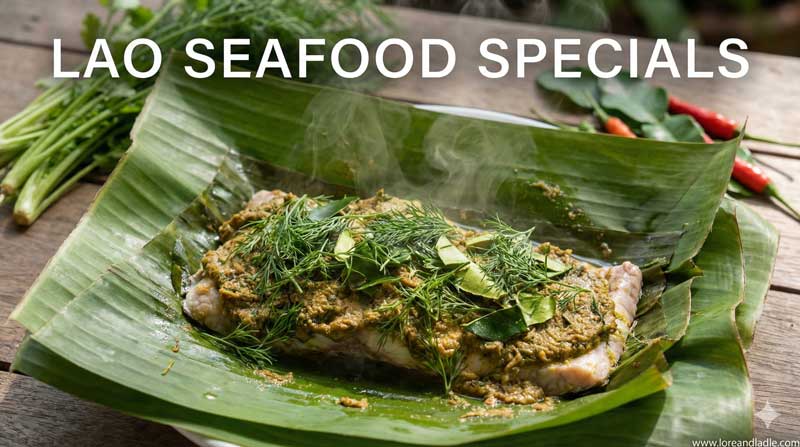
– Choose two cooking methods. Steam a whole fish or fillets in banana leaves (Mok Pa) for fragrance and tenderness. Grill prawns or small fish with a lemony, peppery crust for a smoky finish.
– Build a bright dipping station. Prepare a classic jeow-style chili-lime sauce with cilantro, shallots, garlic, lime juice, and fish sauce. Add a mint- and dill-flecked herb oil for gloss and fragrance.
– Add a spicy-fresh salad. A Laab Pla Duk-style fish salad delivers texture, heat, and citrus lift, balancing heavier platters.
– Round out with sticky rice and fresh vegetables. Sticky rice is the glue that binds the plate, while cucumber, shredded cabbage, and herbs provide crispness.
– Plan service flow. Start with aroma as guests gather, then present the Mok Pa, followed by grilled seafood, and finish with the vibrant fish salad. This sequence invites conversation and shared tasting.
Signature Dishes and Pairings
Here are core Lao seafood elements you can feature, with a sense of how they shine at gatherings:
- Mok Pa (Steamed Fish in Banana Leaf)
-
Silky fish wrapped in aromatic banana leaf, steam-cooked with garlic, lemongrass, and black pepper. The leaf carets moisture and fragrance into the flesh. Serve in halves or portions for Easy sharing.
-
Laab Pla Duk (Spicy Fish Salad)
-
Fresh fish is minced or finely sliced and tossed with lime juice, chilies, mint, cilantro, and roasted rice powder. The result is bright, grassy, and lightly crunchy. It pairs beautifully with sticky rice and cucumber slices.
-
Grilled River Shrimp with Lemongrass and Herbs
-
Whole shrimp or large prawns marinated in a simple blend of lemongrass, garlic, and fish sauce, then grilled until pink and fragrant. A squeeze of lime brightens the finish, making every bite lively.
-
Jeow Dip Ensemble
-
A trio of dipping sauces rounds out the plate: a hot chili-lime jeow, a milder herb-jeow, and a smoky garlic-jeow. Guests can customize each bite and keep conversations going across the table.
-
Fresh Herb and Citrus Finish
- A final touch of dill, cilantro, and fresh lime zest over the platter ties the flavors together, inviting guests to sample with their hands or chopsticks.
The Social Heart of Lao Seafood at Gatherings
Lao cuisine shines most brightly when shared. In gatherings, cooking becomes a warm ritual: families and friends gather around, exchange tips, and celebrate the craft of the cook. The emphasis on communal dining makes seafood feel more generous and approachable. Dipping sauces invite participation, not spectatorship. The act of passing platters, adjusting spice levels for someone’s taste, and offering a slice of Mok Pa embodies hospitality. In this way, Lao seafood is more than a meal; it is a social art, reinforcing conversation, laughter, and connection.
Fresh, Local Ingredients and Seasonality
The beauty of Lao seafood lies in its freshness. River fish, river prawns, and seasonal herbs provide the heart of the dishes. When you source ingredients close to the moment of cooking, the flavors become clearer and more vivid. Lemons or limes offer lively acidity; lemongrass adds a citrus-tinged aroma; fresh mint and cilantro provide bright, cooling notes. The seasonality of fish and herbs shapes the menu and guides how you plate it. A well-curated spread feels alive because it reflects what the water and fields can offer that day.
Hosting Tips for a Memorable Lao Seafood Spread
- Prep ahead with purpose. Clean and portion fish, marinate prawns, and mix jeow sauces a few hours before guests arrive.
- Set up a dipping station. Place jeow varieties, lime wedges, herbs, and sesame or roasted rice powder within easy reach.
- Keep keepsakes on hand. Use banana leaves to present Mok Pa as a focal dish; their aroma enhances the sense of ceremony.
- Balance spice and accessibility. Offer a milder option alongside the fiery sauces so guests of all palates can enjoy the flavors.
- Think about flow. Start with aroma and single-serve portions, then move to shared platters and finally a refreshing herb finish.
- Respect serving temperatures. Grill seafood to a warm, not hot, state for maximum tenderness; keep the salad cool and crisp for contrast.
Conclusion
Party-Ready Lao Seafood Specials for Game Night and Gatherings celebrate the beauty and culinary significance of Lao seafood. The dishes honor a tradition built on fresh fish, vibrant herbs, and thoughtful sharing. When you invite Lao seafood to your table, you invite a culture of warmth, balance, and generosity. The result is not only delicious but deeply connective—an invitation to savor, to share, and to remember how gatherings can become small celebrations of flavor and community.