
Introduction
Welcome to Quick Guide to Lao Soups & Stews for Busy Home Cooks. This article introduces a beloved collection of Lao soups and stews. It celebrates their cultural value and culinary significance. The focus stays on the beauty of the food, the craft of home cooks, and the rhythms of Lao dining. You will find ideas for nourishing meals that fit a busy schedule, without losing the soul of Lao flavors. The dishes shown here honor fresh ingredients, balance, and the joy of shared bowls.
What makes Lao soups and stews special
Lao soups and stews open a window into everyday life. They are flexible, comforting, and deeply local. Cooks rely on seasonal produce, fresh herbs, and simple proteins to build layers of taste. These pots invite conversation around the table and a sense of hospitality. In Lao culture, a well-made broth or stew signals care for family and friends. The dishes teach patience and precision, even when time is short. As a result, the kitchen becomes a place of warmth, nourishment, and quiet pride.
Core ingredients and flavor harmony
The heart of Lao soups and stews is balance. The best bowls mingle sour, salty, spicy, and savory notes with bright aromatics. Key elements include lemongrass, lime leaves or zest, galangal or ginger, and fresh herbs such as cilantro, dill, and mint. Fish sauce or a touch of fermented fish paste adds depth. Chilies wake the broth without overwhelming it. Rice and noodles provide comforting texture, while vegetables and mushrooms bring color and freshness.
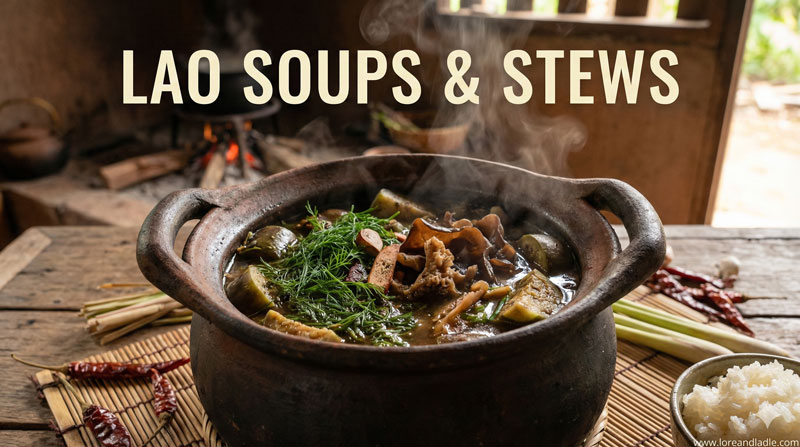
Or Lam stands out as a representative Lao stew. It blends meat or poultry with eggplant, wood ear mushrooms, chilies, and herbs. The result is a fragrant, hearty dish that stays welcoming and bright. Khao Piak Sen is another staple—rice noodle soup with a richly flavored broth. These dishes show how Lao cooks layer aromas and textures to create comforting meals that still feel light and clear in the aroma.
Quick, practical tips for busy home cooks
This guide speaks to busy cooks who want depth without long hours. Use these practical ideas to bring Lao flavor into meals fast:
– Build a simple stock base. A light stock flavored with lemongrass, lime leaves, and garlic serves many soups.
– Layer flavors in stages. Sear aromatics first, then add liquid, proteins, and vegetables in sequence.
– Freeze convenience. Prepare a batch of Or Lam–style broth or a basic Lao seasoning mix, then reheat as needed.
– Use one pot wisely. Start with a quick sauté, add broth, simmer briefly, finish with fresh herbs.
– Finish bright. Add lime juice or fresh herbs at the end to keep the dish vibrant.
– Keep pantry backup. Fish sauce, dried chilies, lime zest, and rice noodles travel well and speed up meals.
Popular Lao soups and stews you can try
These options show the range of Lao soups and stews, with notes on why they matter to the table and culture.
-
Or Lam (the Lao eggplant and meat stew). This dish centers on soft, smoky eggplant, tender meat, and a chorus of herbs. It demonstrates how Lao cooks balance richness with brightness, using herbs to lift every bite. Or Lam invites sharing, as a generous pot can feed a family or a crowd.
-
Khao Piak Sen (Lao rice noodle soup). A comforting, nourishing bowl, it blends a clear, savory broth with soft rice noodles. Fresh herbs and a squeeze of lime brighten the soup right before serving. This dish highlights how a simple recipe can become a daily ritual that gathers people around the table.
-
A quick, herb-forward fish or chicken soup with a light sour note. Think a clear broth scented with lemongrass and dill, finished with lime and cilantro. It shows how Lao cooks adapt a quick format to deliver bright, clean flavor. This kind of soup is ideal for busy days when you want something comforting yet fast.
The cultural rhythm of soups and stews at the table
Soup and stew rituals in Lao homes reflect daily life and seasonal change. A pot on the stove can welcome a family after work or a neighbor stopping by for a chat. The act of sharing a warm bowl reinforces hospitality and care. Each region adds its own herb swirls and ingredient tweaks, creating a living map of flavor that evolves with time and place. In this way, Lao soups and stews connect meals to memory, season, and community.
How to taste, pair, and present
To honor the dish’s cultural value, present soups and stews with intention:
– Serve with sticky rice or fresh rice noodles to soak up every drop of broth.
– Offer a bright finish: lime wedges, chopped cilantro, and fresh dill on the side.
– Keep bowls simple and clean, so the broth’s aroma can shine.
– Encourage a slow, mindful tasting: note the balance of sour, salty, spicy, and herbal notes.
– Pair with mild vegetables or a crisp cucumber salad to contrast textures.
A note on technique and mindset
The beauty of Lao soups and stews lies in their balance and accessibility. You can begin with a modest stock and a handful of herbs. Then you add a protein, a few vegetables, and a splash of lime. The result is a dish that feels crafted and complete. The mindset is steady, curious, and respectful of ingredients. Even on busy days, the ritual of building flavor step by step remains a source of joy.
Conclusion
Quick Guide to Lao Soups & Stews for Busy Home Cooks invites you to explore the cultural value and culinary significance of Lao soups and stews. These dishes celebrate balance, hospitality, and the everyday artistry of Home Cooking. They teach us that nourishment can be quick, yet deeply meaningful. Try Or Lam, Khao Piak Sen, or a simple herb-forward soup this week. Let the flavors connect you to Lao culinary traditions, the beauty of fresh ingredients, and the shared pleasure of a warm bowl.