
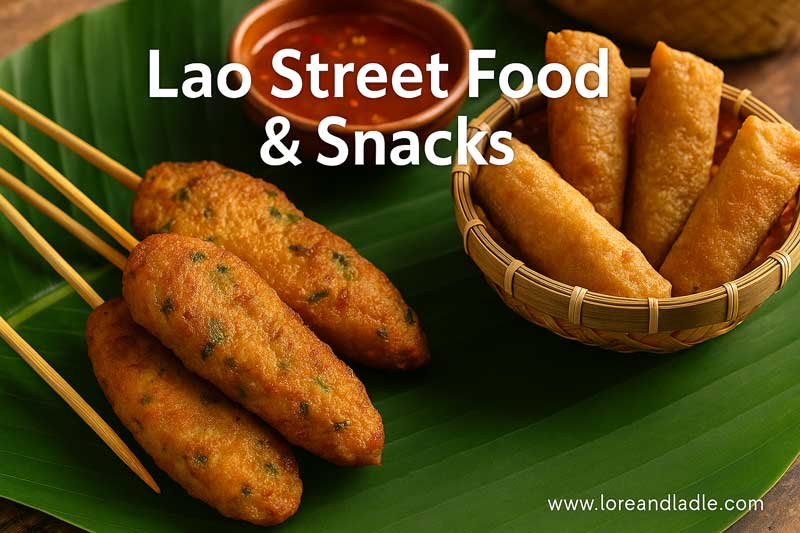
Introduction
Family-Style Lao Street Food & Snacks to Share at the Table invites readers to savor more than flavor. It celebrates a way of eating that centers people, conversation, and a shared sense of hospitality. Lao street food is known for bright contrasts: tangy, salty, spicy, and fragrant herbal notes. In this style, many small dishes sit at the center, inviting guests to sample, compare, and connect. Bites arrive in quick succession, but the return is slow, deliberate, and social. The table becomes a stage for culture, craft, and careful balance. This post highlights the cultural value and culinary significance of this generous format.
The Art of Sharing at Lao Tables
In Lao dining, friends and family gather around a central spread. Dishes arrive in a rhythm that feels welcoming rather than hurried. A bowl of sticky rice anchors the table, its soft grains ready to gather sauces, dips, and grilled morsels. People pass bowls with both hands, offer a smile, and invite others to try a new combination. The act of shared tasting makes every bite a note in a larger chorus. This practice emphasizes connection, respect, and the joy of generosity. The setting itself—low tables, wooden platters, fresh herbs—speaks of fresh, everyday life and a culture that trusts communal joy over solitary indulgence. The result is a meal that tastes like home, wherever the dish travels.
Core Flavors and Signature Dishes
A family-style Lao spread thrives on balance. Larb, a herbaceous minced meat salad, performs with lime juice, fish sauce, and roasted rice powder for a bright, nutty finish. Jeow, a lively chili paste, wakes the plate with heat and herbal brightness. Sai oua, Lao sausage, offers smoky depth and citrusy accents from herbs. Tam mak hoong, a Lao papaya salad, delivers crisp texture and peppery zing. Ping gai and other grilled offerings introduce smoky savor and caramelized edges. These components mingle with fresh greens, herbs, and slices of cucumber, making every bite a study in harmony. The culinary language here favors clear contrasts—hot and cool, soft and crisp, sour and salty—crafted to be shared and balanced at the table.
The Table as a Cultural Canvas
A table spread in Lao street food embodies more than sustenance; it mirrors daily life and seasonal flavors. Bright herbs—mint, cilantro, dill, and river greens—bring perfume and color. Lime wedges, fish sauce, and roasted rice powder provide aroma and texture that wake the palate. The central role of sticky rice ties all dishes together, a versatile partner that soaks up juices and sauces with ease. Colorful plates and wooden serving boards create a visual rhythm that invites the eye to roam the entire spread. The pace of serving—where a new bite arrives as the last one departs—encourages mindfulness and appreciation for the craft behind each recipe. In this setting, food becomes a shared language that celebrates memory, skill, and place.
Craft, Care, and Community
The strength of this approach lies in the care put into each element. Fresh herbs are washed and chopped with intention. Grilled meats are seasoned to reveal depth while staying tender. Fermented or roasted ingredients carry bright acidity or smoky sweetness, enhancing every other bite. Family-style service means Cooks and hosts tailor portions to the table, ensuring there is enough variety for everyone to explore. The result is a meal that feels generous, warm, and accessible. Dishes are not merely eaten; they are felt—through texture, aroma, and the satisfying moment when a new combination appears on the palate.
How to Enjoy with Respect and Delight
To fully enjoy this Lao table, approach with curiosity. Start with small tastes from several dishes, then return to favorites for larger portions. Use the sticky rice as a vehicle to gather sauces and bites without overloading one plate. Welcome herbs and greens that brighten flavors and balance heat. Take time to notice the balance of sour, salty, and herbal notes in each bite. And savor the communal act itself—sharing, passing, and nodding to each other’s preferences. This mindful approach honors the skill of the cooks and the warmth of the table.
A Closing Note
Family-Style Lao Street Food & Snacks to Share at the Table offers more than meals; it offers a way to experience culture through food. The emphasis on sharing, balance, and hospitality reveals the heart of Lao culinary art. By inviting all to participate in tasting, aroma, and conversation, this tradition becomes a living, delicious expression of community. Whether at a bustling market stall or a home dining room, the practice remains a gentle testament to how food can unite, delight, and inspire.