
Welcome: A Look at Best Takeout-Inspired Classic Lao Main Dishes to Recreate in the U.S.
In Lao cooking, takeout favorites carry a special warmth. They mingle bright herbs, bold chili, and a balance of sour, salty, and fresh notes. This post invites you to explore Lao main dishes that often shine in takeout menus and show you how to recreate them at home in the United States. The focus is on cultural value and culinary significance. Each dish reveals how Lao flavors travel, adapt, and celebrate everyday meals with family and friends.
The Heart of Lao Flavor: Balance and Freshness
Lao cuisine centers on balance. The same bite can be tangy, savory, and herb-driven all at once. In many Lao main dishes, a light touch of sweetness sits beside lime, fish sauce, and herbs. Fresh herbs lift the palate, while chili adds warmth without overwhelm. Sticky rice binds flavors and textures in a way that invites slow enjoyment. This harmony makes Lao dishes memorable, even when they begin as everyday takeout-inspired meals.
Larb: A Bright, Ground-Meat Classic
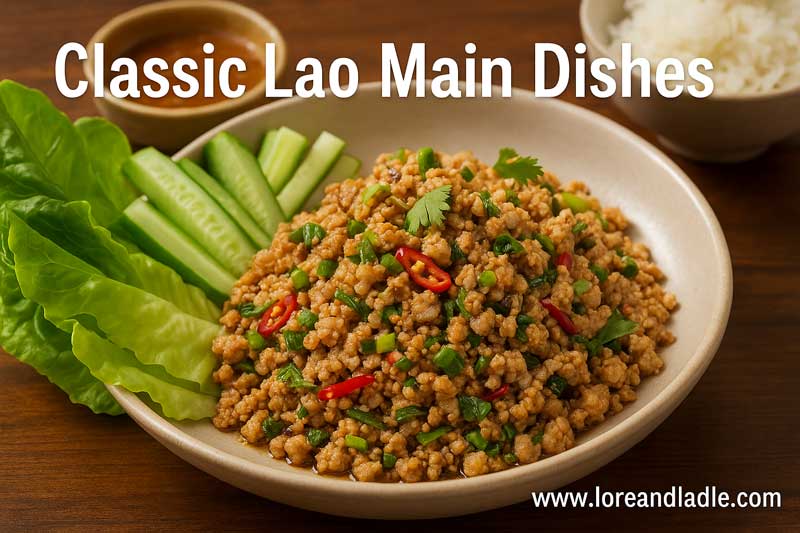
Larb is a cornerstone Lao dish that often appears on takeout menus. It is a bright, tangy, herb-filled meat salad. Ground pork, chicken, or beef is lightly cooked or warmed with a sharp lime juice, fish sauce, and roasted rice powder. The texture is lively, with crisp shallots and fresh mint. Every bite offers a chorus of flavors: sour from lime, salty from fish sauce, and green from herbs. When you recreate larb at home in the U.S., you honor a dish that centers communal eating and quick, satisfying meals. Serve with sticky rice or lettuce wraps, and let guests scoop and mix themselves. The dish’s simplicity and depth make it a natural ambassador for Lao culinary culture.
Mok Pa and Other Steam-Cooked Masterpieces
Mok Pa is a steamed fish dish flavored with herbs and spices, often wrapped in banana leaf. This technique preserves delicate fish flavors while inviting aromatic notes from lemongrass, dill, ginger, and shallots. In takeout circles, Mok Pa appears as a fragrant, elegant main option. Recreating it at home emphasizes the Lao reverence for fresh ingredients and careful steaming. The banana leaf wrap is not just a package; it is a way to concentrate aroma and moisture, delivering a soft, fragrant bite that speaks to Lao hospitality and careful cooking.
Or Lam: A Hearty, Herb-Loaded Stew
Or Lam is a deeply comforting Lao stew that typically features meat slow-simmered with eggplant, herbs, and fragrant spices. Its depth comes from layering flavors—bright herbs at the end, a gentle richness from the meat, and a subtle warmth from chili and pepper. Takeout versions often arrive as a one-pot meal that warms the heart. Recreating Or Lam in a home kitchen highlights Lao techniques for building softness and complexity, while keeping the dish approachable for weeknight cooking. It is a reminder of how Lao cooks coax tenderness from humble ingredients.
Khao Piak Sen: A Slurping Noodle Main
Khao Piak Sen is Lao noodle soup that can read as a main dish when served with generous toppings. The broth is comforting and clear, with soft noodles and crisp vegetables or herbs on top. In takeout experiences, the aroma of broth and the comfort of noodles make it a go-to choice. In your kitchen, you can tailor the broth to your preferred depth, balancing savoriness with bright herb notes. The dish shows how Lao cuisine blends texture and warmth, inviting slow enjoyment and mindful slurping.
Signature Techniques That Travel Well
- Fresh herb finish: Mint, cilantro, and Thai basil add brightness just before serving, preserving fragrance.
- Roasting and grinding: Toasted rice powder (khao khua) adds a warm, nutty bite to larb and other dishes.
- Fish sauce and lime balance: A careful blend of salty and sour makes Lao flavors sing.
- Gentle heat: Chilis are layered to build warmth without dominating the dish.
- Textural variety: Crunchy herbs pair with tender meat and silky noodles for a complete mouthfeel.
These techniques travel well. They help takeout-inspired Lao dishes come alive again in home kitchens across the United States, preserving cultural meaning through every bite.
Key Ingredients That Define Lao Main Dishes
- Sticky rice: The anchor of many Lao meals, providing texture and a satisfying foundation.
- Fish sauce and lime juice: The core salty-sour duo that shapes many profiles.
- Fresh herbs: Mint, cilantro, and basil bring brightness and aroma.
- Lemongrass, dill, and garlic: Aromatic notes that lift stews and grilled meats.
- Chili and spices: A measured kick that invites rather than overwhelms.
- Roasted rice powder: A toasty, nutty element that enhances larb and similar dishes.
- Banana leaves and gentle steaming: For fragrant cooking and presentation in Mok Pa-style preparations.
By focusing on these ingredients, home cooks can capture the essence of Lao main dishes while adapting to pantry availability in the United States. The result is a respectful and flavorful homage to Lao culinary craft.
Serving Traditions That Enrich the Experience
Lao main dishes are often shared and enjoyed with family or friends. A plate of larb may be paired with sticky rice, fresh herbs, and crisp vegetables for a complete meal. A warm bowl of Or Lam invites slow sipping and conversation as the stew thickens with herbs. The act of gathering around a table, assembling bites, and savoring contrasting textures deepens appreciation for Lao food culture. When you recreate these dishes at home, you join a tradition of care, hospitality, and mindful cooking.
Practical Tips for Recreating These Dishes in the U.S.
- Start with a simple larb: choose ground meat, lime juice, fish sauce, and mint. Toasted rice powder adds the essential finish. Serve with sticky rice and fresh herbs.
- For Mok Pa-style flavors, use firm white fish, herbs, and a gentle steaming method. If banana leaves are unavailable, you can wrap in parchment and steam for a similar aroma.
- When cooking Or Lam, select a lean cut of meat and allow a long, gentle simmer with eggplant and herbs to develop depth.
- Build a small herb garden or windowsill assortment. Fresh mint, cilantro, and lemongrass elevate any Lao dish.
- Taste as you go. Lao cooking rewards balance and restraint. Adjust lime, fish sauce, and chili gradually to reach the ideal harmony.
A Kitchen Shelf for Lao Flavor
- Sticky rice or jasmine rice
- Fish sauce and lime juice
- Fresh herbs: mint, cilantro, Thai basil
- Lemongrass and garlic
- Shallots and chili peppers
- Roasted rice powder
- Banana leaves or parchment for steaming
- Firm white fish or ground meat of choice
- Eggplant and greens for stews
With these essentials, you can explore a range of Lao main dishes and adapt to your cooking rhythm. The result is a meaningful connection to Lao flavors and kitchen traditions.
Why These Dishes Matter: Cultural Value and Culinary Significance
- Community through shared meals: Lao main dishes are often prepared for gatherings. They invite conversation, passing bowls, and enjoying together.
- Respect for ingredients: Lao cooking highlights fresh vegetables, herbs, and protein in harmony. Each ingredient has a purpose, and the combination honors its role.
- Culinary craftsmanship: Techniques like gentle steaming, careful pounding of spices, and balancing flavors show a thoughtful craft that rewards patience and practice.
- Flavor storytelling: Each dish tells a story of seasonality, region, and technique. Recreating them preserves a narrative of taste that passes from kitchen to kitchen.
- Accessibility and creativity: The set of dishes is approachable for home cooks. The idea of “takeout favorites at home” encourages experimentation while staying true to core flavors.
Embracing the Experience: A Respectful, Non-Political Celebration of Lao Cuisine
This blog post centers on the beauty of Lao dishes and their culinary significance. The goal is to celebrate flavors, techniques, and the joy of home cooking. It is a neutral, non-political invitation to explore Lao main dishes that many people love from takeout menus and to recreate them with care in U.S. kitchens. By focusing on taste, texture, and cultural meaning, you can enjoy a meaningful culinary journey that honors Lao food culture.
Final Thoughts: Savor the Craft, Celebrate the Table
Best Takeout-Inspired Classic Lao Main Dishes to Recreate in the U.S. invites you to discover how Lao flavors travel from market stalls to home kitchens. The dishes blend brightness, warmth, and texture in ways that feel both comforting and inspiring. As you cook, you honor a tradition built on balance, hospitality, and the simple joy of sharing a well-prepared meal. Welcome these dishes into your cooking routine, and let every plate tell a small story of Lao culinary artistry.