
Restaurant-Style Lao Vegan & Vegetarian Dishes You Can Recreate at Home
In Lao cuisine, meals are a celebration of balance and seasonality. The restaurant-style dishes you can recreate at Home illuminate a culture that honors fresh herbs, precise textures, and the harmony between bold flavors and gentle comfort. This post explores the cultural value and culinary significance of Lao vegan and vegetarian dishes, showing how plant-forward plates carry memory, tradition, and artistry from the kitchen to your table.
The heart of Lao dining: rice, herbs, and shared plates
Central to Lao meals is sticky rice, a symbol of community and togetherness. When shared around a mat, bowls of vegetables, pickles, and condiments become a chorus of color and scent. In vegan and vegetarian Lao dishes, the rice serves as a canvas for bright herbs, tangy dips, and slow-cooked vegetables. The practice of pairing textures—crunchy roasted rice powder with tender vegetables, silky noodles with crisp herbs—highlights a culinary philosophy: food should wake the senses, invite conversation, and nurture the body. These plates carry a quiet dignity, inviting cooks at home to honor the same values found in a bustling Lao restaurant.
Core ingredients that define Lao vegan cooking
Lao flavor comes alive through a few reliable staples:
- Sticky rice for fullness and balance.
- Fresh herbs: dill, Thai basil, mint, cilantro, and green onions.
- Aromatics: lemongrass, shallots, garlic, and chilies.
- A roasted rice powder (khao khua) for texture and a toasty note.
- Vegetable toppings and dips (jeow) that offer bright acidity and heat.
- Plant-based proteins such as mushrooms, tofu, or tempeh to mimic savoriness.
Together, these elements create dishes that are vibrant yet grounded. The care shown in selecting herbs and arranging colors on the plate reflects a culture deeply connected to the land and to the people who share meals.
Signature dishes you can recreate at home
Below are accessible, restaurant-inspired Lao vegan and vegetarian dishes. Each can be adapted to home cooking while preserving cultural essence.
-
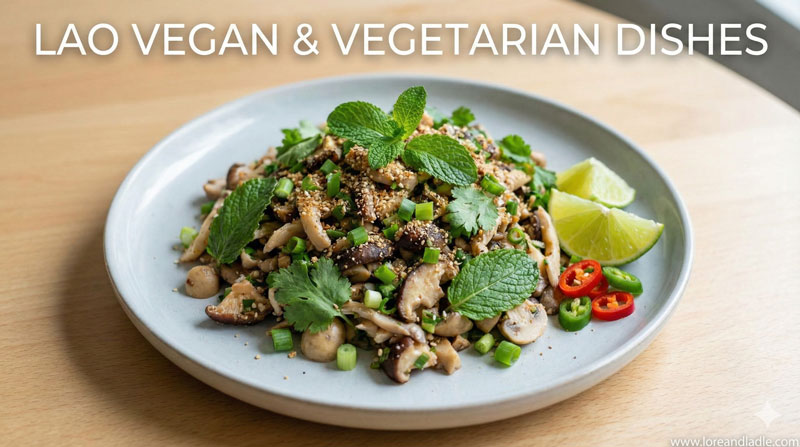
Larb Mushrooms (Larb Hed): In many Lao homes, larb is a centerpiece. For a vegan version, crumble sautéed mushrooms or crumbled tofu and fold in lime juice, roasted rice powder, shallots, chilies, mint, cilantro, and green onions. Serve with sticky rice and a fresh herb salad. The result is a bright, meaty texture without animal products, yet full of tradition and punchy aroma.
-
Tam Mak Hoong (Green Papaya Salad) – Vegan Style: Traditional tam mak hoong blends shredded green papaya, tomatoes, green beans, and chilies with a sour-salty dressing. Omit fish sauce and dried shrimp, using soy sauce or a dash of miso for depth. Add lime juice, palm sugar, roasted peanuts, and a splash of chili vinegar if you like extra tang. This dish demonstrates how Lao flavors can shine without meat, while staying true to regional balance.
-
Or Lam (Laotian Vegetable Stew): Or Lam is a heartwarming stew built from mushrooms, eggplant, green beans, and winter greens, simmered with lemongrass, chilies, and herbs. Use vegetable broth and miso or mushroom sauce to deepen the flavor. The slow simmering magnifies the fragrance of herbs and creates a comforting, restaurant-like finish that still resonates with home-cooked warmth.
-
Lao-style Noodle Soup (Khao Poon-inspired, vegan): A vegan version of Lao vermicelli soups emphasizes coconut milk, lime, herbs, and a medley of vegetables. Use mushroom broth as a base, add coconut milk for richness, and finish with fresh greens, cilantro, and a squeeze of lime. This dish shows how Lao tradition can translate into a comforting bowl that suits modern kitchens.
-
Jeow and Vegetable Plaques: Jeow dips—hot chili sauces with a brightness of lime and herbs—complement fresh vegetables and sticky rice. A vegan jeow can pair well with raw cucumber, lettuce, or steamed greens, turning simple vegetable platters into a restaurant-style experience at home.
-
Nam Khao-ish Crispy Rice Salad with Tofu: Traditionally made with crispy rice and pork, a vegan version uses crunchy fried tofu cubes, crisp lettuce, herbs, and a tangy dressing. The dish emphasizes textures and contrasts, a hallmark of Lao cuisine’s appeal.
Techniques that elevate home cooking to restaurant levels
- Master the balance of textures: Use roasted rice powder for a snappy bite in larb and other salads.
- Embrace fresh herbs: Finely chop herbs to release fragrance, then fold them gently into dishes.
- Use a mortar and pestle when possible: It releases aroma and softens aromatics like lemongrass and chilies, a technique valued in Lao cooking.
- Layer flavors with careful timing: Add sour elements (lime juice or vinegar) toward the end to preserve brightness.
- Plate with intention: Arrange vegetables in color blocks, top with herbs, and offer a small bowl of jeow for dipping.
- Cook with clarity: Short, precise steps keep the dish vibrant and true to its roots.
Plating and presentation: honoring Lao aesthetics at home
In Lao cuisine, presentation mirrors hospitality. A colorful plate with sticky rice at the center, surrounded by bowls of larb, papaya salad, and a small jeow, invites guests to mix and match. A simple garnish of fresh herbs and a lime wedge finishes the dish with a fragrant touch. This approach respects the Lao principle of balance and sharing, making every home meal feel like a dining experience in a Lao restaurant.
A practical home menu: planning a Lao vegan meal
- Starter: A Jeow trio (hot chili dip) with fresh vegetables and steamed greens.
- Main 1: Larb Mushrooms served with sticky rice and herb salad.
- Main 2: Or Lam-style Vegetable Stew with crusty bread or more sticky rice.
- Side: Tam Mak Hoong with extra roasted peanuts for texture.
- Finish: A light coconut-based noodle soup or a citrusy herbal tea.
This menu demonstrates how a cohesive Lao vegan meal can unfold across courses, keeping the flavors bright, the textures varied, and the cultural spirit intact.
The cultural value of Lao vegan and vegetarian dishes in modern kitchens
Lao vegan dishes carry cultural value by preserving regional flavors while inviting Home Cooks to participate in a centuries-old culinary conversation. They teach balance—between sour and salty, hot and cool, soft and crisp. They celebrate seasonal produce and the accessibility of plant-based ingredients, reminding us that nourishment and artistry can coexist beautifully. By recreating these dishes at home, you become part of a living tradition that respects farmers, markets, and families who share meals with care.
Final thoughts: inviting curiosity and continued exploration
The beauty of Lao vegan and vegetarian cooking lies in its clarity and generosity. Each dish invites you to slow down, season thoughtfully, and savor the harmony of herbs, spice, and texture. As you experiment, you’ll discover how restaurant-style Lao flavors can thrive in everyday kitchens, celebrating cultural value through simple, memorable meals. Let your home be a place where this cuisine is honored, learned, and enjoyed with warmth.