
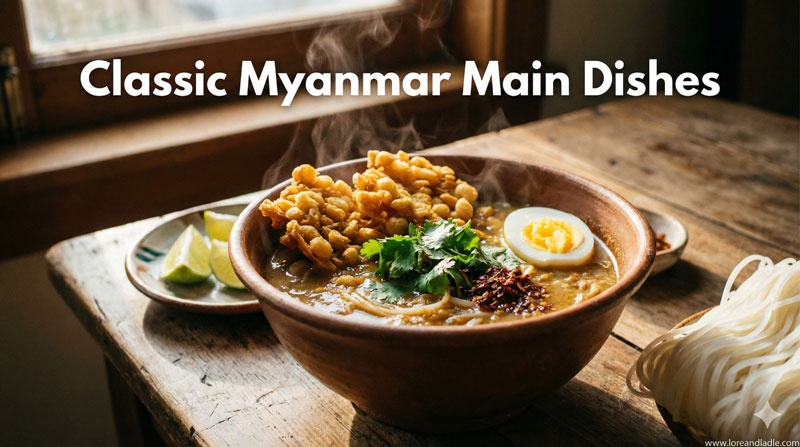
Make Classic Myanmar Main Dishes the Star of Your Next Gathering: A Cultural Introduction
Myanmar’s main dishes carry the rhythm of its markets, rivers, and homes. They invite sharing and conversation. When you center these dishes at a gathering, you invite a story to the table. The flavors tell of careful work with simple ingredients. They reveal a culture that honors time, technique, and hospitality. This post explores How to celebrate classic Myanmar main dishes with warmth and respect. You will see how culinary craft meets social meaning.
The Cultural Value of Myanmar Main Dishes
Food in Myanmar is more than sustenance. It is a daily practice of care and connection. Main dishes often anchor meals that gather family and friends. People prepare them with patience, balancing sweetness, sourness, saltiness, and heat. This balance reflects a neighborly spirit: listening to each other’s tastes, adjusting a recipe, sharing bowls, and enjoying conversation. When these dishes become the centerpiece, meals transform into rituals of welcome. The act of serving a dish with pride honors the cooks and the guests alike. In every bite, you taste place, memory, and craft.
Core Flavors and Cooking Techniques
Classic Myanmar main dishes rely on a few generous building blocks. Rice plays a central role, offering a neutral stage for richer curries and tangy accompaniments. Fermented fish paste, known as ngapi, adds a distinctive depth for some curries and sauces. Coconut milk often lightens and rounds spice, while turmeric and lemongrass brighten the palate. Fresh garlic and shallots bring warmth, and chili adds gentle heat rather than overwhelming fire. Tamarind or lime can add a bright sour note that lifts the dish.
Techniques center on patience and layering. Slow-simmered curries develop character as aromatics bloom in oil. Braising meat until tender creates a deep, comforting bite. Stir-fried or quick-seared proteins retain their fresh texture and color. Fish from rivers and seas lends a clean, delicate sweetness when handled with care. Each dish showcases how simple methods, chosen ingredients, and calm timing can produce depth and harmony.
Regional Voices on the Plate
Myanmar’s regions contribute unique shades to the same family of dishes. The delta and coastal towns emphasize lighter, coconut-inflected curries and seafood. Hill towns bring heartier flavors with herbs and root vegetables grown in higher altitudes. In cities, chefs blend tradition with modern technique, preserving the essence of the classics while inviting new textures and presentations. This regional variety enriches any gathering, offering guests a tasting journey without leaving the table.
Bringing the Dishes to the Table: Presentation and Sharing
To make classic Myanmar main dishes the star, think about the table as a stage for sharing. Bowls are generous, and portions invite guests to sample and compare. Condiments such as fresh herbs, lime wedges, sliced chilies, and crisp vegetables provide bright accents. A simple platter of rice supports the main dishes and helps balance flavors. Consider serving sauces and sambals in small bowls so guests can adjust the intensity to their liking. The act of passing dishes and exchanging plates deepens the sense of community that small gatherings cherish.
Planning a Gathering Around Classic Dishes
Here is a practical approach to hosting with these dishes as stars.
- Choose 2–3 main dishes. Pick one fish or seafood option, one meat option, and a vegetarian-friendly dish if needed. This variety keeps flavors distinct and balanced.
- Build supporting sides. A bright salad, a tangy pickle, and steamed rice or sticky rice create a complete plate.
- Think about timing. Start with slow-cooked curries early, then finish with quick sautés or fresh garnishes before serving.
- Pair thoughtfully. Favor cool beverages and light herbs that cleanse the palate between rich bites.
- Present with care. Use warm bowls, fresh herbs, and simple garnishes to highlight color and texture.
This approach keeps the focus on the dishes’ beauty and craft while making the gathering comfortable and inviting.
A Note on Respectful Enjoyment
Enjoying these dishes is a moment to honor the cooks and the culture. Listen to how flavors unfold and appreciate the balance of ingredients. When you share a dish, you share a memory. Small acts—arranging bowls neatly, offering seconds, thanking the cook—renew the sense of hospitality that anchors Myanmar’s food traditions. A mindful table makes every bite more meaningful.
Conclusion: The Beauty of Sharing Food
Classic Myanmar main dishes offer more than taste. They embody care, technique, and community. By making them the star of your next gathering, you invite guests to explore a culture through its cooking. The dishes reward patience, curiosity, and generosity. Enjoy the flavors, the stories, and the smiles around the table. In this way, food becomes a bridge between table and tradition, inviting everyone to partake in a shared and lasting experience.