
Introduction: A Modern Look at a Classic Pair
Modern Take on Shashlik – Uzbekistani Rice & Pilaf Specialties Flavor You’ll Love invites readers to a table where two beloved traditions meet. The dish blends the smoky charm of shashlik with the fragrant depth of Uzbek pilaf. It honors time-honored methods while inviting new flavors for today’s kitchens. The result feels fresh, welcoming, and deeply rooted in everyday gatherings.
The Heart of Uzbek Hospitality: Shared Meals and Craft
In Uzbek culture, meals are moments of connection. Families and friends gather, stories flow, and the kitchen hums with care. The act of preparing food becomes a way to honor guests and kin. This dish echoes that spirit. It centers on generosity, balance, and the happiness found in sharing generous portions of rice and meat. Each serving becomes a small ceremony of hospitality, a reminder that food binds people through taste and memory.
Core Ingredients and What They Signify
Uzbekistani rice forms a bright, fragrant canvas. Long-grain rice stays light and fluffy when cooked with patience. Carrots cut into thin matchsticks bring sweetness and color, a signature touch in osh (pilaf). Meats such as lamb or beef provide depth, while onions offer sweetness and aroma. Aromatics like cumin seeds, coriander, and black pepper lift the dish with warmth. Optional touches—barberries for a tangy note or saffron threads for a sunny hue—highlight regional variations. Together, these ingredients tell a story of harvests, markets, and careful preparation.
Techniques that Tie Past to Present
The classic plov method features careful layering and toasting. First, cooks heat oil or animal fat, then gently caramelize onions for sweetness. Next, they briefly toast spices to wake their oils. Carrots follow, bringing color and sweetness. Rice is added with measured water and steam finishes the dish. This sequence creates distinct textures: a crisp edge on some grains, a tender core, and a fragrant, slightly nutty aroma. The modern version keeps the soul of this technique while allowing lighter fats or alternative grains to suit today’s kitchens. The result is consistently fragrant, evenly cooked, and comforting to the eye.
Shashlik’s Charcoal Charm and Its Culinary Rhythm
Shashlik adds a smoky, grilled contrast that brightens the plate. Skewered meat marks and juicy textures bring a lively counterpoint to the soft, steamed rice. The pairing of grilled meat with pilaf creates a dynamic rhythm: first a bite of crisp, charred exterior, then a spoonful of tender rice. This balance highlights how fire and flame can enhance flavor, color, and aroma. It also underscores a shared sense of outdoor cooking as a cherished, communal activity that brings people together.
The Modern Take: Elevating Flavor Without Losing Roots
The modern interpretation respects tradition while inviting contemporary flavors. A touch of dried barberries or a whisper of saffron can brighten the pilaf’s profile. Fresh herbs, like dill or parsley, offer brightness after serving. Some cooks introduce a light glaze or a hint of citrus to refresh the dish’s finish. Yet the essence remains: rice that glows with spice, meat that tastes of hearth and smoke, and vegetables that lend color and sweetness. This balance preserves cultural value while making the recipe approachable for today’s Home Cooks.
Texture, Aroma, and Sensory Pleasure
Texture matters as much as taste. The rice should be fluffy, with each grain distinct. Carrots add a soft crunch and a warm sweetness. Onions contribute a mellow depth. The meat should be tender, with a pleasing bite. Aroma plays a leading role: the toasty perfume of cumin, the caramel notes from fried onions, and the smoky edge from grilled meat mingle in a welcoming scent. Together, these elements create a memorable, multi-sensory dining experience.
Serving Traditions and the Joy of Sharing
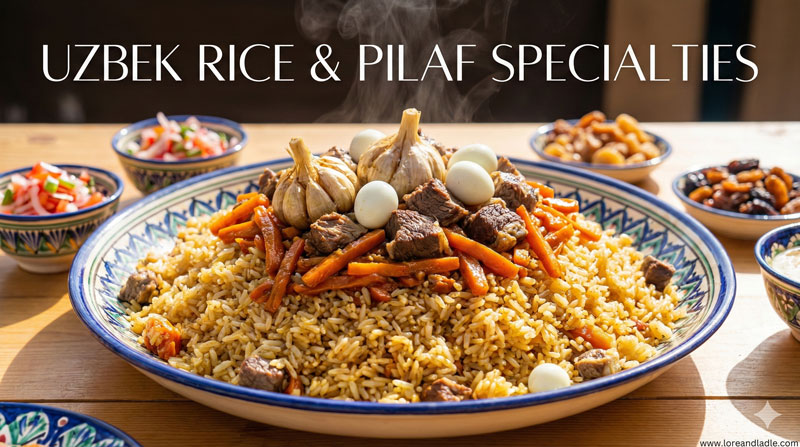
Serving is as important as cooking. A large communal platter invites close friends and family to gather around. Slices of meat rest on top of or beside the fluffy pilaf, making it easy for everyone to choose a preferred bite. Fresh herbs, garlic, and crisp vegetables greet the eye. The act of portioning and passing the dish along reinforces bonds and hospitality. This ritual is a living memory of how Uzbek cuisine brings communities together.
A Flavor Bridge Across Kitchens
Though rooted in Uzbek traditions, this dish welcomes cooks from all backgrounds. The modern approach makes it accessible without losing its cultural value. Simple ingredients, clear steps, and dependable techniques empower home cooks to recreate a sense of place in their own kitchens. In this way, the dish becomes a flavorful bridge between generations and between kitchens worldwide.
Pairings, Presentation, and Practical Tips
- Pair with a bright salad of radish, cucumber, and fresh herbs for contrast.
- Offer a yogurt or sour cream drizzle to balance richness.
- Keep a warm serving tempo; plate portions while the pilaf stays fluffy.
- Use a wide, shallow pan to allow even heat distribution and better aroma release.
A Sense of Place in Every Bite
This dish celebrates the beauty of Uzbek cuisine: careful planning, respectful techniques, and a generous spirit. Each element—rice, carrots, meat, and spices—speaks of harvest, craft, and care. The modern rendition honors those values while inviting new flavors and textures. The result is a dish that feels both timeless and alive, a testament to how food carries culture forward with grace and joy.
Conclusion: A Welcoming Culinary Story
The Modern Take on Shashlik – Uzbekistani Rice & Pilaf Specialties Flavor You’ll Love offers more than taste. It provides a narrative of hospitality, technique, and shared memory. By combining pilaf’s fragrant base with the char and charm of shashlik, it creates a dish that invites conversation, brings people together, and honors a rich culinary heritage. In every bite, you taste care, culture, and the enduring magic of Uzbek cuisine.