
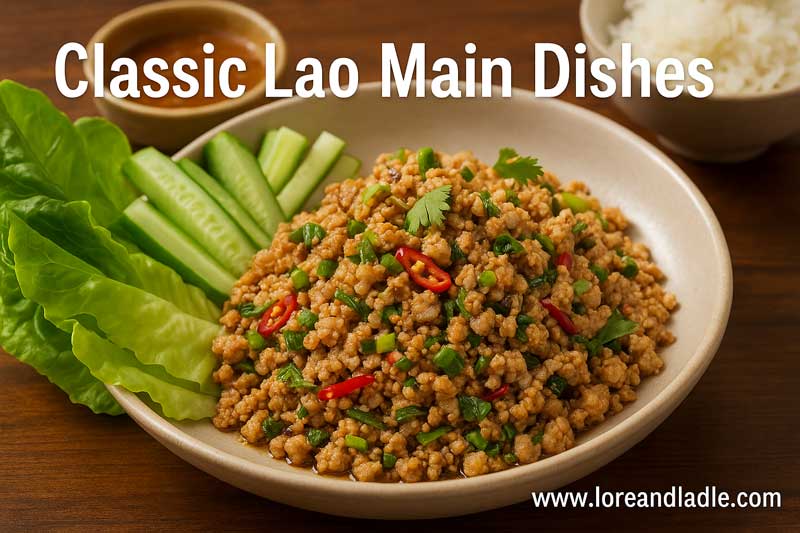
A Welcome to Creative Classic Lao Main Dishes with Modern Twists
This collection invites you to explore Lao main dishes reimagined with Modern Twists. The goal is to honor flavor, craft, and cultural meaning. Creative Classic Lao Main Dishes with Modern Twists stays rooted in Lao ingredients while inviting contemporary technique and creative plating. The result feels both timeless and fresh on the plate. Each dish tells a story of markets, home kitchens, and shared meals. This post focuses on cultural value and culinary significance, celebrating the beauty of Lao food without drifting into politics or controversy.
The Soul of Lao Main Dishes: Balance, Freshness, and Family
Lao meals hinge on balance. Sour, salty, spicy, and aromatic notes meet bright herbs and clean textures. Fresh ingredients take center stage. Family life surrounds and sustains the dining table, and meals become moments of connection. In Creative Classic Lao Main Dishes with Modern Twists, that spirit remains intact. The twists preserve core values while inviting new textures, colors, and sensory delight. The result is plates that feel rooted in tradition yet inviting to curious diners.
Core Elements: Staples That Ground Lao Flavors
Several elements anchor Lao flavor across dishes. Sticky rice is the heart of Lao dining. It binds the meal and invites shared tasting. Fish sauce provides depth and umami, a quiet backbone for many dishes. Lime juice brings brightness and a precise tartness. Fermented pastes, such as jeow, add warmth and peppery nuance. Fresh herbs—dill, mint, cilantro, and Thai basil—lift every bite with vibrant aroma. A touch of roasted rice powder adds a nutty finish and a subtle snap. Chili peppers supply the familiar heat Lao cuisine cherishes. Meat or fish serves as a reliable center, often prepared with care to stay tender. These staples anchor every twist, ensuring authenticity remains intact even as the plate evolves.
Modern Twists: Elevating Tradition with Thoughtful Techniques
Modern twists seek enhancement through technique and presentation while honoring the heart of the dish. Grilling, smoking, or a gentle sear amplifies aroma and depth. Crisp toppings and textures provide contrast to tender main elements. Quick pickles and light ferments introduce brightness and tang. Plating places color, form, and rhythm at the forefront, inviting the eye to travel across the plate. Plant-based adaptations expand options without compromising flavor. In practice, a traditional larb might gain a delicate crunch from roasted rice powder and a drizzle of herb oil, while a tam mak hoong receives a refined glaze that accentuates lime and fish sauce notes. The goal is harmony between innovation and respect for tradition.
Cultural Value: Food as a Shared Experience
Food in Lao culture goes beyond taste; it is an act of warmth and welcome. Meals bring people together, inviting stories, laughter, and gratitude. Sticky rice becomes a common ground where bowls and hands meet in a gentle, rhythmic flow. Sauces and dips circulate, inviting everyone to tailor each bite. Creative Classic Lao Main Dishes with Modern Twists honors that generosity by offering plates that feel personal and communal at once. The result is meals that linger in memory for flavor as well as the sense of belonging they cultivate.
Culinary Significance: Techniques, Presentation, and Sensory Harmony
Culinary significance in Lao-inspired modern dishes rests on thoughtful balance and sensorial harmony. The mix of sweet from a hint of palm sugar or roasted rice powder, sour from lime, heat from chilies, and salt from fish sauce creates a signature profile. Fresh herbs deliver aroma and brightness, while textures range from succulent meat to crisp garnishes. Visual presentation matters; color, shape, and arrangement convey the story of Lao cuisine. The modern twists add texture and color while honoring the era-defining flavor backbone. In this way, techniques become storytellers, guiding the diner from aroma to taste to memory.
Regional Threads: How Local Ingredients Inspire Innovation
Laos offers a tapestry of regional ingredients that inspire innovation. River fish, garden herbs, and local produce shape the character of each dish. The Mekong region contributes bright, clean seafood notes and citrusy tangs. Mountain and rural areas bring greens, mushrooms, and earthier notes to broths and stews. Creative twists often highlight these local strengths—presenting a familiar fish dish with a light citrus glaze, or a herb-forward curry that uses regionally grown greens. This approach keeps the dishes grounded in place while inviting new technique and presentation.
How to Enjoy: Serving, Pairings, and Moments of Connection
Serve Lao main dishes with fragrant sticky rice, shaped and shared around the table. Offer jeow-style dips for dipping and dipping variations to explore. Garnish with fresh herbs for aroma and color. Provide lime wedges and sliced chilies so guests can tailor heat and brightness to their liking. Pair these plates with a light beer, a cooled herbal tea, or a crisp water to cleanse the palate between bites. The dining experience becomes a slow, joyful ritual—an invitation to savor, discuss, and connect with friends and Family.
A Closing Thought: Honoring Past and Present on the Plate
Creative Classic Lao Main Dishes with Modern Twists invites readers to savor tradition while welcoming new ideas. The dishes honor Lao culinary culture through thoughtful ingredients, careful technique, and generous hospitality. As flavors mingle, the plate becomes a bridge between time and modern life. The result is nourishment, joy, and a deeper appreciation for Lao food culture—a celebration of how tradition and creativity can harmonize on the table.