
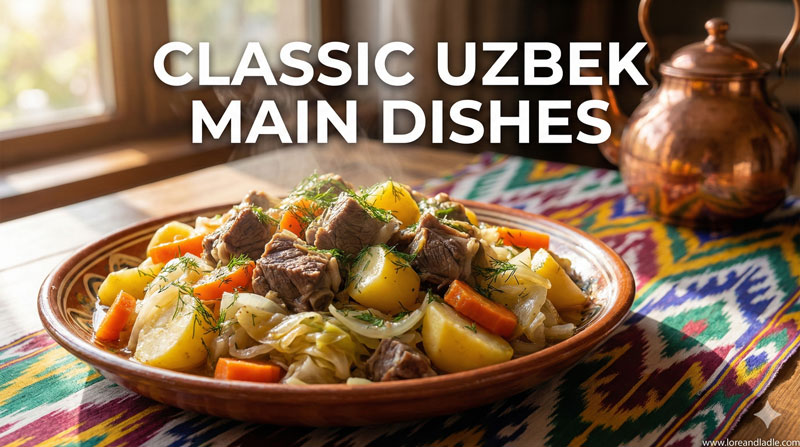
Must-Try Beshbarmak – Classic Uzbekistani Main Dishes Flavor You’ll Love
Beshbarmak is more than a dish. It is a heart of Uzbek kitchens, a warm welcome shared around a table, and a celebration of simple, honest flavors. In Uzbekistan, meals weave people together. This dish stands at the center of that tradition. It invites guests to savor time, care, and family warmth. If you crave a meal that feels like a story told with meat, noodles, and bright onions, beshbarmak will welcome you with open arms.
What Is Beshbarmak?
Beshbarmak means “five fingers” in Turkic languages, reflecting the way this dish is traditionally eaten with hands. The core idea is straightforward: tender boiled meat sits on wide, soft noodles, all crowned with a fragrant onion sauce or broth. The meat is usually lamb or beef, sometimes yak or horse meat in certain regions, always cooked until it is delicate and juicy. The noodles are thick and wide, made to soak up the savory broth. The result is a comforting balance of texture and aroma. This dish is designed for sharing, with steam rising as the platter is passed around the table.
The Core Ingredients and Technique
The beauty of beshbarmak lies in its simplicity and its careful technique. Begin with good meat: choose cuts that stay tender when simmered for a long time. Simmer the meat slowly in water with a touch of salt and aromatics until the flavors deepen. In parallel, prepare the noodles. You can roll fresh dough into broad ribbons or use wide store-bought sheets that echo the traditional texture. Boil the noodles until they are soft but still holding their shape. Slice the meat into generous pieces and arrange it over the noodles.
Next comes the onion sauce. Onions are sliced thin and gently cooked in a bit of oil or broth until they release sweetness and aroma. Some cooks add pepper or a hint of garlic for warmth. Layer the onions over the meat and noodles, then ladle a clear, savory broth around the dish. The final plate looks inviting: pale noodles, tender meat, and a glistening onion glaze. Each bite offers a gentle mix of salt, sweetness, and depth from the simmered meat.
A Meal That Brings People Together
In Uzbek homes, beshbarmak is a social meal. It is the centerpiece for gatherings, celebrations, and everyday moments when families come together. The act of sharing a large platter reinforces care and hospitality. People sit close, talk easily, and pass the food with a sense of ease. The dish becomes a quiet ceremony of connection—everyone contributes to the meal by preparing, serving, and savoring together. The atmosphere around beshbarmak is warm, calm, and inviting, making it a beloved ritual in many households.
Regional Variations and Traditions
Across Uzbekistan, you may notice small differences in beshbarmak. The cut of meat might vary, with some homes preferring more broth and others favoring a richer meat presence. Noodle thickness and shape can differ as well, reflecting family recipes and local techniques. In some regions, you’ll find a stronger onion presence in the sauce, while others favor a subtler glaze that lets the meat speak more loudly. Despite these variations, the essence remains the same: tender meat, broad noodles, and a comforting broth that invites lingering at the table. This unity of flavor and technique across regions highlights a shared culinary language that celebrates diversity within a common tradition.
Serving and Savoring
Traditionally, beshbarmak is served whole on a large platter. The meat rests atop the noodles, while the onion sauce adds a fragrant crown. Diners often pour a small amount of broth into their bowls to sip between bites. The recommended pace is steady and relaxed. Savor the meat first, then enjoy the noodles. Listen to how the onion aroma fills the room as you lift a bite. The experience is as much about temperature, aroma, and texture as it is about flavor. This is comfort food perfected through careful timing and thoughtful preparation.
Pairs and Accompaniments
Beshbarmak shines on its own, but you can enhance the meal with simple accompaniments. A fresh herb salad with cilantro or dill adds brightness. A wedge of crusty bread can be used to scoop up the broth. Tea, lightly sweet or plain, provides a gentle finish between bites. In many homes, pickled vegetables or a light cucumber salad adds a crisp counterpoint to the soft noodles and meat. The goal is harmony, not heavy contrasts, so the flavors breathe and mingle.
Tips for Recreating at Home
If you want to bring beshbarmak into your kitchen, start with a clear plan and good ingredients. Choose meat from a reliable source and allow time for a gentle simmer that yields tender cuts. For noodles, you can use fresh pasta sheets cut into wide ribbons, or make dough from flour, water, and a pinch of salt, then roll and cut by hand. The onion sauce should be cooked slowly to coax sweetness without bitterness. Finally, taste for balance. A little salt, a touch of pepper, and a soft, aromatic finish make the dish sing. Remember, the heart of beshbarmak is patience and care. Each step builds toward a plate that feels both comforting and celebratory.
The Place of Beshbarmak in Uzbek Cuisine
Beshbarmak holds a special place in Uzbek cuisine as a dish that embodies hospitality and shared joy. It represents the confidence of home cooks and the generosity of family meals. The dish stands at the intersection of nourishment and culture: it feeds the body while nourishing relationships, offering a moment to pause, smile, and connect. In the rhythm of Uzbek cooking, beshbarmak is a touchstone that reminds us how flavors can tell a story about place, season, and tradition. Through its warmth and simplicity, the dish teaches reverence for ingredients and the craft of patient cooking.
A Respectful, Neutral Invitation to Try
If you seek a culinary experience that is both comforting and culturally rich, beshbarmak invites you to listen to its gentle voice. The dish speaks softly of family tables, careful cooking, and the joy of sharing. It is a reminder that great flavors often come from simple ideas carried out with patience and love. Yet it remains accessible: with common ingredients and straightforward steps, you can discover a dish that carries a sense of place and a timeless appeal.
Concluding Thoughts
Beshbarmak is more than a recipe; it is a cultural expression that honors gathering, warmth, and Home Cooking. Its combination of tender meat, wide noodles, and onion-scented broth creates a comforting experience that resonates across generations. By preparing and enjoying this dish, you participate in a tradition that values hospitality, quality ingredients, and thoughtful technique. If you are curious about Uzbek flavors and the artistry of soulful home meals, beshbarmak offers a welcoming entry point. It is indeed A Must-try, a classic that lingers in memory as a true celebration of food and community.