
Must-Try Lao Noodle Favorites in American Kitchens: A Taste of Culture and Craft
Welcome to a journey through the must-try Lao noodle favorites that find welcoming homes in American kitchens. This dish set is more than food; it is a living example of culture, craft, and shared meals. Each bowl speaks of careful technique, bright herbs, and a balance of flavors that invite conversation at the table. Here, we celebrate the beauty of Lao noodles and their place in everyday cooking.
A Window into Lao Noodle Culture
Lao noodle dishes center on harmony. They blend comforting textures with vibrant freshness. Rice noodles act as a blank canvas, ready to carry broths, sauces, and heaps of herbs. The broth can be clear and soothing or creamy and rich, depending on the recipe. Nutty, tangy, and spicy notes appear together, never overpowering the others. This balance is not just taste; it is a philosophy of feeding well with restraint and care.
In Lao kitchens, herbs and aromatics play star roles. Mint, cilantro, dill, and lime leaves brighten each bite. Fish sauce and palm sugar provide the essential salt and sweetness that let sour and spicy flavors resonate. The result is a dish that feels light yet satisfying, quick to prepare, and deeply satisfying. When these noodles appear in American homes, they carry a gentle invitation: come taste a culture that values freshness, texture, and warmth.
The Art of Balance in Lao Noodle Cooking
What makes Lao noodle cooking distinctive is its disciplined balance. Chefs and Home Cooks aim for a chorus of four flavors: sour, salty, spicy, and fresh. They also seek contrast in texture—silky noodles next to crisp vegetables or crunchy peanuts. Techniques emphasize clarity in the broth, careful washing of herbs, and precise timing. The same care shows up whether you’re simmering a comforting soup or tossing noodles with a bright dressing.
The ingredients are chosen for their brightness and transparency. Lime juice brightens without overpowering. Fish sauce delivers depth without heaviness. Chili adds heat, but it is often tempered by citrus, herbs, and a touch of sweetness. This approach creates a dynamic dish that remains easy to enjoy. In American kitchens, this clarity translates into meals that feel both exotic and familiar—delightful, approachable, and endlessly adaptable.
Must-Try Dishes in American Kitchens
Here are some Lao noodle favorites that home cooks in the United States can embrace with confidence. Each entry emphasizes cultural value, culinary technique, and everyday practicality.
-
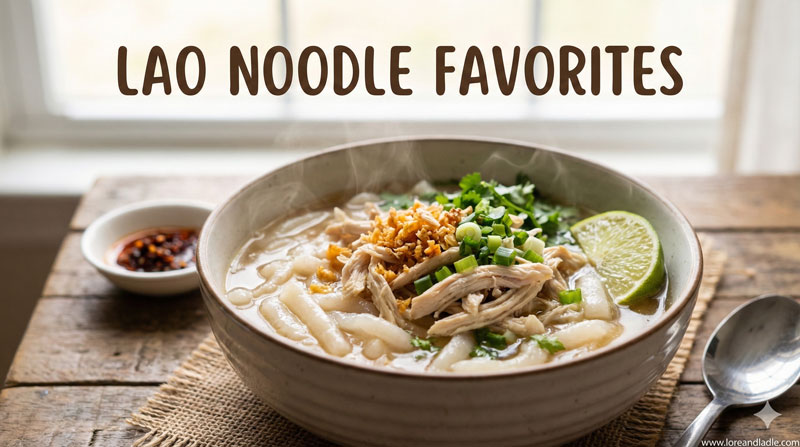
Khao Piak Sen — Lao rice noodle soup. This dish is known for its comforting broth and soft rice noodles. Garnish with fresh cilantro and scallions, and finish with a sprinkle of crispy garlic. It teaches patience in building a warm, soothing bowl that still feels fresh and bright.
-
Lao-style Herb Noodle Salad — A cold or room-temperature noodle dish that highlights herbs. Toss rice noodles with mint, cilantro, dill, and lime. Add a light chili-lime dressing and toasted peanuts. This salad showcases how noodles carry herbs and acidity with energy and balance.
-
Spicy Lime Noodle Bowl — A lively stir-fry or bowl that pairs rice noodles with a tangy, spicy sauce. The dressing blends lime juice, fish sauce, palm sugar, garlic, and chili. It’s quick, vibrant, and perfect for weeknight meals that still feel special.
-
Bright Broth Noodles — A lighter, clear-broth option with noodles, herbs, and a splash of citrus. This format emphasizes the natural sweetness of the noodles and the crispness of herbs, letting the palate experience clarity and freshness.
-
Herb-Forward Noodle Soup Variations — You can adapt the base concept to include seasonal vegetables and proteins. The emphasis remains on herbs, brightness, and a gentle, comforting broth.
These dishes illustrate how Lao noodle flavors travel well. They invite experimentation with herbs and sauces and welcome cooks of all levels to participate in a shared culinary tradition.
The Craft behind Lao Noodle Excellence
Three threads run through Lao noodle craft: stock, herbs, and balance. A good stock underpins many Lao noodle bowls. It is often light, enriched with aromatics, and brewed to carry the next components without overpowering them. The herb bouquet is essential. Fresh mint, cilantro, dill, and lime leaves animate the dish with fragrance and vibrancy. Finally, balance guides every decision—how much lime to squeeze, how to adjust salt, and when to temper heat with sweetness.
Technique matters too. Gentle simmering preserves the clarity of the broth. Quick, high-heat tosses lock in color and texture for the vegetables. Dishes are plated with intention: greens on top, herbs scattered generously, and noodles arranged to reveal the vibrant layers beneath. This approach makes each bowl a small performance—colors, aromas, and textures combining for a satisfying moment at the table.
The Cultural Value of Lao Noodles in American Kitchens
In American kitchens, Lao noodle dishes become bridges between families and communities. They are approachable for beginners and generous in their adaptability. Cooks can tailor heat levels, swap herbs for what’s fresh in the market, or switch proteins to suit preferences. This flexibility supports shared meals that feel personal and inclusive.
Beyond taste, Lao noodles teach timing and rhythm. A bowl comes together quickly, yet its flavor develops with careful layering. The result is confidence in the kitchen: you can craft something comforting and bright in the same evening. The dishes also encourage mindful shopping—selecting fresh herbs, crisp vegetables, and good-quality fish sauce becomes a small act of care that elevates the entire meal.
Practical Tips for Cooking Lao Noodle Favorites at Home
- Start with a gentle base broth. Use gentle simmering to keep flavors clean and bright.
- Build flavor in stages. Add lime and chili in steps to achieve the right brightness without overpowering the dish.
- Use fresh herbs generously. The punch of mint, cilantro, and dill makes the dish sing.
- Balance salt with citrus and tiny touches of palm sugar or honey.
- Choose rice noodles appropriate to the dish. Thicker noodles work well in soups; thinner noodles suit salads and quick stir-fries.
- Taste as you go. Small adjustments at the end preserve the harmony of sour, salty, spicy, and fresh notes.
A Friendly Invitation to Explore
Must-Try Lao Noodle Favorites in American Kitchens is more than a menu. It is an invitation to explore a cuisine built on clarity, generosity, and care. When you prepare these dishes, you honor a tradition that values balance and freshness. You also invite family and friends to share a meal that is both comforting and new.
If you are seeking a flavorful, easy-to-create experience, starting with these Lao noodle favorites will be a good move. They show how culture and craft come together at the counter. They reveal how a simple bowl of noodles can tell a story of herbs, broth, and heart. Welcome the aroma, gather your ingredients, and enjoy the beauty of Lao noodles in your own kitchen.