
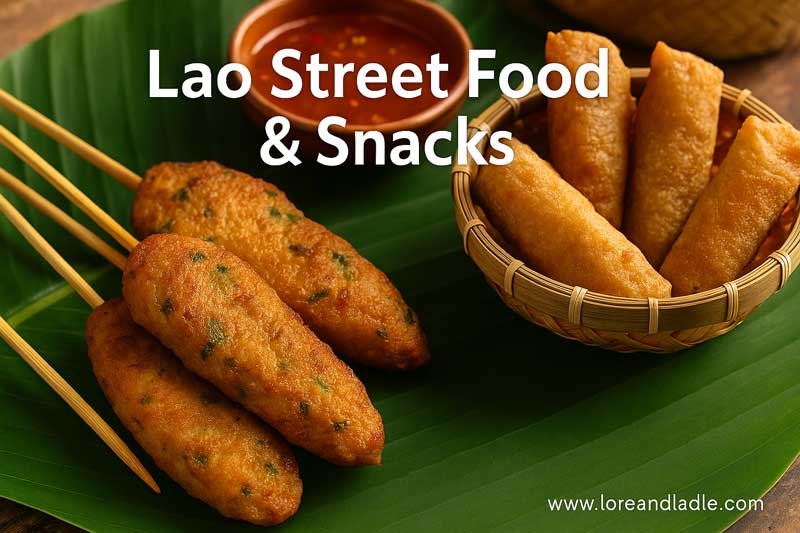
Must-Try Lao Street Food & Snacks in American Kitchens
Lao street food offers bright flavors, crisp textures, and a sense of togetherness. This dish family invites you to explore how Lao foods travel from busy markets to cozy kitchens in America. You’ll discover how simple ingredients create bold, harmonious plates. Best of all, you can enjoy these flavors at Home with friendly effort and care.
Core Flavors that Define Lao Street Food
Lao cuisine celebrates balance. Fresh herbs, sharp lime, savory fish sauce, and bold chilies mingle with warm rice and grilled meats. You will taste sour, spicy, salty, and herbal notes in every bite. The result is clean, vibrant, and deeply satisfying. In addition, the textures—crunchy, chewy, and silky—keep the experience lively. Use these guiding flavors as you plan each dish.
Signature Dishes to Try in Your Kitchen
Start with larb, a minced meat salad that pops with lime juice, fish sauce, herbs, and a touch of chili. It is bright and zesty, and it shines when served with sticky rice. Next, tam mak hoong, Lao-style papaya salad, blends green papaya, lime, dried shrimp, and peanuts for a crisp, tangy bite. Finally, pair these with grilled meats or vegetables for a complete meal. These dishes highlight the Lao emphasis on fresh ingredients, bold seasoning, and quick-cooking techniques done well.
The Role of Sticky Rice in Lao Culture
Sticky rice, or khao niaow, is central to Lao eating. It anchors meals and brings everyone together around the table. The texture is chewy and comforting, perfect for picking up bites by hand. In homes and markets, sticky rice connects people to daily rituals and seasonal foods. When you cook it at home, you honor a long tradition of sharing and careful preparation.
Techniques That Make Lao Dishes Sing
Precision matters. Pound fresh herbs gently to release aroma without overpowering the dish. Balance is key: a little lime lifts flavors, a touch of fish sauce anchors them, and chilies give warmth without fear. Quick stir-fries and light grilling preserve the brightness of herbs. Freshness is the secret, so choose herbs like mint, cilantro, and scallions just before serving.
Shopping and Substitutions for American Kitchens
Stock a small Lao pantry in your regular kitchen. Common staples include glutinous rice, fish sauce, lime juice, garlic, shallots, and fresh herbs such as mint and cilantro. For heat, choose small, fragrant chilies or chili paste. If you can’t find a specific Lao herb, use a similar fresh herb blend to maintain the aroma. Pick up dried shrimp or peanuts for texture, and keep a jar of jeow-style sauces on hand for quick flavor boosts. These ingredients let you craft authentic profiles without needing a market trip every week.
Plating, Serving, and Presentation
Aim for a bright, inviting plate. Place a neat mound of sticky Rice at the center. Add larb on one side and tam mak hoong on the other. Scatter chopped herbs for a fresh green halo. A squeeze of lime finishes each dish. Present sauces in small bowls for dipping. Clear, simple plates help the colors and textures shine.
A Community of Taste and Shared Meals
Lao street food thrives on sharing. Friends and family gather to enjoy diverse bites in a single meal. The act of passing dishes around the table builds warmth and conversation. When you cook these dishes at home, you join a circle of cooks who value hospitality, care, and delicious outcomes.
Conclusion: An Invitation to Explore
This must-try collection invites you to savor Lao street Food in American kitchens. With thoughtful ingredients, balanced flavors, and careful techniques, you create meals that feel lively and welcoming. Start with larb and tam mak hoong, add sticky rice, and let the herbs carry the aroma. In short, these dishes celebrate flavor, craft, and culture—one tasty bite at a time.