
Introduction
Comfort Food Myanmar Chicken Recipes That Feel Like a Hug celebrates a beloved corner of Myanmar’s culinary world. This post invites you to explore how chicken dishes, seasoned with fragrant herbs and warm spices, become steadfast keepsakes in homes and markets. The flavors and rituals behind these meals speak to care, hospitality, and daily life. Each bite offers a sense of belonging and calm, a reminder that food can cradle the body and delight the senses.
The cultural voice of Burmese home cooking
In Myanmar, a family table is a quiet stage where generations share stories, seasons, and simple routines. Chicken is a flexible canvas for these gatherings. It adapts to the pantry, welcomes a few bright notes, and rests in a comforting simmer. The dishes that feel like a hug arise from routine and affection: a steady hand at the stove, shared bowls, and the warmth of a kitchen that smells like home after a long day. This food honors people, places, and everyday rituals, turning ordinary meals into meaningful moments.
Core flavors that define Burmese chicken
The heart of Comfort Food Myanmar Chicken Recipes That Feel Like a Hug rests on a few dependable flavors. Garlic and shallots lay a comforting foundation, while ginger adds a gentle zing. Turmeric brings sunshine and depth, and lemongrass lends a citrusy brightness. Fish sauce or a touch of ngapi paste murmurs the savory note that anchors many Burmese dishes. A hint of palm sugar or light sweetness balances tangy lime or fresh lime juice at the finish. The result is a round, balanced profile where savory, sweet, and tangy work together like friends around the table. These ingredients are easy to source in local markets, making the dishes approachable for home cooks.
Techniques that cultivate warmth and texture
A hug in a bowl often comes from technique as much as flavor. Start by toasting spices to wake their aroma. Then soften onions and aromatics to release sweetness and depth. Sear the chicken for color and juice retention, letting its natural flavors mingle with the aromatics. Deglaze the pan to lift every browned bit, a small thing that adds big flavor. Finally, simmer gently until the chicken is tender and the sauce thickens just enough to cling to each piece. Finish with a squeeze of lime or a whisper of fresh herbs. The rhythm of these steps—toast, sauté, simmer, finish—creates a dish that feels nurturing and complete.
Home variations that carry a comforting signature
Within the same family, homes improvise with small personal touches. Some cooks prefer a coconut milk base for a silky richness; others lean toward a lighter sauce with a bright, citrus lift. A few chop fresh chilies or drizzle chili oil for warmth that lingers. Still others stir in sliced lemongrass in the last minutes for a sharper aroma. Each version maintains the core idea of comfort: chicken, gentle spice, and a sauce that invites slow, thoughtful eating. The beauty lies in how families tailor a recipe to their pantry and their taste, while keeping the comforting spirit intact.
The plate as a center for sharing
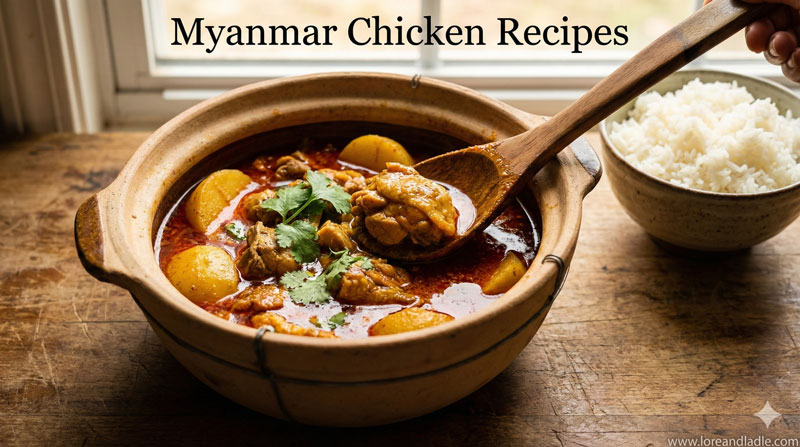
The way this dish arrives at the table matters as much as the recipe itself. A steaming bowl rests on a bed of fluffy jasmine rice, ready to soak up the sauce. Side dishes—crisp pickled vegetables, fresh herbs, and a squeeze of lime—play supporting roles that brighten the plate. A simple cucumber salad or quick, lightly fermented greens can offer a refreshing contrast. When shared with others, the meal becomes more than sustenance; it becomes a small ceremony of care and connection, a minute of peace in a busy day.
The sensory language of Burmese comfort
Texture and aroma carry the most immediate message of comfort. Tender chicken yields to each bite, while the sauce clings to rice and vegetables with a gentle hug. The aroma—garlic, citrus, and a hint of spice—fills the room and invites everyone to relax and savor. This sensory language is a hallmark of Myanmar’s home cooking, where food invites people to slow down, listen to one another, and enjoy a moment of togetherness.
Accessibility and everyday joy
One strength of these recipes is their accessibility. The ingredients are familiar to many readers and can be found at common markets. The cooking method rewards patience and care but remains straightforward enough for a weeknight. With simple steps and a few pantry staples, you can bring a little Burmese comfort into your kitchen. This approach makes the dish welcoming to cooks at every level, encouraging experimentation while preserving the heart of the tradition.
How to honor the tradition in your kitchen
To honor the culture behind Comfort Food Myanmar Chicken Recipes That Feel Like a Hug, approach the dish with respect for its balance and simplicity. Respect the layers of aroma by giving aromatics time to soften. Taste as you go, balancing salt, sweetness, and acidity to suit your palate. Use fresh herbs as a bright finale, and serve with a generous portion of warm rice. Above all, prepare the meal with attention and care. When you cook with intention, the dish truly becomes a hug in a bowl for those at your table.
A closing note on cultural value and culinary significance
These Burmese chicken dishes reveal more than flavor; they reveal a way of cooking that honors family, community, and the daily rhythms of life. They teach us how simple ingredients can become meaningful comfort when prepared with patience and warmth. The culinary significance lies not only in taste, but in the stories it carries—the care of a mother, the pride of a home kitchen, and the welcome of a shared meal. Comfort Food Myanmar Chicken Recipes That Feel Like a Hug invites you to slow down, savor, and celebrate the quiet beauty of Myanmar’s food culture.