
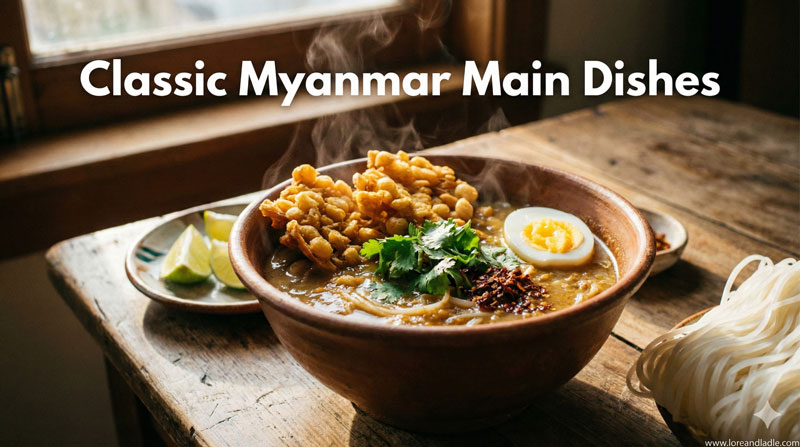
Introducing Everyday Classic Myanmar Main Dishes Ideas for U.S. Kitchens
This post presents Everyday Classic Myanmar Main Dishes Ideas for U.S. Kitchens. It invites you to discover how Burmese everyday meals carry culture, craft, and care. The focus is on flavor, technique, and the joy of sharing a warm bowl or plate.
What makes these dishes culturally meaningful
Myanmar home cooking centers on balance and freshness. Families plan meals around the seasons and local markets. People seek harmony among sour, salty, spicy, and slightly bitter notes. Texture matters, too—smooth broths, soft noodles, crisp vegetables, and tender meat. Each dish tells a story of daily life, community, and a love for rich, everyday flavors.
Core flavors that travel well
Burmese cooking often layers bright aromatics. Lemongrass, garlic, turmeric, and chili wake the palate. Fresh herbs like cilantro and scallions brighten the finish. A few key ingredients unlock complexity: fish sauce or ngapi (fermented fish paste) for depth, tamarind or lime for tang, and coconut milk or fresh stock for body. These elements combine in a way that feels both familiar and new to U.S. kitchens.
A sampler of Everyday Main Dishes with universal appeal
- Mohinga, a comforting fish noodle soup. Think a bright fish broth, rice noodles, and a swirl of aromatics. It feels light yet satisfying and shines in any season.
- Coconut chicken noodle soup. This dish blends a creamy coconut base with tender chicken and noodles. It’s gentle on the palate but deeply flavorful, great for a cozy weeknight.
- A classic Burmese chicken curry with potatoes. The curry is warm, softly spiced, and served with rice. It rewards slow simmering and patience.
- A fish curry with vegetables. A tomato-tish broth carries fish and greens. It yields a bright, nutritious plate that travels well from pot to table.
- A tofu and eggplant curry. This vegetarian option emphasizes roasted textures and rich, layered sauce. It shows how Burmese cooking emphasizes balance and variety.
Each dish is approachable for cooks in the United States. Start with the essentials, then adjust the spice level and ingredients to fit your pantry. The goal is to feel the culture through every bite while keeping the kitchen welcoming and practical.
Techniques that give authenticity and flexibility
- Stock and broth: A clear, flavorful broth forms the backbone. Simmer fish bones or chicken with aromatics to build depth.
- Layering flavors: Add aromatics early, then finish with bright herbs or lime to lift the dish.
- Texture play: Pair tender meat with crisp vegetables or noodles with a silky sauce.
- Quick pick-up sweetness: A touch of sugar or palm sugar can balance acidity and heat.
- Substitutions that work: White fish, chicken thighs, eggplant, okra, or leafy greens can stand in for more traditional items. Rice noodles or even spaghetti can substitute in a pinch.
These techniques help you honor the spirit of Myanmar cooking while keeping meals practical for U.S. kitchens.
Ingredient notes for U.S. pantry and market calls
- Fresh produce: lemongrass, garlic, ginger, chilies, cilantro, scallions, lime, onions.
- Proteins: white fish or salmon, chicken thighs, firm tofu.
- Pantry staples: fish sauce or ngapi, coconut milk or coconut cream, tamarind paste or lime juice, turmeric, chili powder or ground fresh chilies, rice or rice noodles.
- Substitutes: if ngapi isn’t available, a small amount of miso or soy sauce can provide savoriness; if tamarind is hard to find, lime and a touch of brown sugar mimic the tang.
- Grains and noodles: jasmine rice, basmati rice, or rice noodles give a gentle base that lets the sauce shine.
Serving ideas and kitchen rhythm
- Serve with steamed jasmine rice and a bright herb garnish.
- Add lime wedges for a final lift.
- Offer a light, cucumber-ginger salad on the side to balance richness.
- Keep sauces on the side for guests to adjust heat.
- Present bowls and plates with care to highlight color and texture.
A gentle guide to adapting for U.S. kitchens
- Start with one dish per week to keep cooking enjoyable.
- Use familiar ingredients when possible, then introduce authentic items as you become comfortable.
- Record notes on what worked: timing, heat level, and balance of flavors.
- Invite family or friends to share the meal; conversation often deepens the appreciation of the dish’s cultural value.
Why these dishes matter in everyday life
These dishes celebrate daily life—meals shared after work, on weekends, or during a quiet evening at Home. They teach patience, precision, and flexibility. Above all, they offer warmth, aroma, and a sense of belonging around the table. The Everyday Classic Myanmar Main Dishes Ideas for U.S. Kitchens project invites you to explore, taste, and enjoy the beauty of Burmese home cooking in a way that fits your own kitchen rhythm.
Closing: your invitation to explore
Try one dish this week and notice how the flavors unfold. Enjoy the balance of herbs, spices, and heat. Celebrate how a simple main dish can carry culture, craftsmanship, and care to your table. May your kitchen feel open, inviting, and full of color, as you discover the everyday magic of Myanmar cooking.