
Introduction
This piece invites you to explore a flavorful idea: How to Build a Full Menu Around Classic Myanmar Main Dishes. The goal is to honor cultural value and culinary significance without distraction. Myanmar cuisine shines through balance, aroma, and care. By centering a menu on classic main dishes, cooks can create a table that feels like a journey through markets, homes, and festivals. The approach celebrates technique, seasonal ingredients, and the gentle poetry of everyday meals.
The Concept: Building a Menu Around Myanmar Main Dishes
A full menu anchored by Myanmar main dishes offers a clear, inviting path. Start with two or three signature mains, then weave in supporting courses that echo flavor and texture. The result is a harmonious meal where each course feels connected to the others. Use color, aroma, and textures to guide the flow. This method keeps focus on authentic flavors while inviting guests to explore, savor, and remember.
Anchor Dishes: Core Myanmar Main Dishes
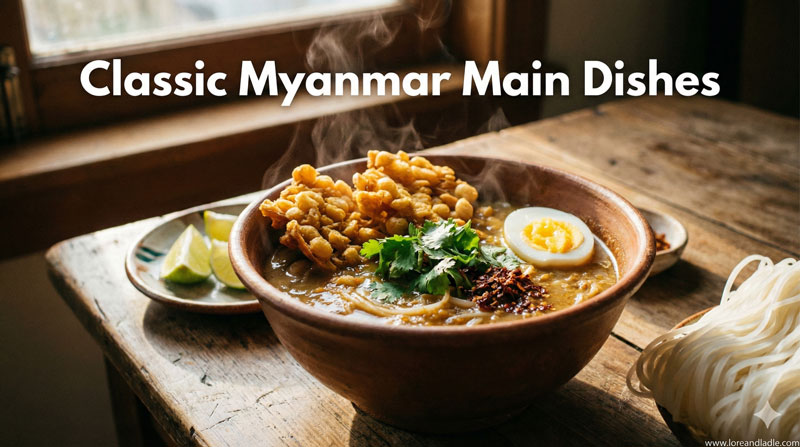
- Mohinga: A fragrant fish noodle soup. It blends fish stock, lemongrass, garlic, and subtle aromatics with rice noodles. It often anchors morning tables and inspires other bowls.
- Ohn No Khao Swè: Coconut milk curry with noodles. It brings creamy warmth, gentle spice, and a comforting broth that lifts bright herbs.
- Shan Noodles: A regional noodle bowl with a clear, herby broth and tender meat. It showcases balance between sour, salty, and savory notes.
- Burmese Curry (Chicken or Beef): A versatile main with turmeric, onions, tomatoes, and warm spices. It reflects everyday Home Cooking and gatherings.
These anchors demonstrate how a Myanmar menu can span soups, curries, and noodle dishes, each speaking to different regions and moods. The idea is to pair them thoughtfully with sides and salads that lift the experience without overpowering the core flavors.
Flavors, Techniques, and Textures
Myanmar mains thrive on contrast and harmony. Sour brightness often comes from lime or tamarind. Fresh herbal notes from cilantro, dill, or sawtooth coriander lift heavier elements. Textures matter: silky broths, tender meat, chewy noodles, and crisp garnishes create interest. Techniques include gentle simmering to deepen flavor, quick stir-frying for aroma, and careful balancing of oils and fresh acids. When you keep these elements in mind, each main dish becomes a focal point around which the rest of the menu can pivot.
Course Flow: From Star Mains to Complements
Plan a comfortable rhythm. Begin with a light starter or a bright salad that echoes the main flavors. Then present the anchor main, followed by a few supporting dishes such as a vegetable curry, a tangy pickle or lime-fresh relish, and a simple herb-led side. End with a light dessert or fruit. The key is transitions: introduce a course, then connect it to the next with a shared spice or brightness. Clear transitions help guests sense a cohesive story from first bite to last.
Ingredient Sourcing and Seasonal Rhythm
Choose ingredients with care and respect for the season. Fresh fish and prawns, lime, lemongrass, garlic, and shallots form the backbone of many classics. Use herbs like cilantro and dill to brighten plates. When possible, source ingredients from trusted markets or local producers. If a dish calls for fermented products like ngapi, use them in moderation to balance intensity with the broth or curry. Thoughtful sourcing supports the depth and authenticity of the menu.
The Cultural Value of a Shared Menu
A menu built around classic Myanmar mains honors communal eating. It mirrors how households gather for meals, how markets buzz with aroma, and how family cookery passes down techniques. Plates become storytellers of place—each bite echoes regional staples, seasonal abundance, and everyday hospitality. By presenting a cohesive menu, you invite guests to experience care, tradition, and the beauty of everyday food. The result is not just sustenance but a shared moment of delight and respect for craft.
Practical Tips for Home Cooks
- Start with two anchor mains and build around them.
- Choose 2–3 sides or salads that echo the main flavors.
- Plan for a range of textures: silky broth, tender meat, crisp garnishes.
- Keep spice level adjustable at the table so guests can customize.
- Focus on balance between sour, salty, bitter, and sweet notes.
- Use fresh herbs and bright citrus to lift heavier dishes.
- Respect seasonal ingredients; adapt the menu as the market shifts.
- Plate with care to highlight color and aroma in every course.
Conclusion
Building a full menu around classic Myanmar main dishes reveals a culture of warmth, balance, and craft. The approach centers on core dishes, thoughtful pairings, and a respectful devotion to flavor. By honoring technique and tradition while inviting curiosity, you create a dining experience that feels both timeless and alive. Embrace the beauty of Myanmar’s food landscape, and let your menu become a welcoming menu of stories, textures, and shared delight.