
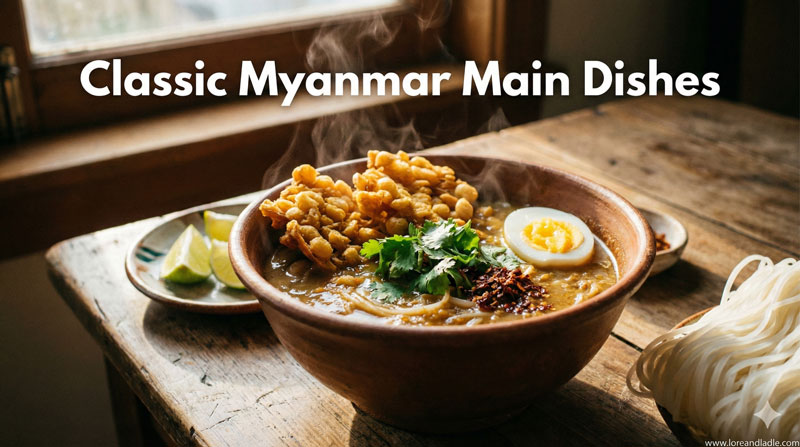
Introduction to Flavor-Packed Classic Myanmar Main Dishes Dishes to Impress Guests
Flavor-Packed Classic Myanmar Main Dishes Dishes to Impress Guests is more than a meal. It is a doorway into Myanmar’s warm dining life. The dish invites conversation, shared aromas, and careful attention to balance. Every bite reveals a careful dance of spice, sweetness, tang, and aroma. This is how food celebrates place, season, and craft all at once. The dish stands as a testament to the care people put into everyday cooking and special feasts alike.
What makes this dish iconic in Myanmar
The dish embodies the spirit of Myanmar’s cooks. It blends bright herbs with soulful, comforting depth. It favors harmony over intensity, letting each flavor shine in its own light. A great Myanmar main dish often follows a simple rule: fresh ingredients meet precise technique. When that rule is followed, flavors feel familiar yet new with every bite. This dish exemplifies that idea. It makes a lasting impression while remaining rooted in everyday cooking.
Core flavors that define the dish
Flavor in this dish comes from a well-rounded quartet: savory notes, tang from citrus or fruit, gentle sweetness, and a hint of heat or spice. Fresh herbs brighten the plate, while toasted aromatics add depth. Salt from fish sauce or fermented fish paste grounds the flavors. A touch of sourness from lime, tamarind, or pickled elements lifts the profile. The result is a layered, inviting taste that lingers in memory. Each bite offers a balance you would describe as clean, vibrant, and comforting all at once.
Key ingredients and their roles
- Protein or main component: a centerpiece that remains tender and juicy.
- Aromatics: garlic, shallots, and ginger provide the perfume that begins the flavor journey.
- Fresh herbs and greens: cilantro, mint, or basil add brightness and color.
- Acids and sweeteners: lime juice or tamarind meet palm sugar or jaggery to create a pleasing contrast.
- Umami accents: a touch of fish sauce or fermented paste deepens the overall savor.
- Textural elements: crisp vegetables, roasted nuts, or sesame seeds add bite and interest.
These ingredients work together to create a dish that feels both festive and approachable. The result is a plate that looks inviting and tastes memorable.
Methods and techniques that elevate taste
Precision matters in every step. Start with fresh produce and well-balanced seasoning. Sauté aromatics gently to release their fragrance without burning. Layer flavors methodically: add souring agents after the main seasoning to keep bright notes intact. If a sauce is involved, simmer until the texture coats the back of a spoon. Finally, finish with fresh herbs just before serving to preserve their aroma. Presentation matters too: a neat arrangement mirrors the care behind the cooking. A well-tinished plate makes guests feel welcomed and honored.
Cultural role at the Myanmar table
In Myanmar, meals are often shared. A dish like this becomes a centerpiece around which stories, laughter, and gratitude revolve. It reflects a philosophy of generosity: good food should be vibrant, accessible, and comforting. The dish crosses generations, teaching younger cooks through example. It also shows how technique and seasonality shape tradition. The result is both a proud heritage piece and a practical, everyday staple.
Serving traditions and presentation
Serve hot, with a gentle aroma inviting guests to gather. Plate with care and balance: a main item at center, bright accompaniments on the side, and herbs arranged for color and scent. Offer lime wedges or pickled vegetables to let guests tailor brightness to their taste. A clean, uncluttered presentation honors the dish’s layers of flavor. In many homes, the aroma itself signals hospitality and readiness to Share.
Regional twists and adaptations
Myanmar’s regions offer subtle differences that enrich this dish without changing its essence. Coastal areas might emphasize brighter citrus notes and lighter oils. Inland regions may lean into sturdier spice blends and firmer textures. Urban kitchen styles blend modern cooking tools with traditional flavors. Regardless of the variation, the dish remains faithful to its core balance: fresh ingredients, thoughtful seasoning, and respectful technique.
Pairings and occasions
Pair this dish with light, refreshing sides that brighten the palate between bites. Pickled vegetables, cool cucumber salads, or plain steamed rice work well. For beverages, choose something delicate and fresh, like a lightly oiled tea or a fruit-infused drink. The dish fits many occasions—from casual weeknight dinners to celebratory gatherings. Its versatility makes it a crowd-pleaser that teaches guests about Myanmar’s flavor philosophy.
Tips for home cooks
- Use fresh herbs at the end to preserve their fragrance.
- Taste in stages; build the sauce gradually rather than adding all at once.
- Balance sweet, salty, sour, and spicy in small increments.
- Rest the dish briefly after cooking to let flavors meld.
- Slice meat or vegetables evenly for uniform cooking.
- Keep a clean workstation so aromas stay distinct and inviting.
These practical steps help you recreate the dish with confidence and joy.
Conclusion: a dish that honors taste and tradition
Flavor-Packed Classic Myanmar Main Dishes Dishes to Impress Guests captures the essence of Myanmar’s culinary spirit. It rewards careful technique, fresh ingredients, and thoughtful presentation. It invites guests to slow down, share, and savor. In every bite, there is culture, craft, and care. This dish proves that good food can be a generous, memorable experience—one that celebrates the beauty of Myanmar’s food culture with warmth and respect.