
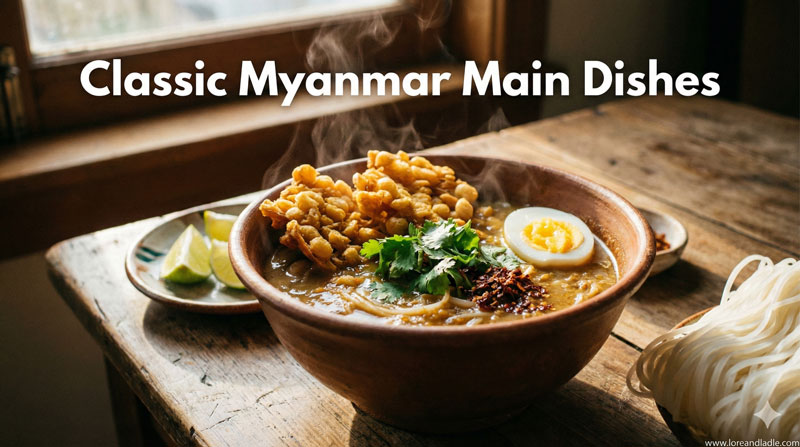
Lightened-Up Classic Myanmar Main Dishes Without Losing Flavor
This post introduces a thoughtful approach to Myanmar’s beloved main dishes. The idea centers on preserving bold, comforting flavors while lightening the meals for everyday cooking. It celebrates how tradition and lighter cooking can coexist, enriching the table without compromising the sense of place each dish carries.
Cultural value of Myanmar main dishes
Myanmar cooking is a daily feast of color, aroma, and balance. Food is a warm invitation to gather, share, and savor the moment. In homes and marketplaces, meals are a language of care, inviting families to slow down and connect. The main dishes at the center of meals reflect regional life: coastal dishes lean toward bright, tangy notes from lemongrass and lime; inland favorites emphasize hearty herbs, roots, and spice blends. The signature strength of Myanmar flavors lies in harmony—savory depth, fresh brightness, a touch of heat, and a subtle sweetness that glows from the base of onions, garlic, and toasted spices. This balance is not just about taste; it’s a storytelling practice. Each bite tells of a kitchen that respects seasonality, local ingredients, and shared techniques passed from cooks to cooks. The concept of Lightened-Up Classic Myanmar Main Dishes Without Losing Flavor respects that storytelling. It invites modern cooks to honor heritage while embracing lighter methods that suit busy days and mindful eating.
Culinary significance: why lighter versions matter
The culinary heart of Myanmar is built on layering flavors through careful techniques. Spices are toasted to wake their personality; aromatics are sautéed to release fragrance; sauces simmer to meld sour, salty, spicy, and earthy notes. Lightened-up versions honor this philosophy. They keep the foundation of flavor—the brightness of lemongrass, the warmth of turmeric, the savor of garlic and shallots—while reducing heavy elements that can mask those flavors. In practice, cooks use leaner proteins, more vegetables, and gentler fats. They replace heavy thickeners with long, slow simmering, and they balance sauces with tamarind, lime, or a splash of light stock. The significance is clear: Myanmar’s main dishes can remain deeply satisfying even when approach is lighter. This is a way to keep traditional techniques relevant in today’s kitchens, schools, and homes.
Techniques that preserve flavor with less fat
- Toast and bloom spices: Dry-roast coriander, cumin, and turmeric to release essential oils, then grind for a vivid base.
- Build layers with aromatics: Sauté garlic and shallots in modest oil, adding lemongrass and ginger for brightness.
- Use light liquids: Replace some coconut milk with stock or water to maintain moisture and flavor without heaviness.
- Favor lean proteins and more vegetables: Chicken, fish, and tofu shine when surrounded by peppers, greens, or root vegetables.
- Deepen sauces through simmering: Slow reduction concentrates flavors without extra fat.
- Finish with brightness: A squeeze of lime, a handful of fresh herbs, or a light tang from tamarind sharpens the dish just before serving.
Ingredient spotlight: honoring regional flavors
- Aromatics: garlic, shallots, ginger, lemongrass, and galangal create fragrant foundations.
- Spices: turmeric, coriander seeds, white pepper, and chili provide warmth and character.
- Acids and sweetness: lime juice, tamarind, and a touch of palm sugar balance savoriness with brightness.
- Umami and salt: fish sauce and fermented products add depth without heaviness.
- Fresh greens and herbs: cilantro, Thai basil, or fresh mint bring lively finish and color.
- Textural contrast: crunchy vegetables or lightly charred edges add interest without greasiness.
Regional flavors and balance in practice
Coastal Myanmar favorites often lean toward brighter, lighter profiles with touches of coconut and lime. In inland areas, dishes lean on root vegetables, beans, and earthier spice blends. A lightened-up approach keeps those regional voices audible: you’ll still taste the sea in a fish-forward curry, still sense the earth in a tomato- and tamarind-tinged sauce, and still feel the village-influenced warmth from toasted spices. The goal is to let each region’s heritage speak clearly, even when the cooking style is gentler on the palate and the waistline.
Practical examples: types of lightened-up dishes
- Lightened-Up Chicken Curry: tender chicken, lots of aromatics, a lighter sauce built with stock and a touch of coconut milk, finished with fresh herbs.
- Lightened-Up Fish Curry: flaky fish simmered gently with lemongrass, lime, and coriander; the sauce stays bright and savory without heavy creaminess.
- Vegetable-Forward Curries: hearty vegetables in a balanced spice blend, boosted by umami from mushrooms or miso-like notes and a light broth.
- Lean Meat Stews: beef or pork prepared with slow simmering, root vegetables, and a lean sauce that carries depth through spice and tang.
These examples illustrate a philosophy more than a single recipe. Each dish demonstrates How to keep cultural essence intact while applying lighter techniques.
How to approach cooking: tips for home kitchens
- Start with a flavor map: decide the dominant notes (bright, savory, earthy) and choose ingredients that emphasize them.
- Use fresh, seasonal produce: seasonal vegetables add natural sweetness and texture.
- Keep sauces lively: finish with a citrusy or herb note to brighten the dish just before serving.
- Plan balance: pair a lighter main with a crisp, fresh side or pickled vegetables to suit the mood of the meal.
- Be intentional with oil: use just enough to bloom the spices, then rely on the sauce and stock for moisture.
- Plate with care: a vibrant garnish and a colorful plate highlight the dish’s freshness and culture.
Serving and sharing: how these dishes fit into Myanmar table culture
Myanmar meals are often shared and communal. Bowls of rice anchor the table, with several dishes arranged around it. Sharing favors equality and conversation, inviting guests to sample a variety of textures and flavors. Lightened-Up Classics fit this setting beautifully: they offer the same inviting aroma and heartiness while inviting guests to eat more mindfully. A bright main with a simple side of greens or pickles invites conversation about ingredients, techniques, and regional inspirations. In this way, the concept supports the joy of gathering and the pleasure of tasting well-loved flavors anew.
Getting started: how to try the concept at home
- Choose one dish to start: a chicken or fish curry works well for a first attempt.
- Gather bright aromatics and fresh herbs to ensure the dish remains lively.
- Use stock or a light coconut-mleck solution to keep sauces silky without heaviness.
- Taste and adjust: balance sour, salty, and sweet with lime, fish sauce, and a touch of sugar.
- Serve with plain steamed rice and a simple vegetable side to keep the plate balanced.
Conclusion
Lightened-Up Classic Myanmar Main Dishes Without Losing Flavor presents a respectful, flavorful path for cooking that honors Myanmar’s culinary spirit. It celebrates bold, comforting tastes while embracing lighter techniques that fit modern life. By focusing on fresh ingredients, aromatic foundations, and thoughtful balance, this concept helps Home Cooks, food lovers, and communities experience the beauty and significance of Myanmar’s main dishes in a new, accessible way. The result is meals that feel rooted in tradition, yet warmly contemporary—inviting, nourishing, and endlessly flavorful.