
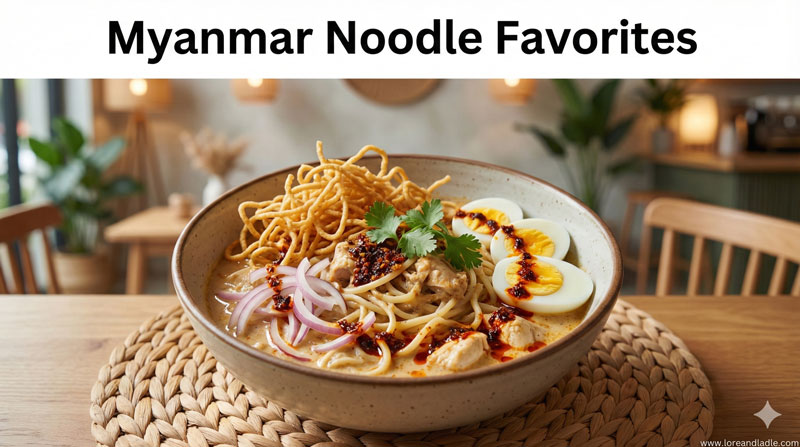
Welcome to Comfort Food Myanmar Noodle Favorites That Feel Like a Hug
This post introduces a warm family of noodle bowls from Myanmar. The title itself—Comfort Food Myanmar Noodle Favorites That Feel Like a Hug—describes how these dishes welcome you home. In Myanmar, noodle bowls are part of daily life. Vendors fill the air with steam and a gentle scent of garlic, lemongrass, and sesame. at Home, families gather around a table to share bowls, stories, and smiles. These noodles carry cultural value and culinary significance. They show how food ties people together. in the sections to follow, we explore flavors, techniques, and the rituals behind these treasured bowls.
What makes Burmese noodle dishes comforting
Comfort in Burmese noodles comes from balance. The broth can be clear and bright or creamy and coconut-scented. Salt, sour lime, and a kiss of heat all work in harmony. Noodles provide chew and texture, while herbs and fried toppings add freshness and crunch. The aroma lingers and invites the next bite. These bowls travel from busy street stalls to cozy kitchens, carrying memories of morning markets and shared meals. The result is a sense of care in every mouthful, a simple act that feels like a warm greeting.
Signature bowls that define the hug
- Mohinga: A fragrant fish broth with rice noodles forms the heart. Garlic oil, lemongrass, and shallots perfume the soup. A squeeze of lime brightens the bowl, and fish flakes add gentle richness. This is often enjoyed for breakfast, but its warmth lasts all day.
- Shan noodles: Slippery rice noodles rest in a light, savory broth or oil, topped with crisp garlic, sesame seeds, pickled greens, and fresh herbs. The combination offers delicate ease and a final snap of brightness.
- Nan Gyi Thoke: Thick rice noodles mingle with shredded chicken and a velvety sauce made from peanut or chickpea flour. The sauce clings to the noodles, creating a creamy, nutty bite. Each forkful brings a new texture as toppings mix in.
- Ohn No Kauk Swè: A coconut-milk-based noodle soup with a gentle sweetness and a warm finish. Ginger, garlic, and curry notes weave through the bowl, inviting calm and satisfaction.
These bowls spotlight different textures and flavors, yet each one provides a familiar, comforting hug of aroma, warmth, and nourishment.
The craft behind the bowls
The magic rests in careful balance and technique. Broth is the soul, built by slow simmering with aromatics like lemongrass, garlic, shallots, and a touch of turmeric or curry. Noodles are chosen to suit the dish—thin rice noodles for light soups, flat or thick varieties for saucier preparations. Toppings matter: fried garlic, toasted sesame, crushed peanuts, fresh cilantro, and lime lift flavors and add texture. The sauces, especially for Nan Gyi Thoke, blend legume flour and peanuts to create a glossy, clingy coating that carries the seasonings. Each step—stir, simmer, rest, finish—cultivates a bowl that feels both familiar and quietly sophisticated. The result is a family of noodle foods that travels well from the market to the home table, preserving its character in every kitchen.
Sharing, seasons, and the rhythm of meals
In Myanmar, noodle bowls are part of daily rhythm. Markets pulse with activity, and stalls offer steaming bowls suited for morning refreshment or post-work comfort. Families gather to share a meal, learn new toppings, and pass down small tips that improve the dish with each generation. The same dish can adapt with the seasons: lighter broths in warmer months and richer, creamier bases when cooler days come. The act of sharing—passing bowls, guiding others to balance acidity and spice—becomes a quiet lesson in hospitality. In this way, these noodle favorites become more than food; they are a living link among people, places, and memories.
Bringing Burmese noodle joy home
To invite this comfort into your kitchen, start with quality noodles and fresh aromatics. Choose a stock or broth that suits the dish you want, whether clear and bright or coconut-sweet. Gather herbs like cilantro and a lime for lift, and keep a few crunchy toppings on hand. Stir sauces gently to respect each noodle’s texture. If you enjoy exploring, try making a simple version of Nan Gyi Thoke with a chickpea-flour sauce and roasted peanuts. Above all, approach the meal as a shared ritual. Sit with others, savor the aroma, and let the warmth of the bowl guide the conversation. In doing so, you honor the beauty and cultural significance of Myanmar’s noodle traditions.
A concluding note on the beauty of Burmese noodle culture
Myanmar’s noodle bowls celebrate warmth, balance, and welcome. They reflect a culinary language built on fresh ingredients, thoughtful technique, and the joy of gathering. Each bowl offers a story of comfort—quiet, inviting, and deeply rooted in daily life. Whether at a market stall or a family table, these noodles remind us that food can feel like a gentle hug, carried forward through time with grace and flavor.