
Flavorful Myanmar Noodle Favorites Ideas with Simple Spices
Noodles are more than food in Myanmar. They are a living thread in daily life, markets, small eateries, and family kitchens. This dish guide celebrates the cultural value and culinary significance of Myanmar’s noodle favorites. Simple spices unlock big flavors, and they carry memories of home, friendship, and welcoming bowls shared at tables of many sizes.
The Spice Pantry: Simple Yet Signature
Myanmar cooks rely on a few reliable aromatics to build depth quickly. Garlic and shallots give warmth. Fresh ginger adds brightness. Lemongrass brings a gentle citrus lift. Turmeric offers color and a calm earthiness. Chili tails the heat with a friendly glow. Fish sauce or a salty shrimp paste brings a sea-salty depth. A touch of lime or yuzu leaf can brighten the mix. This compact pantry reflects geography, trade, and time-honored technique. With these ingredients, a humble noodle dish becomes a ceremony of flavor. The approach is practical and poetic: respect the ingredients, let the spices do steady work, and invite people to the table.
Ohn No Khao Swè: Coconut-Chicken Comfort
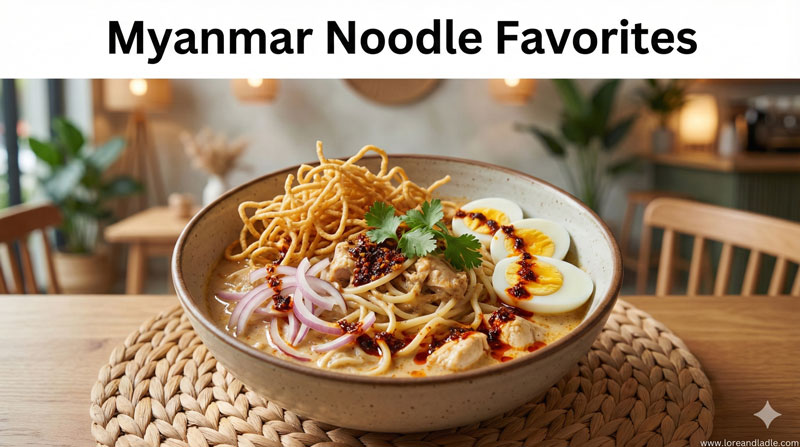
Ohn No Khao Swè is a beloved Burmese noodle rendition. Its broth whispers of coconut milk and gentle spice. Shredded chicken travels with soft wheat or rice noodles. A swirl of coconut cream or milk adds richness, while fried shallots offer a sweet crunch. A final squeeze of lime ties the dish to a bright finish. The beauty here lies in balance: creamy, savory, tangy, and clean. Culture wise, this dish signals home cooking and weekend preparation. It also shows how a single pot can cradle care for family visitors and friends alike. Simple spices collaborate with time-rooted technique to create a comforting bowl that feels familiar across generations.
Mohinga: The Morning Noodle Tradition
Mohinga is often enjoyed at dawn and along busy streets. The broth is light yet fragrant, scented with lemongrass, garlic, onion, and turmeric. Fish sauce adds a gentle saltiness, while rice noodles carry the subtle texture of the day. Garnishes—such as crispy chickpea crackers, fresh herbs, chili, and citrus—offer bright, contrasting notes. Mohinga embodies the Burmese value of starting the day with warmth. It highlights how a bowl of noodles can be a ritual, a quick energy boost, and a social moment all at once. The dish teaches patience in simmering, precision with balancing flavors, and generosity in sharing a steaming bowl with neighbors and passersby.
Shan Noodles and Nan Gyi Thoke: Regional Threads
Shan noodles come from the highlands and carry a soft elegance. They often feature thin noodles, a light chicken broth, and a gentle sesame or peanut finish. The texture contrast between noodles and toppings is deliberate and pleasing. Nan Gyi Thoke presents a more robust profile: thick rice noodles dressed with a flavorful chicken curry sauce, sesame seeds, pickled vegetables, and fresh herbs. Both dishes reveal how Burmese cooks honor regional ingredients and techniques while keeping a shared approach to spice and aroma. They illustrate cultural reciprocity — how different places contribute unique textures and flavors to a common noodle family. The result is a spectrum of bowls that feel connected yet distinct.
Garnish, Texture, and the Scent of Home
Garnish is more than decoration. It is a final invitation to taste. Fresh herbs—cilantro, scallions, or culantro—add brightness. Sliced chilies or chili oil wake up the palate. Lime wedges or wedges of preserved lemon offer a citrus spritz that clarifies the flavors. Crispy toppings, such as fried garlic, sesame seeds, or chickpea cracklers, add crunch and a toasty aroma. The textures play an essential role in Myanmar noodles. A good bowl balances silky broth, chewy noodles, and crisp toppings to create a sensory moment that feels like a welcome hug. This attention to detail shows how culinary culture honors both the bite and the breath of flavor.
Noodles in Daily Life: Culture, Hospitality, and Shared Tables
Noodles sit at the center of many everyday scenes. A busy street stall plates up a quick, satisfying bowl for commuters. A kitchen table hosts a family meal, where children learn to recognize spices and seasonings. Festivals and temple fairs often feature noodle dishes as easy, shareable fare. The act of preparing and presenting noodles makes hospitality visible: it invites conversation, exchange, and warmth. In Myanmar, a simple bowl can tell a story of place, family customs, and the care that goes into cooking. The cultural value lies not only in taste but in the ritual of making and sharing food that nurtures community.
Practical Tips for Home Kitchens
- Start with a simple backbone. Choose one noodle type (rice or wheat) and one broth base (coconut milk for richness or a light lemongrass broth for brightness). Build with the same spice set for several days to notice how small changes shift the flavor.
- Layer spices gradually. Sauté garlic, shallots, and ginger first. Then add turmeric and chili. Finish with lime and a splash of fish sauce or shrimp paste to taste.
- Use fresh garnishes. They elevate the dish instantly. Keep herbs chopped and ready. Have lime wedges and chili oil on hand for quick brightness.
- Experiment with textures. Add a crunchy element like fried garlic, toasted sesame, or puffed chickpeas. The contrast makes the dish more inviting.
- Honor regional ideas. Try Shan noodles with a light chicken curry finish or Mohinga with a peppery herb kick. Small adjustments reveal a family of flavors rather than a single recipe.
The Cultural Value of Noodles in Myanmar
Noodles symbolize ease, generosity, and togetherness. They travel easily from morning markets to family dinners, from humble stalls to celebratory meals. The dishes demonstrate how a few honest ingredients can carry depth through technique and balance. They remind cooks of the importance of timing, heat, and attentive seasoning. The cultural value is in the shared act of cooking and eating: how a bowl becomes a vehicle for connection, memory, and care. Myanmar noodles invite people to slow down just enough to savor aroma, texture, and the warmth of community around the table.
Conclusion: A Gentle Invitation to Explore
Flavorful Myanmar Noodle Favorites, with Simple Spices, offer a doorway into a rich culinary tradition. Each bowl tells a story of place, season, and the people who gathered to cook and eat together. The dishes honor heritage while inviting experimentation. They celebrate simplicity that shines when it is treated with respect and curiosity. If you seek a meal that comforts, connects, and quietly teaches about culture, start with a Burmese noodle bowl. You will taste hospitality, history, and the beauty of everyday cooking—one steaming spoonful at a time.