
Cozy Fall and Winter Myanmar Noodle Favorites Ideas in the U.S.
Myanmar noodles carry a quiet warmth that feels tailor-made for cool days. In fall and winter, these bowls become more than meals; they become small rituals that honor family, craft, and shared comfort. The dishes blend bright aromatics with hearty broths and tender noodles, showcasing a culinary language that travels well and still speaks clearly of its roots. When prepared in the U.S., these noodle favorites invite curiosity, respect, and joy around the table. They celebrate a savory balance of fresh herbs, rich broths, and comforting textures that can be enjoyed by many palates.
Mohinga: The Fragrant Morning Comfort for Chilly Days
Mohinga is widely beloved as a first light, comforting bowl, and it shines in cooler weather. The base is a savory fish broth, simmered until it glows with lemongrass, garlic, shallots, and a touch of turmeric. Rice noodles drift through the broth, tender and light, making each spoonful feel cleansing and warm at once. A drizzle of lime or a squeeze of fresh juice adds brightness, while crispy fried shallots and cilantro finish the bowl with aroma and texture. In the U.S., home cooks and small cafés often adapt Mohinga with locally available fish or with fish alternatives, but the essence stays: a fragrant, bright, distancing-winter soup that invites slow savoring. This dish teaches how Burmese cooks balance salt, sour, and aroma to create a bowl that lifts the spirits on grey days. The cultural value lies in its daily ritual—preparing a broth, layering noodles, and sharing with others—an act of care that transcends borders and seasons.
Nan Gyi Thoke: A Hearty Noodle Salad for Sharing
Nan Gyi Thoke presents a comforting contrast: thick rice noodles crowned with a savory chicken-curry sauce and a chorus of textures. The noodles hold up well in warmer and cooler months, yet they feel especially satisfying when it’s cool outside. A gently spiced sauce coats the noodle bed, while toppings such as sesame seeds, fried onions, fresh herbs, and a hint of lime brighten and balance the dish. In the U.S., this dish welcomes families and friends to enjoy together, because it pairs well with a variety of side dishes and beverages. The beauty of Nan Gyi Thoke lies in its balance of richness and freshness: a creamy, spiced sauce with crisp garnishes, all resting on sturdy noodles. It is a celebration of layering—texture, aroma, and color—that shows how Burmese cooks coax seasonal comfort from a single bowl, then share that joy with others.
Ohn No Kauk Swe: Coconut Comfort in a Bowl
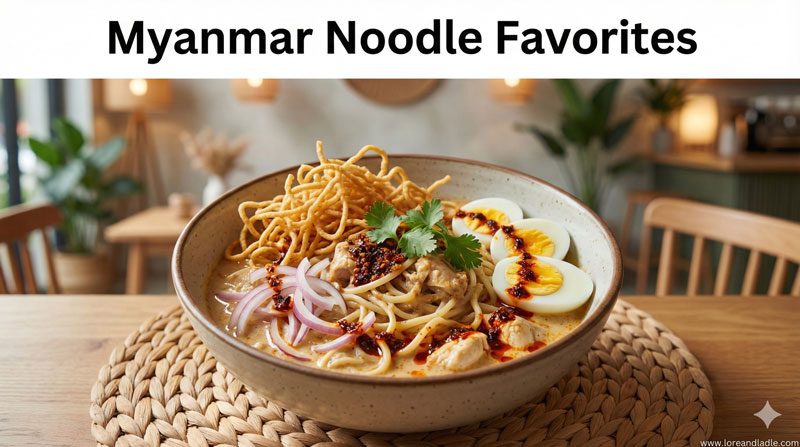
Ohn No Kauk Swe is a coconut-milk-based noodle soup that many find soothing when temperatures drop. The soup brings gentle sweetness from coconut milk and a warm spice profile that suggests a sunlit kitchen even on a chilly afternoon. Tender chicken and noodles drift in the creamy broth, while tomatoes and onions add brightness and body. A simple chili oil or fresh pepper can wake the bowl, giving a touch of heat that makes winter feel cozy, not heavy. In the U.S., this dish translates into a comforting, easy-to-love option for family dinners or quiet evenings at Home. The significance rests in how it uses coconut’s mellow richness to create a bowl that nourishes the senses and invites calm, reflective dining. Its cultural value is in showing how Burmese cooks turn available ingredients into a soothing, annual favorite.
A Seasonal Twist: Adapting Burmese Noodles for Fall and Winter in the U.S.
Fall and winter bring new opportunities to experience Burmese noodle dishes with seasonal produce. In the U.S., cooks often blend fall vegetables—such as mushrooms, squash, and leafy greens—into the bowls, either as toppings or simmered into broths. The result is still distinctly Burmese in aroma and technique, but it feels freshly comforting for the season. You might add sautéed mushrooms to Mohinga for earthiness, or fold in baby bok choy or kale to Nan Gyi Thoke for a crunchy, bright note. These adaptations highlight the versatility and resilience of Burmese noodle cuisine: a set of core flavors that welcomes local ingredients while preserving the soul of the dish. The cultural value here is adaptability with respect—honoring tradition while making it inviting for a modern home kitchen in the United States.
Texture and Balance: The Craft Behind Burmese Noodles
What makes these noodle bowls special is the balance of textures. Soft, yielding noodles meet a broth that smells of lemongrass and spices. Toppings provide crunch and brightness—crisp fried onions, fresh herbs, lime, and sesame seeds. The aroma alone can feel like a welcome homecoming. Cooks coordinate heat, sourness, sweetness, and salt in precise measures, then finish with a fresh garnish that sends the scent of the dish upward into the room. This craft matters because it teaches patience and attention to small details. The resulting bowls are not only filling; they are layered experiences that reward careful technique and mindful tasting.
Bringing Burmese Noodle Culture to Your Table in the U.S.
In the United States, these noodle favorites often serve as a bridge between kitchen traditions and contemporary dining. Home cooks bring ancestral knowledge into modern routines, turning a simple pot of broth into a ritual of care. Restaurants and households alike share stories through aroma, color, and texture, turning meals into memorable experiences. Sourcing can be flexible: fish broth can be built with local fish, noodles can be rice-based or wheat-based depending on preference, and herbs can be grown in a sunny window box or bought from a farmers market. The result is a meaningful culinary exchange that highlights the beauty of Burmese flavors and techniques, while celebrating the warmth of fall and winter meals in a new setting.
Quick Tips for Crafting Cozy Burmese Noodles
- Start with a fragrant broth foundation: a light sesame oil base, garlic, shallots, and lemongrass create an inviting aroma.
- Choose noodles that hold up: thick rice noodles work well for Nan Gyi Thoke; finer noodles suit Mohinga’s delicate broth.
- Balance toppings: crisp onions, fresh herbs, lime, and a touch of chili oil add texture and brightness.
- Embrace seasonal add-ins: mushrooms or squash can complement the savory notes without overpowering the dish.
- Keep it flexible: adjust salt, sour, and heat to your taste and the ingredients on hand.
Closing Thoughts: A Cozy Culinary Bridge
Cozy Fall and Winter Myanmar Noodle Favorites Ideas in the U.S. celebrate more than flavor. They honor a culinary heritage that embraces warmth, balance, and shared meals. Each bowl invites the senses to slow down, inhale the aroma, and savor a careful blend of tradition and seasonality. Whether you are cooking for family, friends, or a quiet evening alone, these noodles offer a respectful, inviting way to explore Burmese cuisine. They remind us that good food can be a gentle, generous connector—bringing comfort, culture, and celebration to the table in any season.