
Introduction
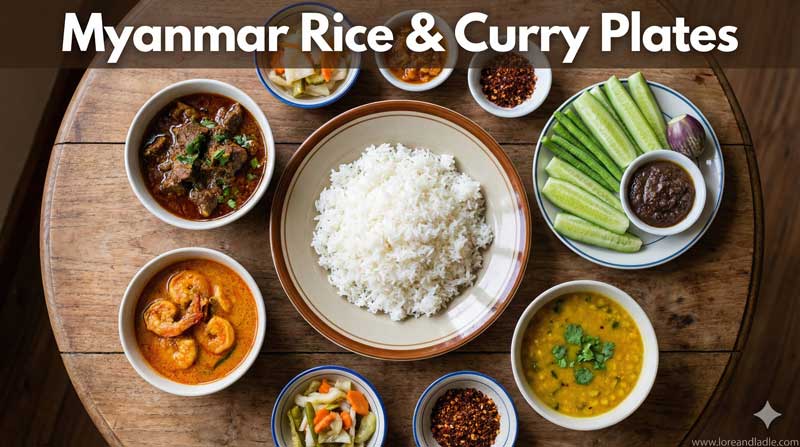
Myanmar Rice and curry plates form more than a meal. They are a celebration of everyday life, a gallery of color, aroma, and texture. The idea of building a full menu around these plates invites cooks to think beyond a single dish. It honors the rhythm of sharing, the balance of flavors, and the way ingredients travel from market to table. When you plan a menu around Myanmar rice and curry, you invite guests into a comforting, vibrant culinary culture.
What makes Myanmar rice & curry plates special
At the heart of these plates is rice, the stage where curries, vegetables, and sides gather. The curries may be chicken, fish, lentil, or vegetable, each with its own spice profile and depth. Sides add crunch, brightness, or a tangy note, while pickles and fresh herbs lift the whole plate. The result is a balanced meal that feels approachable yet layered. This format highlights the seasonality of ingredients and the skill of simple techniques done well. It is a cuisine that invites conversation, not ceremony, and it travels through markets, homes, and eateries with ease.
Core components and techniques
- Rice: steamed, fluffy, and fragrant, it anchors every plate.
- Curries: built on aromatics—garlic, shallots, chili, ginger, and lemongrass—with a base of coconut milk or broth for richness.
- Fresh accompaniments: herbs, lime or tamarind for brightness, crisp vegetables for texture.
- Fermented and pickled accents: a small bowl of pickle or a tangy relish adds depth.
- Method: layering Flavors in stages—sautéing aromatics, simmering the curry to develop body, and finishing with a bright finish from herbs or citrus.
These elements come together with careful balance. The best plates offer warmth from the curry, freshness from the greens, and a satisfying bite from crunchy pickles or fried components. The technique is approachable, yet the results feel thoughtful and complete.
Building a full menu around the plates
- Start with a central curry: choose a meat, seafood, or plant-based option as the anchor.
- Add two vegetable curries or pairings: one creamy, one crisp, to contrast textures.
- Include a protein-forward dish or a fish option for depth.
- Offer a bright or tangy pickle and a fresh salad or herb cup to cleanse the palate.
- Round out with a simple dessert or fruit course and a light beverage.
- Consider seasonal ingredients: leafy greens in spring, fresh beans in early summer, root vegetables in autumn.
A well-designed menu keeps rice as the common thread, while the curries, sides, and pickles provide variety. This approach makes the dining experience cohesive yet exciting, inviting guests to taste harmony across courses.
The cultural value of the plate
These plates embody hospitality. They reflect careful planning, shared best practices, and the joy of cooking together. The format honors regional ingredients and everyday techniques, showing how a simple base can become a feast through thoughtful pairings. In homes and eateries alike, the rice-and-curry concept anchors meals in comfort and community, while inviting cooks to express creativity within a familiar template.
Regional inspirations and seasonal variations
Myanmar’s landscape offers rich material for adaptation. Inland regions might emphasize hearty curries with beans and leafy greens, while delta and coastal areas favor fish and coconut notes. Herbaceous touches from moringa, dill, or lime leaf can appear in curries or sides, and different types of rice varieties provide subtle texture differences. Embracing regional ingredients keeps the menu vibrant and respectful of local flavors.
Practical tips for home cooks
- Plan ahead: prepare a couple of curries early, then finish with fresh herbs and quick pickles.
- Use a timer for gentle simmering to develop depth without over-reducing liquid.
- Balance richness with brightness: a squeeze of lime, a touch of tamarind, or a crisp pickle works well.
- Keep textures varied: creamy curry, crisp vegetables, and tender rice create a satisfying plate.
- Taste as you go and let seasonal produce guide the final touch.
Conclusion
Building a full menu around Myanmar rice and curry plates invites you to celebrate a cuisine rooted in warmth, balance, and daily life. It is a respectful, inviting approach that honors the beauty of Simple Ingredients treated with care. Whether you cook for a family gathering or a quiet dinner with friends, this concept offers a flavorful journey through Myanmar’s culinary landscape. Explore, taste, and share the rich harmony of rice, curry, and accompaniments.