
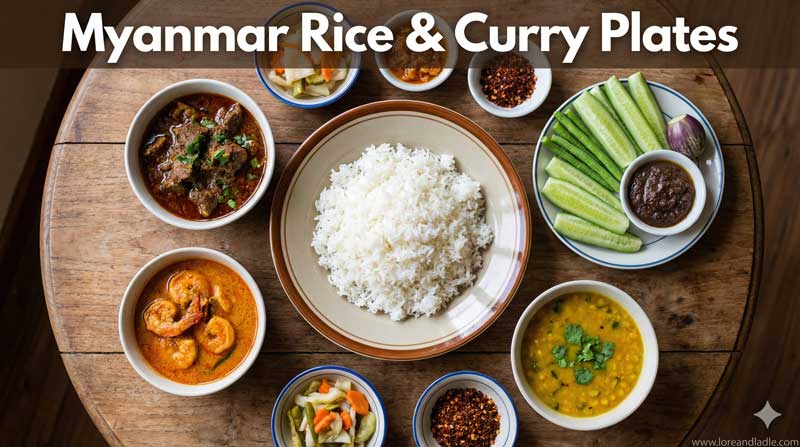
Introduction to Weeknight-Friendly Myanmar Rice & Curry Plates with Minimal Prep
This dish, Weeknight-Friendly Myanmar Rice & Curry Plates with Minimal Prep, invites you into a everyday food moment from Myanmar. It centers on a simple balance: fluffy rice, warm curry, fresh vegetables, and bright finishing notes. The idea is to honor tradition while making room for a busy evening. The plate becomes a small ceremony of flavor, texture, and color that families share around the table.
Why this plate works on busy evenings
First, the concept keeps prep light without sacrificing depth of flavor. Second, it uses Pantry Staples and quick-cooking vegetables. Third, it invites adaptability—you can swap proteins, adjust heat, or tailor the vegetables you have on hand. Finally, the plate emphasizes balance: mellow coconut curry, crisp greens, and a citrus lift. The result feels comforting, familiar, and celebratory all at once.
Flavor profile: Myanmar on one plate
Myanmar cuisine blends warmth and brightness. Turmeric and garlic give a gentle earthiness, while shallots add sweetness and aroma. Ginger and lemongrass bring a fresh lift. A touch of chili adds warmth without overwhelming. Coconut milk adds creamy richness to the curry, and fish sauce (or a salty alternative) anchors the dish with umami. Lime or tamarind can add a bright tang. On one plate, you taste the coast, the markets, and everyday kitchens working together.
The backbone: rice in Myanmar cuisine
Rice is the anchor of a Burmese meal. It is the plain canvas that carries curries, vegetables, and pickles. In this plate, the rice is the constant you return to with every bite. Steaming the rice until it is fluffy makes a big difference. A light sprinkle of salt or a dab of coconut oil can lift the aroma. The rice keeps the plate approachable for weeknights, while still honoring the traditional role it plays in daily life.
Minimal prep, maximum impact: techniques and tips
- Prep a curry base in a breeze. Sauté minced garlic, shallots, and ginger. Add turmeric, cumin, and coriander for warmth. Pour in coconut milk and a little water. Simmer briefly while you chop quick-cook vegetables.
- Choose flexible proteins. Chicken, fish, or tofu all work. A quick sear seals in flavor, then a short simmer finishes the dish.
- Use a vegetable shortcut. Spinach, green beans, bell peppers, and tomatoes cook fast and add color. Frozen peas are a handy option too.
- Build layers with texture. Add fresh herbs at the end, a handful of toasted nuts, or crisp shallots to create contrast with the smooth curry.
- Plan ahead in small steps. Chop aromatics ahead of time, and refrigerate. The curry base can be made in larger batches and warmed later.
- Keep the plate vibrant. A squeeze of lime and a few chopped herbs brighten the dish right before serving.
Structuring a traditional plate with modern ease
On a single plate, place a bed of fluffy rice. Spoon a generous portion of curry beside it. Add a small pile of vegetables or a bright pickle to introduce crunch and acidity. Finish with fresh herbs and a final drizzle of a light sauce or oil. This arrangement mirrors traditional Burmese practice: multiple tastes and textures on one plate, ready to be mixed as you eat. The modern twist here is the streamlined prep, not the spirit of the dish.
Pairings and finishing touches
- Fresh herbs: cilantro or extra Thai basil add brightness without overpowering the curry.
- Citrus notes: lime wedges or a light squeeze of lemon lift the flavors.
- Crunch and aroma: fried shallots, toasted sesame seeds, or roasted peanuts provide texture and aroma.
- Pickles and quick sides: cucumber slices or a simple tomato salad offer refreshing contrasts.
Cultural value: what this dish reveals about Myanmar dining
- Centering rice. The plate honors rice as the daily base, bringing comfort and continuity to busy evenings.
- Collecting flavors. The combination of curry, vegetables, and fresh notes reflects a culture that enjoys balance—soft and assertive, creamy and crisp, warm and bright.
- Accessible elegance. The dish demonstrates that refined flavor can come from thoughtful technique and good ingredients, even on weeknights.
- Shared experience. Meals arrive as a colorful, communal spread at the table, where each bite is part of a larger conversation about food and family.
- Seasonal mindfulness. The vegetables and herbs can reflect what is fresh and affordable, supporting a sustainable, local approach to cooking.
Ingredient notes and cultural context
- Rice: a dependable staple that forms the core of many Burmese meals.
- Curry base: built with aromatics and coconut milk to create a comforting, well-rounded sauce.
- Protein: chicken, fish, or tofu offer variety while keeping prep simple.
- Vegetables: choose a mix that suits the season and personal preference.
- Seasoning: a touch of fish sauce or salt deepens the savor; citrus brings lift.
These elements together show how Myanmar cooks adapt to what is available, while preserving a sense of harmony on the plate. The result is not just sustenance but a moment of cultural expression that travelers and locals alike can enjoy.
A closing note on craft and care
Weeknight meals can still feel thoughtful and rooted in tradition. This dish demonstrates that culinary significance lives in the careful balance of flavors, the ease of preparation, and the joy of sharing. By focusing on core components—rice, curry, vegetables, and bright finishing touches—you create a plate that honors Myanmar’s food culture and welcomes you to savor the beauty of simple, well-made food.
If you try this plate, you’ll notice how quickly a weeknight routine can become a small ceremony. The flavors tell a story, the textures invite exploration, and the plate sits invitingly at the center of the table. In short, Weeknight-Friendly Myanmar Rice & Curry Plates with Minimal Prep offers both practicality and a quiet celebration of Burmese culinary heritage.