
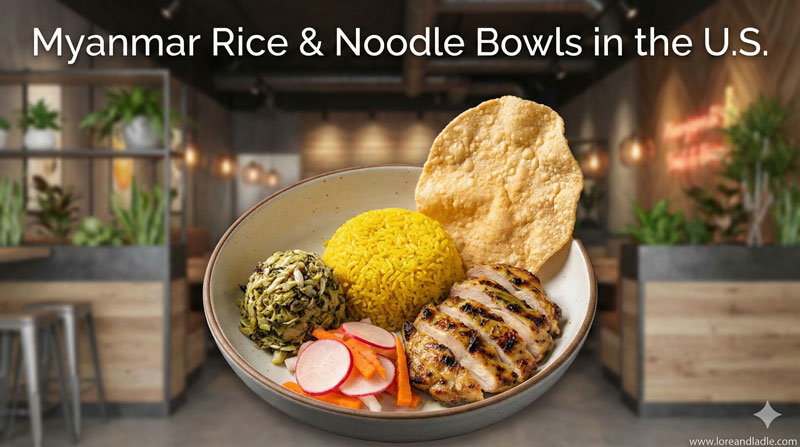
Introduction: A Window into Myanmar’s Comfort Food
Myanmar Rice & Noodle Bowls offer a calm, satisfying harmony of textures and flavors. In many households, these bowls stand as a daily celebration of home cooking. They blend soft noodles or rice with bright herbs, warm aromatics, and a balanced mix of savory sauces. When you prepare them in the U.S., you connect with a culinary tradition that values warmth, balance, and shareable meals. This post introduces a beginner-friendly shopping list and what it reveals about culture and craft.
What Makes Myanmar Rice & Noodle Bowls Special
At the heart of these bowls is balance. The soft chew of rice noodles or steamed rice contrasts with crisp vegetables and tender protein. Aromatics like garlic and shallots wake the dish, while lime or a splash of tangy sauce lifts the flavors. The result is a versatile plate that can be hearty for a family dinner or light for a quick lunch. Culturally, the bowl mirrors hospitality: guests are welcomed with generous, flavorful bowls that invite conversation and lingering around the table. The preparation favors clear technique, mindful timing, and respect for fresh ingredients.
The Beginner-Friendly Shopping List: A Cultural Bridge
The core idea is simple: a concise set of ingredients lets you recreate the spirit of Myanmar bowls anywhere, including the United States. The list focuses on core flavors and flexible components. With these items, you can assemble bowls that feel authentic, seasonally bright, and easy to customize for your tastes. The approach encourages confidence in the kitchen and appreciation for the practice of balancing sweet, sour, salty, and savory notes. In short, the shopping list becomes a bridge between two kitchens—Myanmar and American home kitchens—built on shared love of good food and thoughtful preparation.
- Rice noodles or thin flat noodles
- Fresh herbs (cilantro, mint, green onions)
- Aromatics (garlic, shallots, a touch of ginger)
- Protein (chicken, fish, eggs, or tofu)
- Leafy greens or crunchy vegetables (cabbage, bean sprouts, cucumbers)
- Condiments (fish sauce or soy sauce, lime juice, chili, a touch of sugar)
- Optional toppings (crushed peanuts, fried shallots, sesame seeds)
This selection keeps the flavors bright and approachable while honoring traditional notes. It invites experimentation and steady practice, which is how every cook grows more confident over time.
Core Flavors and Techniques
These bowls shine when you respect a few guiding ideas. First, balance is key: salty, sour, and sweet should all have space. Second, freshness matters: crisp vegetables and bright herbs lift the dish. Third, technique matters less than intention: even simple steps—softening aromatics, warming the sauce, and quickly tossing with noodles—yield results that feel thoughtful and intentional. The most satisfying bowls layer a mild, flavorful base with vibrant toppings, creating a sense of depth on every bite.
Ingredient Spotlight: Staples and What They Bring
- Noodles: Rice noodles bring a delicate chew and light, neutral canvas. Flat rice noodles offer a slightly firmer bite.
- Proteins: Shredded chicken or fish provide a comforting, savory backbone. Tofu or eggs offer easy vegetarian or protein-rich options.
- Herbs and greens: Cilantro and mint give brightness; green onions add a crisp finish; leafy greens contribute color and texture.
- Aromatics: Garlic and shallots form the aroma that defines the dish. Ginger adds warmth and subtle zing.
- Sauce elements: Fish sauce or a light soy sauce adds depth; lime juice offers brightness; a touch of sugar balances sharp notes; chili introduces gentle heat.
- Crunch and fragrance: Fried shallots or crushed peanuts give a satisfying finish and aroma.
Each component plays a role in the overall experience. When you bring these parts together in a bowl, you create a dish that speaks of care, skill, and inviting flavor.
Crafting the Bowl: Steps that Honor Tradition
1) Soften aromatics briefly in a pan to release their fragrance. 2) Cook or warm protein with a light sauce to keep it tender. 3) Prepare noodles or rice according to package directions. 4) Arrange a bed of greens, then add noodles and protein. 5) Finish with herbs, a tangy-sour element, and a gentle crunch on top. 6) Taste and adjust with a dash of fish sauce, lime, or chili to your preference.
The process emphasizes balance, timing, and the pleasure of assembling a meal that feels thoughtful. This mindful approach is a hallmark of Myanmar-inspired cooking, and it travels well to kitchens in the U.S.
Tips for Sourcing in the U.S.
- Explore Asian markets and the fresh produce aisle for herbs and greens.
- Look for rice noodles in the international section or refrigeration cases for better texture.
- Seek small bottles of fish sauce or tamari as a substitute when needed.
- Visit farmers markets for crisp cucumber, herbs, and leafy greens.
- Keep a small jar of chili, lime, and a pinch of sugar to adjust brightness and heat.
This practical guidance helps you build confidence and enjoy consistent results, no matter where you cook.
The Pleasure of Sharing: Social and Culinary Value
These bowls celebrate togetherness. A family meal, a shared lunch, or a quick dinner with friends becomes a small ceremony of care. The bright herbs, comforting noodles, and balanced flavors invite conversation about ingredients, technique, and memory. In this way, the dish becomes more than nourishment. It becomes a friendly way to welcome others to a table and a chance to learn from one another through food.
Conclusion: Embracing a Simple, Flavorful Meal
Myanmar Rice & Noodle Bowls in the U.S. offer a beautiful example of culinary craft and cultural expression. The beginner-friendly shopping list distills tradition into approachable components, inviting cooks to explore, adapt, and celebrate. By focusing on balance, freshness, and thoughtful preparation, you honor a dish that has nourished communities for generations. In your kitchen, these bowls become a warm invitation to savor culture, craft, and connection—one flavorful bite at a time.