
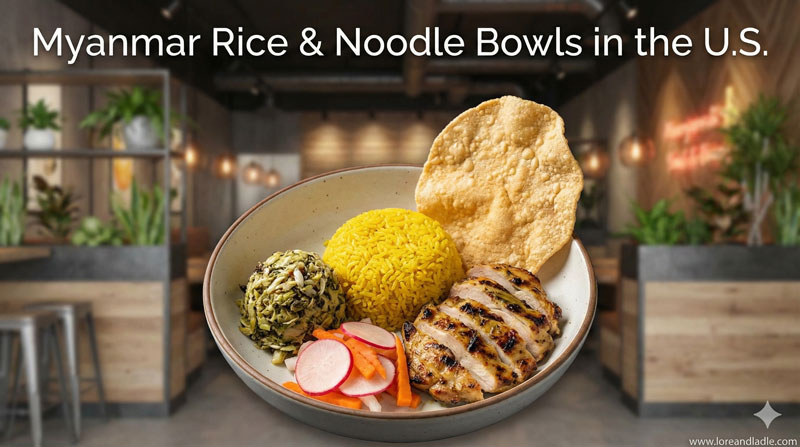
Welcome to Simple Myanmar Rice & Noodle Bowls
Across Myanmar, meals are warm moments of everyday life. in the United States, you can recreate that warmth with a bowl that pairs fluffy rice with soft noodles. This dish uses grocery-store ingredients that are easy to find, so you can enjoy Burmese flavors at home. The idea is simple: a comforting base, bright sauces, crunchy vegetables, and fresh herbs. The result is a versatile bowl that works for lunch, dinner, or a casual gathering with friends.
A Dish of Balance, Brightness, and Hospitality
Myanmar’s kitchen often celebrates balance. In these bowls, a light acidity from lime or lemon meets umami notes from fish sauce or a fermented paste. Crunchy vegetables contrast with smooth noodles and tender rice. Fresh herbs add perfume and brightness. This harmony makes the dish feel welcoming and bright, yet grounded. Every element is chosen to play a role without overpowering the others. The result is a dish that invites you to slow down, savor each bite, and share with others.
Ingredients You Can Find in U.S. Grocery Stores
- Jasmine rice or another long-grain white rice
- Rice noodles (thin vermicelli or flat rice noodles)
- Fresh cucumber, shredded carrot, and bean sprouts (optional)
- Fresh herbs: cilantro, mint, and scallions
- Hard-boiled eggs or sliced avocado for a creamy option
- Crunchy toppings: crushed peanuts, fried shallots or garlic
- Lime or lemon for bright juice
- Fresh chilies or chili flakes for heat
- Soy sauce or fish sauce (or a combination)
- Sesame oil for a fragrant finish
- Optional: ngapi paste (fermented fish paste) as a traditional note; if you don’t have it, use a small amount of fish sauce or miso for depth
- Optional protein: chicken, tofu, shrimp, or tempeh
These ingredients are common in many American grocery stores, Asian markets, and farmers’ markets. They come together quickly, making the bowls approachable for Busy days and relaxed weekends alike.
The Sauce: A Bright, Simple Dressing
Create a bright, Burmese-inspired dressing to tie the bowls together. In a small bowl, whisk:
– Lime or lemon juice (about 2 tablespoons)
– A splash of fish sauce or soy sauce
– A pinch of sugar or honey
– Minced garlic or garlic paste (about 1 clove)
– A small splash of water to loosen
– Optional: a drop of sesame oil and a pinch of chili flakes for warmth
Taste and adjust. If you have ngapi paste, whisk a tiny amount with the lime juice for a more traditional note. The dressing should be balanced—savory, tangy, and just a touch sweet. Drizzle over the assembled bowls just before serving to keep textures lively.
How to Assemble the Bowls
- Cook the rice according to package directions and keep it warm. Fluff it gently to stay light and fluffy.
- Prepare the noodles according to the package. Rinse with cool water if they’re very starchy, then drain well.
- Slice or chop vegetables to your preference. Keep them fresh and crisp.
- If using eggs, make hard-boiled eggs ahead of time and slice them.
- In each bowl, start with a bed of rice, add a helping of noodles, then pile on the vegetables.
- Add herbs, nuts, and fried onions for texture and aroma.
- Drizzle the dressing over the top. Finish with a squeeze of lime and a final shake of sesame oil if you like.
- Serve immediately and enjoy the contrasts of soft, crisp, bright, and nutty flavors in every bite.
Flavor Notes and Pairings
- The rice base offers a gentle, neutral canvas. The noodles bring a soft chew that pairs well with crisp vegetables.
- Lime, herbs, and a light fish-sauce kiss create a distinctly Burmese brightness without heaviness.
- Crunch from peanuts or fried shallots adds texture that elevates the overall experience.
- This bowl pairs nicely with a chilled tea, a light beer, or a sparkling water with a twist of lime.
Variations and Adaptations
- Protein swaps: swap in grilled chicken, pan-fried tofu, shrimp, or tempeh for a heartier bowl.
- Veggie upgrades: add sliced bell peppers, avocado, shredded cabbage, or quick-pickled radish for additional tang.
- Spice levels: adjust chili to your taste. A little squeeze of fresh lime at the table can brighten any heat.
- Gluten considerations: use gluten-free soy sauce or tamari if needed. Rice and rice noodles are naturally gluten-free, making the dish versatile for various diets.
Cultural Value and Culinary Significance
These bowls celebrate everyday Burmese flavors in a format that fits modern kitchens. The combination of rice and noodles reflects a practical, flexible approach to meals, where bases meet vibrant toppings. Fresh herbs and citrus highlight seasonal brightness, while a savory dressing draws all elements into a cohesive bite. The result is a dish that feels both familiar and new, inviting cooks to explore flavors with confidence. By using common grocery-store ingredients, the bowls become accessible, encouraging home cooks to honor and enjoy Myanmar’s culinary texture in daily life.
Respectful Accessibility: Making It Your Own
The beauty of this concept lies in adaptability. Start with a simple base of rice and noodles, then tailor toppings to what you enjoy or have on hand. The bowls welcome creativity while preserving a clear thread of Burmese flavor. This approach makes the dish welcoming to guests and easy to share, reinforcing the joy of gathering around a bright, nourishing meal.
Closing Thoughts
Simple Myanmar Rice & Noodle Bowls in the U.S. with Grocery Store Ingredients offer a graceful doorway into Burmese dining. They blend gentle acidity, savory depth, crisp vegetables, and fragrant herbs into one satisfying bowl. With straightforward steps and readily available ingredients, you can create a comforting dish that honors flavor, balance, and hospitality—right in your own kitchen. Enjoy the glow of fresh ingredients, the calm of a well-constructed bowl, and the pleasure of sharing good food with others.