
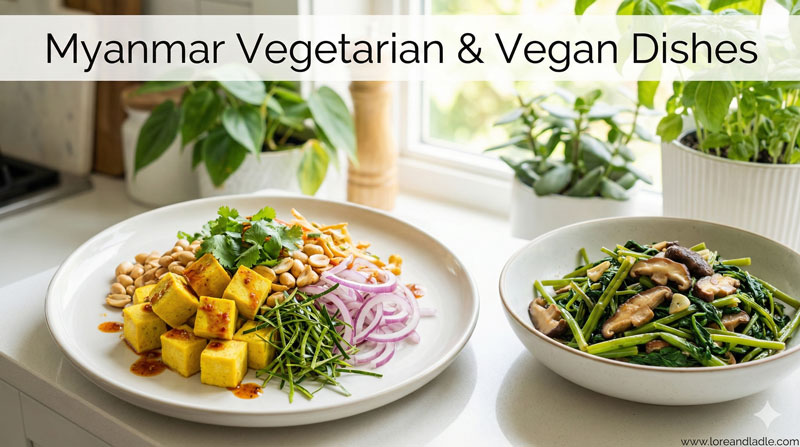
Slow-Cooked Myanmar Vegetarian & Vegan Dishes for Deep, Rich Flavor invites us into a kitchen tradition where plant-based cooking is honored with patience, care, and a sense of ritual. This collection shines a light on how slow methods unlock layers of aroma and texture, transforming everyday vegetables and legumes into something richly satisfying. The result is a culinary language that speaks of home, season, and the straightforward beauty of good ingredients prepared with attention.
Cultural Value and Daily Life
In Myanmar, meals are a shared act that connects family, neighbors, and friends. Slow-cooked vegetarian and vegan dishes are often prepared for fresh market days, temple offerings, and Weekend Gatherings. They reflect a philosophy of taking time to nurture those around you. Every simmering pot becomes a small celebration of mindfulness and generosity. The dishes carry memory in their aroma: a hint of garlic, a touch of turmeric, a whisper of coconut. They invite conversation and support a sense of belonging. In this way, Slow-Cooked Myanmar Vegetarian & Vegan Dishes for Deep, Rich Flavor isn’t just food; it is a language of care spoken through color, scent, and texture.
Culinary Significance: Depth Without Meat
The heart of these recipes is depth built without animal products. Slow simmering draws out sweetness from onions and roots, while spices build warmth and complexity. Umami comes naturally from mushrooms, roasted vegetables, and steady, gentle reductions. Coconut milk or palm sugar add roundness, balancing bright herbs and tangy notes. The result is a dish that feels lush and satisfying, even without meat. This approach illustrates how Myanmar’s plant-based kitchen can achieve fullness through technique as much as through ingredients. The emphasis on slow cooking highlights a culinary ethic: patience yields richness, and steady heat reveals the soul of each vegetable.
Core Plant-Based Ingredients and Their Stories
A typical preparation centers on a vibrant mix of legumes, roots, leafy greens, and seasonal vegetables. Think lentils that soften into a creamy texture, chickpeas that hold their shape, and mung beans that glow with color when simmered gently. Add in potatoes, sweet potatoes, squashes, okra, eggplant, and leafy greens like spinach or mustard greens. Aromatics—garlic, onion, ginger, and fresh chilies—provide the base, while turmeric, coriander seeds, and chili powder bring warmth. Fresh herbs, lime juice, and tamarind introduce brightness. For depth, cooks may fold in mushrooms or a small amount of soy sauce or mushroom sauce to amplify savoriness. Each ingredient contributes to a balanced palate of sweet, savory, sour, and a gentle heat.
Slow-Cooking Techniques That Define the Dishes
The slow method is a patient companion in the kitchen. Start with toasting spices briefly to wake their aroma. Then sweat the aromatics in a little oil until they turn fragrant and translucent. Layer vegetables and legumes, adding liquids gradually so flavors blend without rushing. A covered simmer allows fibers to break down and release their subtle sweetness. In many homes, clay or heavy pots hold steady heat and contribute a gentle, even simmer. Finally, a long simmer with a lid on helps ingredients mingle, yielding a cohesive, deep-tinted sauce or curry. The technique emphasizes balance: never rushing, always tasting, and adjusting salt, acidity, and sweetness as the pot thickens.
Flavor Architecture: Depth, Umami, and Balance
Deep flavor in these dishes comes from the careful build of layers. The base notes are savory and comforting, built with aromatics and salted with soy sauce or a vegetarian-friendly seasoning. Sweetness appears as onions caramelize and vegetables release natural sugars. Acidity often arrives through lime juice, tamarind, or a splash of vinegar, brightening the richer tones. A gentle heat level keeps the experience comforting rather than overpowering, inviting you to savor the sauce as much as the vegetables. Texture plays a key role too: tender legumes meet soft cubes of potato or pumpkin, while greens retain a fresh bite. The overall effect is a harmonious balance that showcases plant-based cooking at its most confident and soulful.
Social Settings: Sharing and Celebration at the Table
These dishes thrive as social meals. They are ideal for family dinners, weekend gatherings, and festive table settings where everyone contributes. The slow-cooked nature invites conversation while simmering, offering a hands-on activity that culminates in a shared feast. Bright chutneys, fresh herbs, or crispy fried onions can be added at the end for a contrasting snap. Serving alongside steamed rice or flatbread completes the experience. In every bite, you sense a tradition that values generosity and the joy of feeding others with nourishment that is hearty, healthy, and approachable.
Pairings, Serving Traditions, and Visual Appeal
To honor the dish’s depth, pair with simple accompaniments that let the flavors shine. Steamed jasmine rice or fragrant basmati rice provides a clean canvas. Fresh cucumber salad with a light vinegar dressing adds crunch and brightness. A handful of cilantro or sliced green onions offers an emerald note that lifts the plate. Pickled vegetables or a quick, tangy chutney can provide a contrasting tang, while crisp fried onions or toasted sesame seeds bring a delicate crunch. The presentation is a visual invitation as well as a culinary one: warm bowls, rich sauces, and vibrant greens create a table that feels inviting and complete.
Practical Tips for Home Cooks
- Use a sturdy pot or a clay vessel if you have one. The even heat helps the flavors mingle gently.
- Soak dried legumes ahead of time to shorten cooking time and improve texture.
- Toast spices briefly to wake their aroma before adding liquids.
- Layer aromatics gradually: start with the base, then add vegetables, and finally fold in greens toward the end.
- Keep some acidity for balance: a squeeze of lime or a splash of tamarind can lift the dish.
- For a vegan depth, substitute soy sauce, tamari, or mushroom-based sauces in place of any fish-derived ingredients.
- Taste as you go. Slow cooking rewards adjustments that reflect your pantry and preferences.
A Gentle Invitation to Create at Home
Slow-Cooked Myanmar Vegetarian & Vegan Dishes for Deep, Rich Flavor invites cooks of all levels to explore a meat-free, flavor-rich approach to traditional ideas. It celebrates the beauty of plant-based ingredients and the art of patience. With simple steps and respectful technique, you can craft dishes that feel both timeless and fresh. The experience honors everyday cooking as a meaningful ritual—one that nourishes body and spirit, and that brings people together around a shared, comforting meal.
If you are seeking a culinary journey that blends culture, technique, and plant-based living, this collection offers a warm entry point. Each dish demonstrates how slow, thoughtful cooking can reveal depth and beauty in vegetables, legumes, and herbs. It is an invitation to taste the generosity of a kitchen that believes good food begins with good ingredients, careful preparation, and a generous heart.