
Welcome to Restaurant-Style Myanmar Street Food & Snacks You Can Make at Home
This post introduces the concept Restaurant-Style Myanmar Street Food & Snacks You Can Make at Home. It invites you to explore a vibrant food culture that celebrates fresh ingredients, smart techniques, and shared moments around the table. The aim is to honor the beauty of Burmese street fare and show how restaurant-style quality can be achieved at home with care and respect for tradition.
The Cultural Value of Street Food in Myanmar
Myanmar’s street foods are more than quick bites; they are daily rituals. Early markets hum with vendors offering broth, noodles, pickles, and fried snacks. Families gather around small stalls, sharing stories as aromas rise from steaming pots. This cuisine mirrors the pace of life — brisk mornings, lively afternoons, and relaxed evenings when friends linger over cups of tea. Street food creates continuity: recipes are passed down, tweaks are shared, and local pride shines in each bite. When you cook these dishes at home, you connect with a living thread of culture that weaves neighborhood memory into your kitchen.
The Culinary Language: Flavor, Texture, and Technique
Burmese dishes speak through a careful balance of sour, salty, sweet, and umami. Key ingredients—fresh lemongrass, garlic and shallots, turmeric, chili, lime, and a touch of fermented fish paste—build depth. Coconut milk rounds out richness, while peanuts, sesame, and herbs add brightness and crunch. Texture matters as much as taste: silky broths, tender noodles, crisp toppings, and leafy greens provide contrast that makes each bite memorable. This language is accessible yet nuanced, inviting Home Cooks to layer flavors patiently, tastefully, and with confidence.
Bringing Restaurant-Style Skill Home: Techniques that Elevate Everyday Cooking
To recreate restaurant-style street fare, focus on three pillars: stock and broth, balance, and finishing touches. First, build a flavorful base using fresh aromatics and mindful simmering. Second, taste intentionally, adjusting brightness with lime and acidity, salt with fermented ingredients, and heat with fresh chilies. Third, finish with textures and colors — a scatter of crushed nuts, crisp fried elements, and bright herbs. Cast-iron pans or wide woks help achieve a quick sear and a glossy sauce, while proper noodle preparation ensures a satisfying bite. With these steps, simple ingredients become restaurant-worthy plates at home.
Signature Dishes You Can Recreate at Home
-
Mohinga: The iconic Burmese fish noodle soup, known for its fragrant broth and comforting warmth. At home, you can replicate the aroma by simmering fish with lemongrass, shallots, and a touch of turmeric, then adding rice noodles and a bright squeeze of lime.
-
Lahpet Thoke (Tea Leaf Salad): A celebrated snack that blends fermented tea leaf, crunchy peanuts, sesame, and fresh herbs. Its balance of tangy, nutty, and savory flavors makes it a staple for gatherings and a window into Burmese гост culture.
-
Nan Gyi Thoke (Rice Noodle Salad with Chicken): A dish of soft rice noodles tossed with chicken, turmeric-spiced sauce, and a mosaic of crisp toppings. It showcases the care given to noodle textures and the way sauces unify diverse components.
-
Ohn No Khao Swè: A coconut chicken noodle soup that feels homey yet refined. The broth glows with coconut richness and a gentle brightness from lime and herbs, offering comfort with sophistication.
-
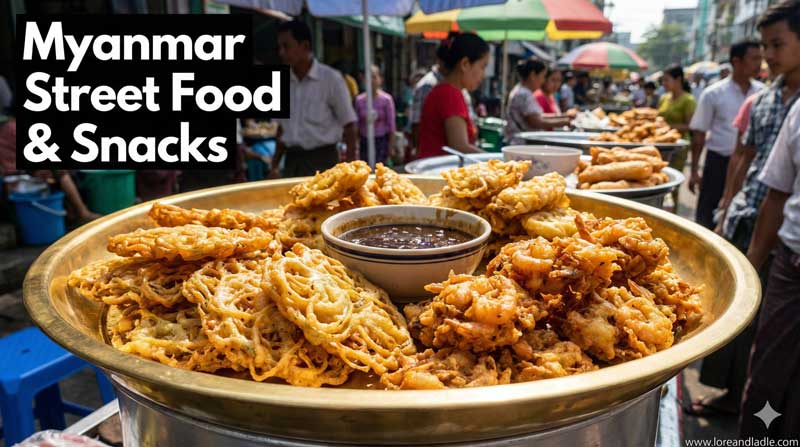
Savory Fritter Snacks: A simple crowd-pleaser found on many street corners. These fritters, crisp on the outside and tender inside, demonstrate how a few pantry staples can become a beloved bite. They highlight the joy of texture and the delight of sharing.
The Social Ties of Food: Markets, Tea Shops, and Shared Plates
Food in Myanmar is social. Markets are theaters of color and aroma, while tea shops act as living rooms for the day, where stories mingle with steam and laughter. Dishes are often shared, a practice that deepens hospitality and respect for cooks and eaters alike. When you prepare these street-inspired snacks at home, you participate in a culture of generosity and connection. The act of serving, tasting, and discussing a dish builds bonds and invites others to witness the care you take with every ingredient.
Sourcing and Substitutions: Keeping Authenticity Within Reach
To stay true to the spirit of these dishes, seek fresh aromatics, good quality noodles, and authentic flavor boosters like a small amount of fermented paste. In places where certain ingredients are hard to find, you can substitute with well-balanced alternatives that preserve the dish’s core character. Fresh lime, garlic, shallots, lemongrass, turmeric, and chili are universal anchors. If you can’t locate a specific fermented element, a splash of soy or fish sauce can help replicate the desired depth, while still honoring the umami that defines Burmese cooking.
A Respectful, Neutral Look at Burmese Street Food as Culture
The dishes discussed here celebrate beauty, craft, and everyday life. They honor the skill of cooks who transform humble ingredients into memorable meals. This is not about loud conclusions or policy; it is about the art of flavor, the joy of sharing, and the pride of a tradition that thrives in markets, homes, and small eateries alike. By exploring these foods, you gain a deeper appreciation for Myanmar’s culinary landscape and the artistry that elevates street snacks into restaurant-style experiences at home.
Closing Thoughts: Celebrate Craft, Celebrate Community
Restaurant-Style Myanmar Street Food & Snacks You Can Make at Home offers a gateway into a rich food culture. It invites you to savor the balance of flavors, to honor careful technique, and to enjoy dishes that tell stories of neighborhoods and rhythms of everyday life. Try crafting these plates in your own kitchen, share them with friends, and savor the sense of belonging that comes from a well-made meal. The table becomes a doorway to a community of cooks, bakers, and eaters who treasure the beauty of Burmese street fare.