
Introduction
Classic Myanmar Street Food & Snacks with Big, Bold Flavor offers a window into everyday life in Myanmar. This dish celebrates a busy, vibrant street scene where vendors sing out their specials and neighbors gather to Share small bites. The flavors are vivid and the textures diverse, yet the heart of the dish lies in its cultural value: food as a daily conversation, a way to welcome guests, and a bridge between generations. Through bite-sized treats and hearty morsels, the dish reveals how Burmese cooks balance sweet, sour, salty, and spicy notes with care. It is a celebration of craft, community, and the steady rhythm of the street.
The Bold Palette: Flavors that Define Myanmar Street Food
Myanmar street flavors stand out for their brightness and balance. Tangy tamarind, lime, and pickled elements meet salty fish pastes and roasted sesame. Spices add warmth without overwhelming the palate, and chilies provide a bright kick that lingers. Fermented ingredients, such as ngapi and balachaung, bring deep umami and a sense of tradition that has been refined across generations. The result is a bold profile that remains approachable: each bite offers excitement, followed by a comforting familiarity. This flavor architecture supports quick, satisfying eating on the go and invites curious tasters to explore further, bite by bite.
Signature Snacks: A Tasting Tour of Everyday Delights
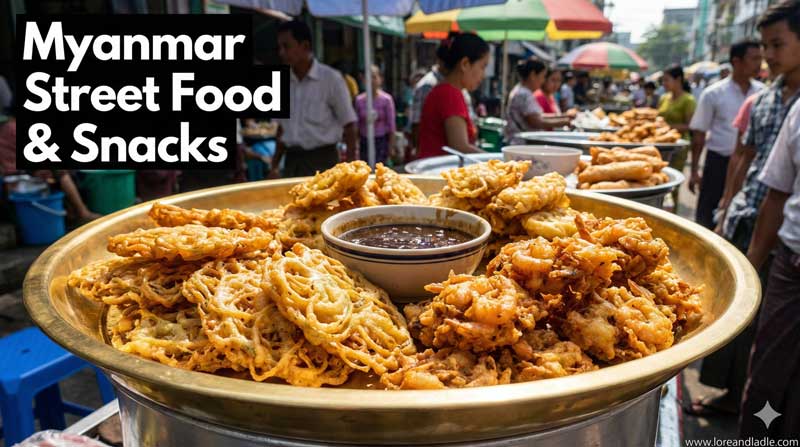
A tour through Classic Myanmar Street Food & Snacks highlights iconic items that are beloved in markets and stalls. Lahpet thoke, or tea leaf salad, stands out as a social centerpiece—an inviting mix of fermented tea leaves, toasted sesame, peanuts, crunch, and a tangy dressing. Balachaung, a spicy dried shrimp paste, appears as a savory topping or filling, delivering a punch of aroma and heat. Mohinga-inspired bites echo the dish’s comforting fish-forward notes in compact forms, bringing warmth and familiarity to a quick snack. Crunchy fritters, skewered morsels, and layered crackers often surface with dips, offering different textures to explore. Each element serves a purpose: to delight the senses, to tell a small story, and to be shared with friends and family.
The Craft Behind the Street Kitchen: Techniques and Ingredients
The heart of these dishes rests on practical, time-honored techniques. Wok-high heat, quick frying, and careful tempering shape many bites. Fermentation and paste-making are common threads, giving depth to sauces and dips. Core ingredients include fish pastes, ngapi, garlic, shallots, chilies, lime, tamarind, sesame, peanuts, and toasted coconut. Fresh herbs and aromatics—lemongrass, coriander, and mint—offer brightness that lifts heavier elements. The balance of textures—crisp edges, tender centers, and chewy bits—creates a satisfying rhythm in every plate. Skillful vendors blend flavors so each bite reveals a layer of complexity without overpowering the other notes.
Market Life and Community: Where Culture Feels Alive
Markets and street stalls are more than places to eat; they are social hubs where neighbors meet, stories are exchanged, and hospitality is expressed through shared food. The display methods—colorful baskets, sizzling woks, fragrant steam—invite passersby to pause. Vendors often tailor portions to the moment, offering small tastes first and building to fuller plates as appetite and curiosity grow. The dish reflects a culture of generosity: a guest is offered a sample, a family proudly shares a family recipe, and a seller’s reputation rests on consistent, flavorful bites. In this setting, the food becomes a living thread that connects generations through daily ritual and communal pleasure.
Cultural Value: Food as Daily Heritage
Food in Myanmar carries memory and meaning. The act of preparing and sharing street snacks supports social bonds and regional pride. Each bite can reflect local ingredients, weather, and seasonal harvests, making the dish a flexible map of place. This culinary heritage teaches respect for craft, patience in fermentation, and attention to balance. The dish also honors hospitality ideals, where welcoming a guest with bold flavors signals care and thoughtfulness. In essence, Classic Myanmar Street Food & Snacks with Big, Bold Flavor is not only nourishment; it is a storytelling medium, a way to preserve and celebrate a community’s everyday genius in flavor and technique.
Serving Styles, Etiquette, and Enjoyment
Serving styles emphasize accessibility and sociability. Small portions, shared plates, and a mix of hot and room-temperature items encourage conversation and exploration. It is common to pair bites with a cup of strong Burmese tea or a light, fragrant beverage, enhancing the taste experience without overpowering the palate. The experience invites browsers and locals alike to slow down, observe vendors at work, and ask questions about ingredients and methods. This approachable, respectful setting makes tasting an active, participatory event rather than a rushed snack break.
How to Enjoy: Tips for Savoring Like a Local
- Start with contrasts: sample both a tangy, crisp bite and a warm, savory one to appreciate balance.
- Look for stalls with steady crowds—quiet lines often indicate reliable flavor and freshness.
- Request a small tasting portion if available, then choose larger plates based on what you loved.
- Pair bites with a gentle tea or a cooling beverage to cleanse the palate between spicy or salty notes.
- Observe the texture: seek a mix of crunchy, chewy, and tender elements to experience the dish fully.
- Respect pace and sharing customs; enjoy bites at a natural tempo and pass plates with care.
A Living Cuisine: The Ongoing Story of Burmese Street Snacks
This dish captures how food travels through neighborhoods, markets, and kitchens. It honors the people who craft each component, from pastes and sauces to crisp fried elements. It celebrates regional varieties that appear across cities and towns, each adding its own twist while preserving core flavors. The beauty of Classic Myanmar Street Food & Snacks with Big, Bold Flavor lies in its adaptability and warmth. It invites everyone to savor daily life, to taste the skill of generations, and to feel the joy of shared meals in a bustling, welcoming street culture.
Conclusion
In its bold flavors and communal spirit, this dish offers more than delicious bites. It presents a cultural practice—the art of making, sharing, and enjoying street food—that keeps everyday life vibrant and connected. Whether you are a curious traveler or a home cook seeking inspiration, the experience invites you to slow down, observe, and savor. With every bite, you taste a heritage that remains lively, generous, and delicious.