
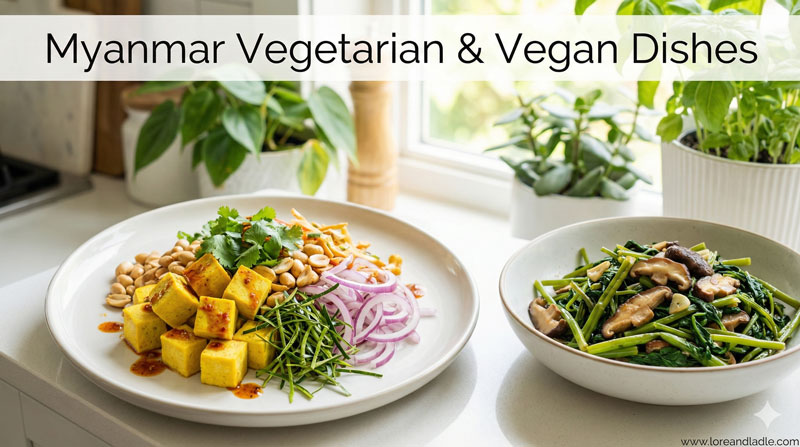
Discovering Flavorful Myanmar Vegetarian & Vegan Dishes Ideas with Simple Spices
This dish concept invites you to savor Myanmar’s plant-based flavors through a thoughtful collection of ideas. It centers on vegetables, legumes, and tofu, all lifted by a small, well-chosen set of spices. The result is vibrant, comforting, and easy to recreate. You will feel the beauty of Myanmar’s cooking in every bite, as fresh produce meets clear, aromatic seasonings.
Cultural value: honoring simple ingredients with careful technique
Myanmar cuisine often highlights the natural sweetness and brightness of vegetables. When simple spices are used with care, they reveal layers of aroma and texture without overpowering the ingredient’s character. This approach honors the home kitchen, where meals are shared with family and friends. The dish ideas reflect a spirit of generosity and hospitality that makes every table feel welcoming.
Culinary significance: the art of balance through accessible spices
The flavor profile relies on a small arsenal: garlic, shallots, fresh chilies, lemongrass, turmeric, coriander seeds, and toasted sesame or peanut notes. These spices are versatile and affordable, yet they create depth when toasted, ground, and blended. The result is a bright, comforting bite that can be tweaked for heat, sourness, or creaminess with simple additions like lime juice, tamarind, coconut milk, or a splash of soy sauce. The significance lies in transforming everyday vegetables into memorable, satisfying dishes.
Core ingredients and techniques that shape the dishes
- Staples: tofu, chickpeas, lentils, green leafy vegetables, eggplant, bean sprouts, jackfruit, tomatoes, and fresh herbs.
- Flavor builders: garlic, shallots, fresh chili, lemongrass, turmeric, coriander, and peanut or sesame paste.
- Textural contrasts: crisp vegetables, silky coconut milk, and lightly toasted nuts.
- Techniques: quick stir-fries, simmered curries, and gentle braises that coax out natural sweetness.
To achieve a balanced dish, start with a light sauté to wake the aromatics, add vegetables in order of their cooking time, and finish with a bright finish such as lime, a hint of vinegar, or a dash of fresh herbs.
Signature ideas: vegetarian and vegan inspirations from Myanmar
- Aromatic lemongrass tofu with peanut drizzle: crisp tofu pieces tossed in a fragrant lemongrass and garlic base, finished with a peanut-lime sauce.
- Green curry with tofu and greens: a simple coconut milk base, loaded with leafy greens, peas, and tender tofu cubes, seasoned with turmeric and coriander.
- Chickpea and vegetable sambal: chickpeas and mixed vegetables in a fiery-sour chili-tomato sauce, brightened with lime and cilantro.
- Eggplant with sesame-citrus glaze: roasted eggplant bathed in a nutty sesame dressing with a touch of orange or lime citrus.
- Lentil curry with coconut milk: a creamy, comforting dish that relies on garlic, turmeric, and a dash of chili for warmth.
- Bean sprout stir-fry with herbs: a quick wok dish that brightens flavors with fresh herbs, garlic, and a splash of soy sauce.
- Fresh herb quinoa with roasted vegetables: a wholesome bowl that pairs nutty grains with caramelized vegetables and a lemon-herb finish.
Each idea showcases how a handful of ingredients can become a dish with personality, when cooked with intention and a respect for freshness.
Cooking methods that elevate plant-based flavors
- Quick sauté: a brief, high-heat treatment that preserves color and crunch.
- Simmered curries: gentle heat allows coconut milk and spices to infuse deeply.
- Roasting: concentrates flavor in vegetables like eggplant and peppers.
- Toasting spices: activates aroma and adds depth to even simple blends.
- Finishing touches: bright citrus, fresh herbs, and a light drizzle of sesame oil or peanut sauce.
By varying these methods, you can tailor the texture and aroma to suit your mood and season.
Cultural practices and the joy of sharing meals
Food in Myanmar often centers on generous sharing and harmonious flavors. Families cook together, teaching younger cooks How to balance sweet, sour, salty, and spicy notes. Temples and communities may host simple meals that emphasize fresh vegetables and soy-based components. This dish concept aligns with those values by offering inviting, plant-forward meals that invite everyone to gather, taste, and celebrate togetherness.
Shopping for fresh, local ingredients
- Choose vibrant greens, peppers, and tomatoes that feel firm to the touch.
- Look for firm tofu and plump lentils or chickpeas.
- Stock Pantry Staples: garlic, shallots, lemongrass, turmeric, coriander seeds, chili, peanut or sesame paste.
- Add citrus: lime or lemon for brightness and a touch of acidity.
- For creaminess, coconut milk is a versatile choice; opt for a light can for a lighter finish.
Local markets often carry seasonal produce that elevates these dishes with natural sweetness and color.
Presentation: how these dishes reflect Myanmar’s dining culture
Serve in shallow bowls to show the colors of vegetables, with a side of steamed or lightly seasoned rice. Garnish with fresh herbs, sesame seeds, and lime wedges to invite a lively aroma and a fresh finish. The dishes look as inviting as they taste, inviting friends and family to share and savor together. Presentation is a subtle but important part of the experience, signaling hospitality and care.
Regional twists: embracing variations with simple spices
Myanmar’s landscape offers a range of vegetables and greens that adapt well to these ideas. In cooler highland areas, you might emphasize heartier greens and root vegetables with a creamier coconut base. Coastal regions bring brighter citrus notes and lighter sauces, while inland markets favor robust pepper and sesame flavors. All these variations respect the same core spice set, proving how small changes can celebrate local abundance without complicating the recipe.
Getting started: a gentle guide to begin your journey
- Start with a basic aroma base: sauté garlic and shallots, then add a chopped chili and lemongrass.
- Introduce vegetables in order of their cooking time, keeping the most delicate greens for the end.
- Build creaminess with coconut milk or peanut paste, and finish with a splash of lime.
- Taste and adjust: a touch of salt, a squeeze of lime, and a final herb note can transform the dish.
- Pair with simple rice, flatbread, or warm grains to complete the meal.
This approach makes Myanmar-inspired vegetarian and vegan dishes accessible while preserving cultural richness. It invites cooks of all levels to explore, enjoy, and share, continuing a tradition of flavorful, plant-based cooking that honors the land and its flavors.