
Introduction
Myanmar main dishes hold a special place at the weeknight table. They invite conversation, offer comforting warmth, and reveal a refined balance of flavors. This post explores How to serve classics with care, highlighting cultural value and culinary significance. You will see why these dishes fit naturally into everyday meals and how to present them with grace.
The Flavor Palette and Its Significance
Myanmar cooking blends sweet, sour, salty, and savory notes in harmony. Aromatics like garlic, shallots, and lemongrass perfume the dishes. Turmeric adds warmth, while dried chili or fresh peppers bring gentle heat. Fish sauce or soy adds depth, and fresh herbs brighten the plate. This combination supports a mealscape that feels both familiar and distinct. Serving these flavors well demonstrates respect for local techniques and the careful balance that defines Burmese cuisine.
Weeknight-Friendly Approaches to Classic Dishes
Weeknights call for practical choices. Start with one-pot curries that simmer while you tend other tasks. Use chicken, beef, or fish as the main protein, and pair it with potatoes, greens, or eggplant when appropriate. Prepare a simple curry paste once, then reuse it across different dishes to save time. Fresh lime, tomatoes, and herbs can brighten a dish in minutes. With a little planning, these dishes become reliable, satisfying dinners that honor tradition without demanding long hours in the kitchen.
Building a Balanced Plate
A Burmese weeknight plate often centers on rice. Place a generous serving of fluffy rice beneath a pot of curry. Add a portion of protein, then layer in a vegetable side or two for color and texture. Include a small pickled or fresh accompanyment to provide a tangy contrast. Finish with crunchy fried onions or sesame seeds for texture. This structure—rice, sauce, protein, greens, and a bright accent—creates a complete, comforting meal that is easy to repeat throughout the week.
Serving Techniques and Table Presence
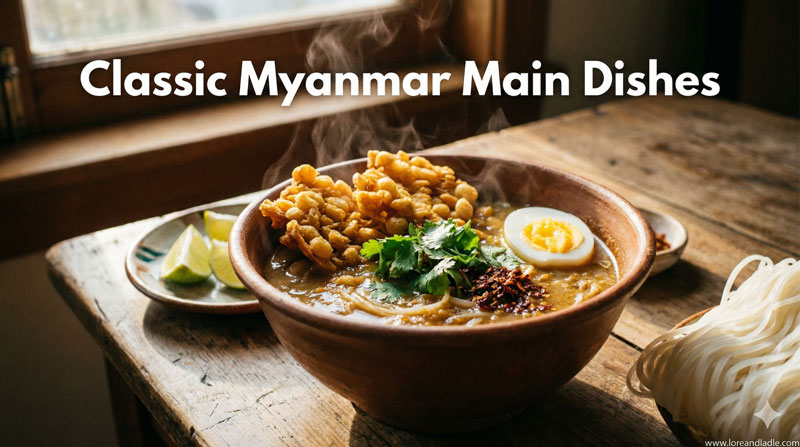
Present the meal in warm, shallow bowls that show the curry’s color and steam. Spoon sauce beside or over the rice, rather than drowning it, so each bite remains balanced. Add a slice of lime or a dash of fresh herbs at the end to lift the aroma. Offer a small dish of pickles or a crisp salad to provide a crisp counterpoint. The ritual of arranging components thoughtfully communicates care and elevates the dining experience.
Practical Tips for Weeknight Success
- Plan ahead: marinate the protein the night before or make a curry base early in the week.
- Keep staples on hand: rice, a reliable curry paste, and fresh herbs for quick assembly.
- Maintain balance: taste as you cook and adjust sweetness, sourness, and salt gradually.
- Preserve texture: add greens near the end to keep them bright and pleasantly crisp.
- Create a comforting atmosphere: soft music, a neat table, and warm lighting enhance the meal’s cultural feeling.
Conclusion
Serving classic Myanmar main dishes for weeknight dinners offers more than nourishment; it invites connection with a culinary culture that values balance, aroma, and care. By prioritizing a simple structure, careful seasoning, and thoughtful presentation, you honor the beauty of these dishes. Each meal becomes a small celebration of place, craft, and daily life—warm, inviting, and deeply satisfying.