
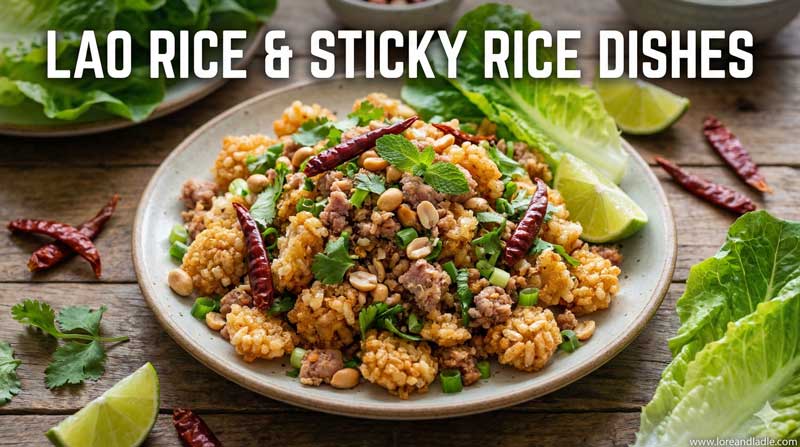
Oven-Baked Lao Rice & Sticky Rice Dishes for Hands-Off Dinners: An Introduction
This dish celebrates Lao Rice culture with a modern twist. It blends the beloved texture of sticky rice with the convenience of oven baking. The result Is a hands-off dinner that still honors tradition. In every bite, you taste a story of field, grain, and table. The method frees time for sharing and conversation, without quieting the soul of Lao flavors. The dish invites curiosity and respect for the careful balance of aroma, tenderness, and savor.
Rice as the Heart of Lao Food Culture
Rice is more than a staple in Laos; it is a signal of daily life and hospitality. Sticky rice, known for its soft chew and gentle glue-like pull, anchors meals and rituals. Diners gather around a shared spread, picking up rice with fingers and forming small portions for each bite. This practice centers patience, rhythm, and togetherness. The oven-baked version preserves that spirit by delivering evenly cooked grains while letting cooks focus on herbs and accompaniments. In short, rice here is poetry in texture, a bridge between field and Family table.
The Oven-Baked Method: A Modern, Hands-Off Dinners Approach
This approach uses gentle heat to coax flavors from the rice and its herbs. First, rinse and hydrate the grains, then seal them with coconut milk, lemongrass, garlic, and a touch of salt. Next, bake slowly in a covered dish. The oven does the work, so cooks can mingle with guests or prepare a fresh accompaniment. Finally, rest the dish briefly after baking. The result is fluffy centers with a soft, aromatic glow around the edges. This method respects Lao taste while offering practical, hands-off evenings.
Texture, Aroma, and Balance: The Culinary Significance
The dish celebrates a dialogue between textures. Sticky rice brings a gentle stickiness that holds its shape, while the oven’s even heat keeps grains tender and separate enough to scoop. Aromas rise from coconut milk, herbs, and a hint of citrus. The balance of salty, sweet, and bright notes mirrors Lao culinary ideals: harmony, subtle sweetness, and refreshing brightness. When you pair the rice with grilled fish, herbs, and a light chili kick, you feel a complete spectrum of Lao flavors in a single bite.
Traditional Pairings and The Social Table
Lao meals often center around shared plates and a variety of textures. This dish pairs beautifully with grilled fish or pork, a zesty larb, or a fresh papaya salad. Fresh herbs—cilantro, Thai basil, mint—brighten the plate and invite a chorus of aromas. The hands-off rice acts as a quiet stage for these lively accompaniments. In this way, the dish supports the social heart of Lao dining: conversation, balance, and enjoying food together. The experience becomes more than eating; it becomes a respectful ritual of sharing.
Techniques That Honor Lao Rice: From Rinse to Rest
Begin with a gentle rinse to remove starch without washing away flavor. Soak briefly to soften the grains. Then combine with a light amount of coconut milk or stock to heighten creaminess. Seal the dish tightly and bake at a moderate heat until the surface glows with aroma and the grains become tender. Finally, rest the dish for a few minutes. Resting helps flavors settle and grains finish absorbing moisture. This sequence keeps the dish faithful to Lao taste while embracing a modern kitchen rhythm.
Seasonal Staples and Sustainability in Lao Rice
Local rice, herbs, and vegetables enrich this dish. Lean on seasonal greens, peppers, and aromatics to keep flavors vibrant. Supporting nearby farms reduces transport and preserves freshness. The rice itself reflects careful water use and field work that sustains landscapes and communities. By choosing seasonal, local ingredients, the dish becomes a celebration of place as much as of technique.
Conclusion: A Dish That Bridges Kitchen and Culture
Oven-Baked Lao Rice & Sticky Rice Dishes for Hands-Off Dinners blends ancient texture with contemporary ease. It honors Lao rice as a cultural treasure and presents it in a way that invites everyone to the table. With each serving, you taste care, balance, and the joy of shared meals. In this fusion of tradition and practicality, the dish shows how food can be both reverent and welcoming, a quiet celebration of Lao culinary significance.