
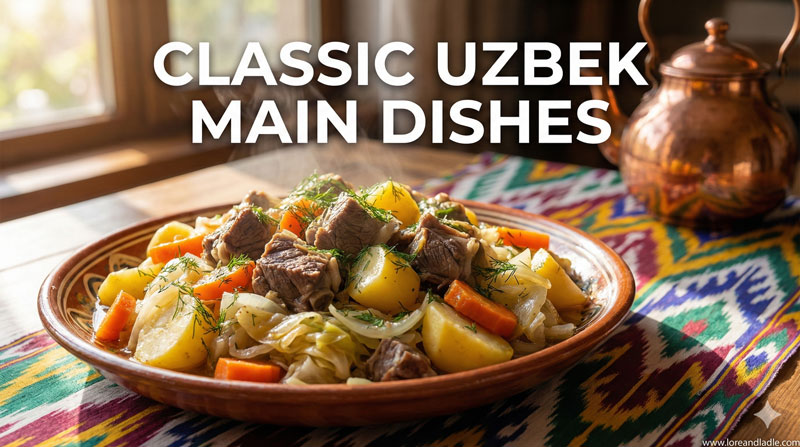
Introduction to Popular Beshbarmak – Classic Uzbekistani Main Dishes Flavor You’ll Love
This dish stands at the heart of Uzbek food culture, a warm bowl that invites gatherings. Popular Beshbarmak – Classic Uzbekistani Main Dishes Flavor You’ll Love showcases noodles, tender meat, and a clear broth. The name beshbarmak means “five fingers,” a hint to how it is shared and enjoyed. In homes and eateries, families welcome guests with this dish, offering comfort and continuity. Its flavors and textures tell a story of land, soil, and seasonal ingredients.
Core Elements: Noodles, Meat, and Broth
The dish rests on three pillars: hand-cut noodles, meat, and a fragrant onion broth. Noodles are silky yet sturdy, made from flour and water, sometimes with eggs. Meat options vary, with lamb or beef offering rich flavor and tenderness. The broth gathers sweetness from onions and gentle simmering, creating a clear, inviting liquid. Serve the noodles in a broad platter, top with meat slices, and ladle the broth over.
Craft and Technique: A Dance of Fire and Time
Chefs begin with a slow simmer to soften the meat until it falls apart. Meanwhile, they roll and cut the dough into thin, broad ribbons. They boil the noodles until al dente, then cool slightly for texture. The final plate presents generous meat, tender noodles, and steam rising from the broth. This balance of heat, time, and gentle seasoning defines the dish’s character.
Cultural Value: Hospitality and Shared Tables
Beshbarmak shines as a symbol of hospitality and welcome. It is often prepared for family meals, celebrations, and visits from neighbors. Diners gather around a shared platter, touching the dish with hands and bread. The act of sharing emphasizes generosity, patience, and togetherness. Through every bite, guests sense a warm invitation to connect and linger.
Regional Variations and Seasonal Flair
Across Uzbekistan, cooks adjust the balance of meat, noodles, and broth. Some regions favor lamb for a deeply aromatic taste, others use beef for clarity. The dish may include fresh herbs or a touch of pepper to brighten the palate. Noodle shapes vary, from wide ribbons to thinner strips, depending on tradition. Regardless of variation, the dish remains a unifying thread in local kitchens.
The Dish in Festivity: Weddings, Gatherings, and Everyday Meals
In festive settings, beshbarmak marks milestones and joyful days. Hosts present the dish as a sign of care and successful cooking. Guests respond with appreciation, sharing stories and toasts as they eat. On ordinary days, families claim a moment of calm with this comforting bowl. The dish connects generations, from grandparents to young cooks learning the craft.
Pairings and Presentation: Savoring the Experience
Fresh herbs like dill or parsley add a bright note to the bowl. A wedge of bread helps scoop up broth and pieces of meat. Tea or ayran complements the savory steam with a gentle contrast. Plating emphasizes generous portions and clear textures. The sensory rhythm—steam, aroma, and soft noodles—draws visitors back.
Why It Endures: A Timeless Thread in Uzbek Cuisine
The dish endures because it speaks to home, season, and skill. Cooks refine the thin noodles and flavorful broth with care. It invites conversation, learning, and sharing across a table. The beauty lies in the balance between simple ingredients and patient technique. For anyone exploring Uzbek cuisine, beshbarmak offers an authentic, welcoming doorway.