
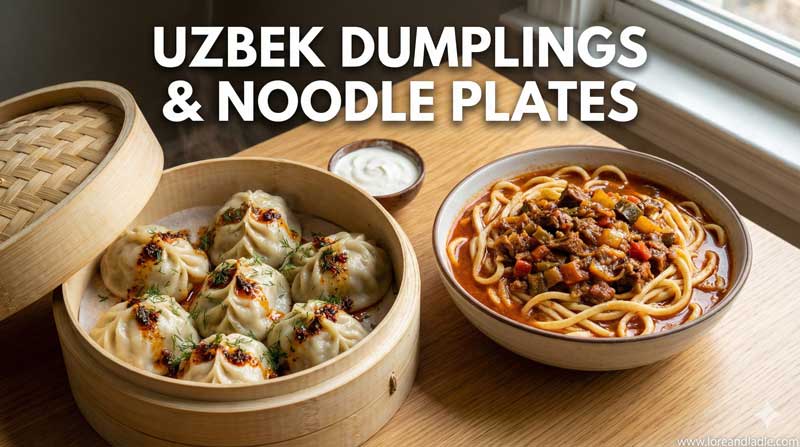
Popular Beshbarmak – Uzbekistani Dumplings & Noodle Plates Flavor You’ll Love
Beshbarmak is a cherished dish in Uzbek cuisine. It blends tender meat, soft flat noodles, and a savory broth into a centerpiece that invites warmth and conversation. The result is a plate that feels both comforting and celebratory. When you savor it, you taste a lineage of Home Cooking and shared meals that nourish more than the body.
What Beshbarmak Is and Why It Matters
Beshbarmak translates to a simple idea: a meal for the family, eaten with the fingers. The dish centers on generous slices of boiled meat laid over broad, delicate noodles. A fragrant broth and a bright onion sauce complete the plate. This combination, simple in composition yet rich in flavor, anchors gatherings and everyday meals alike. It expresses hospitality, attentiveness, and the joy of eating together.
The Craft Behind the Noodles and Broth
The noodles are the soul of the dish. They are usually flat and hand-cut, yielding a silky bite that soaks up the broth without becoming mushy. The broth is simmered slowly, drawing out the meat’s sweetness and creating a cozy, lingering aroma. Thinly sliced onions add a delicate sweetness and depth, balancing the meat’s savor. Each element supports the others, creating harmony rather than dominance. The technique rewards patience and careful tasting, inviting cooks to nurture layers of flavor with care.
Cultural Significance in Uzbek Cuisine
In Uzbek culture, food is a language of hospitality and friendship. Beshbarmak often appears on tables during joyful occasions and family feasts. It signals welcome and generosity, inviting guests to share in a memory built around food. The dish also demonstrates skill with basic techniques—boiling, slicing, and assembling—while allowing room for personal touches in seasoning and presentation. This combination of accessibility and depth makes beshbarmak a beloved anchor in the kitchen repertoire.
Ingredients and Flavor Profile
Core components include:
– Tender meat, typically beef or lamb
– Broad, soft noodles
– A clear, flavorful broth
– A bright onion sauce that adds sweetness and balance
The flavor is warm and inviting: a comforting meatiness, a gentle sweetness from onions, and a clean noodle bite. The broth ties everything together, giving each mouthful a cohesive, satisfying finish. The overall profile is hearty without heaviness, making it a versatile favorite across seasons.
Regional Variations and Modern Takes
Within Uzbekistan, households may vary the cut of meat, the thickness of the noodles, and the balance of onion to broth. Some cooks drizzle a touch of herbs or a light aromatic oil to finish the dish. Modern takes may introduce gentle improvisations, yet the essence remains intact: a dish meant to be shared, enjoyed without rushing, and appreciated for its straightforward beauty.
Pairings and Occasions
Pair beshbarmak with simple accompaniments that complement the broth and meat. Light salads, fresh bread, or yogurt-based sauces can brighten the plate without overpowering it. The dish shines at sunset meals, weekend gatherings, and seed-to-table celebrations where warmth and togetherness take center stage.
Why You’ll Love This Dish
- It embodies hospitality through its sharing nature.
- It offers a comforting, balanced flavor with a satisfying texture mix.
- It reflects careful technique done with everyday ingredients.
- It invites both cooks and guests to participate in the meal’s rhythm.
Tips for Home Chefs
- Use a cut of meat you enjoy; slow, gentle simmering yields the most tender result.
- Roll or cut the noodles to a width you prefer, aiming for a texture that holds broth well.
- Taste the broth and onion sauce as you go; a touch of salt or a whisper of pepper can elevate the dish.
Conclusion
Popular Beshbarmak – Uzbekistani Dumplings & Noodle Plates Flavor You’ll Love offers more than nourishment. It is a celebration of shared meals, craftsmanship, and the quiet beauty of simple ingredients coming together. With every bite, you experience a part of Uzbek culinary heritage that welcomes, satisfies, and inspires.