
Introducing Restaurant-Style Lao Appetizers & Small Plates You Can Recreate at Home
Lao cuisine speaks softly yet vividly through small plates shared around the table. The collection of restaurant-style Lao appetizers and small plates invites Home Cooks to explore bright herbs, tart lime, and smoky grilled flavors. This dish concept centers on hospitality, balance, and the joy of bites that carry a region’s memory in every crunch and herb note. You can recreate these plates at Home with everyday ingredients, while preserving the cultural spirit of Lao dining.
The Cultural Core of Lao Appetizers
Food in Lao culture is a daily act of welcome. Small plates arrive first to spark conversation and set a mood of generosity. Fresh herbs—mint, cilantro, dill, and Thai basil—are not garnish; they are essential flavors that carry the landscape of fields and rivers. The use of lime juice, fish sauce, and dried shrimp brings bright sour and umami to every bite. Toasted rice powder adds a subtle toasty texture that connects dishes to tradition. These elements work together in harmony, inviting diners to share, taste, and reflect on the season and locality.
Flavor, Technique, and Harmony
Lao appetizers are guided by balance: sour, salty, spicy, and earthy notes interplay with crisp textures and herbaceous freshness. Dishes emphasize freshness and clarity of flavor. Techniques are approachable yet precise: quick searing, careful chopping, and the hush of a mortar and pestle to release aromatics. The use of a simple staple—sticky rice—transforms each bite into a communal experience, where the rice acts as a neutral counterpoint to bold flavors. When these plates come together, they reveal a culinary language that values clarity, contrast, and cohesion.
Dishes You Can Recreate at Home
Here are approachable Lao-inspired plates you can craft in your kitchen. Each dish centers on authentic flavors, but remains friendly for home cooks.
- Tam Mak Hoong (Lao Green Papaya Salad)
- Core idea: shredded green papaya with tomatoes, green beans, herbs, and a tangy dressing.
- Flavor pillars: lime juice, fish sauce, a touch of palm sugar, and a light kick from chilies.
- Textural cue: crunch from fresh veggies and crushed roasted rice powder.
-
Why it shines: bright, zesty, and refreshing; it pairs beautifully with sticky rice or grilled meats.
-
Larb (Laab) of minced meat with herbs
- Core idea: minced meat is heated briefly or kept raw, then dressed with lime, fish sauce, chilies, shallots, and a handful of mint and cilantro.
- Flavor pillars: vibrant acidity, savory depth, and a peppery herb finish.
- Textural cue: roasted rice powder sprinkled on top for a nutty bite.
-
Why it shines: a brisk, aromatic centerpiece that showcases fresh herbs and clean contrasts.
-
Sai Ua (Lao Sausage) or Lao-style grilled sausage bites
- Core idea: aromatic pork sausage with lemongrass, garlic, shallots, and pepper, grilled to a caramelized crust.
- Flavor pillars: bright herb notes, peppery warmth, and a savory-fat richness.
- Textural cue: crisp edges from the grill and a juicy interior.
-
Why it shines: approachable meat-based bites that balance spice with fragrant herbs.
-
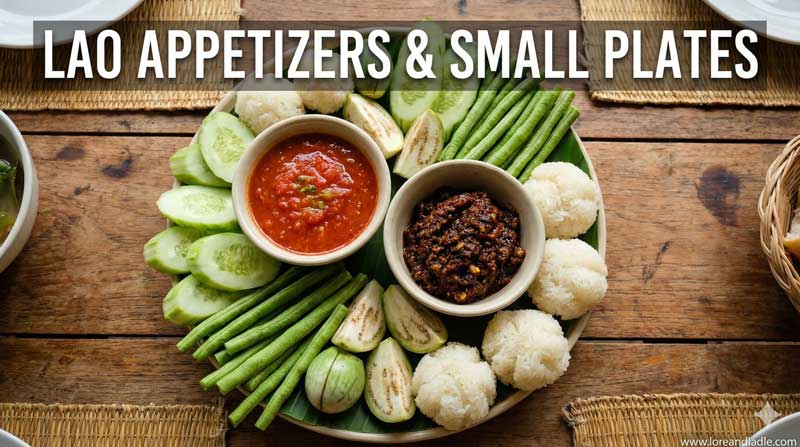
Jeow (Chili Dips) to accompany bites
- Core idea: a family of chili pastes and dips, ranging from tomato-tinged to pure chili heat, often folded with fish sauce or lime.
- Flavor pillars: heat, tang, and a savory depth that teams with fresh herbs.
- Textural cue: smooth and occasionally chunky, depending on how you blend.
-
Why it shines: a dip that nightly table dynamics can adapt to, enhancing vegetables, meats, and sticky rice.
-
Grilled Lemongrass- and Herb-Marinated Beef Skewers
- Core idea: thin strips of beef marinated with lemongrass, garlic, and lime, then grilled.
- Flavor pillars: citrusy brightness, herbaceous lift, and a smoky finish.
- Textural cue: responsive chew and a mild char.
-
Why it shines: a simple, aromatic bite that celebrates the land’s fresh aromatics.
-
Sticky Rice as a Table Vessel
- Core idea: warm, glutinous rice shaped into small portions for sharing.
- Flavor pillars: the rice itself is mild, letting other bites pop.
- Textural cue: soft, slightly chewy, perfect for scooping sauces and dips.
- Why it shines: the anchor of Lao meals, reinforcing the sense of sharing and togetherness.
Techniques That Elevate Home Cooking
- Roasted rice powder (khao khua): Toast dry rice until golden and grind to a coarse powder. It adds a toasty, nutty finish that unifies many Lao dishes.
- Fresh herbs as punctuation: Layer mint, cilantro, dill, and Thai basil in every bite to evoke the region’s bright herb garden.
- Quick heat management: If you’re new to chili, start mild and increase gradually. The goal is balance, not overwhelming heat.
- Fish sauce as seasoning: Use fish sauce or a balanced soy-fish blend to achieve the savory backbone without overpowering other flavors.
- Lime and palm sugar: The sour-sweet balance is essential. Taste and adjust to highlight brightness without losing depth.
Sourcing and Substitutions
- Herbs and aromatics: Fresh mint, cilantro, dill, lemongrass, and Thai basil are ideal. If some are hard to find, use a combination of available herbs to achieve a similar aromatic profile.
- Sauces and seasonings: Fish sauce is central. If you cannot find it, a high-quality gluten-free soy sauce plus a splash of lime can approximate the depth, though the classic aroma will be best with real fish sauce.
- Staples: Sticky rice is ideal, but short-grain rice or jasmine rice can work as a substitute for the main bites; reserve sticky Rice for special serving.
- Fresh chilies: Substitute mild chilies or bell peppers to adjust heat. Always taste as you go.
Serving the Lao Experience at Home
- Platter structure: Arrange a few dips, slices, and small bites on a shared platter. Place sticky rice in small domes or mounds to invite finger tasting.
- Fresh herb garnish: Scatter herbs generously to spark aroma and color for each dish.
- Sequence: Start with lighter, brighter salads; move to richer or spicier dips; end with grilled bites for contrast.
The Table as Culture: Hospitality in Practice
Sharing Lao appetizers at home mirrors a broader tradition of hospitality. The table becomes a canvas where family and friends connect through aroma, texture, and taste. Each plate invites conversation about ingredients, technique, and the stories that flavor the dishes. By recreating these small plates, you honor a culinary practice built on warmth, balance, and a respect for fresh, local ingredients.
Conclusion: A Living Culinary Language
Restaurant-Style Lao Appetizers & Small Plates You Can Recreate at Home offer more than delicious bites. They embody a cultural language of sharing, seasonal awareness, and thoughtful seasoning. By exploring Tam Mak Hoong, Larb, Sai Ua, Jeow dips, and herb-forward grills, you invite Lao culinary values into your kitchen. The result is not only food but a respectful, inviting experience that highlights the beauty and balance of Lao flavors. Celebrate the table, celebrate the herbs, and savor the way these plates bring people together.